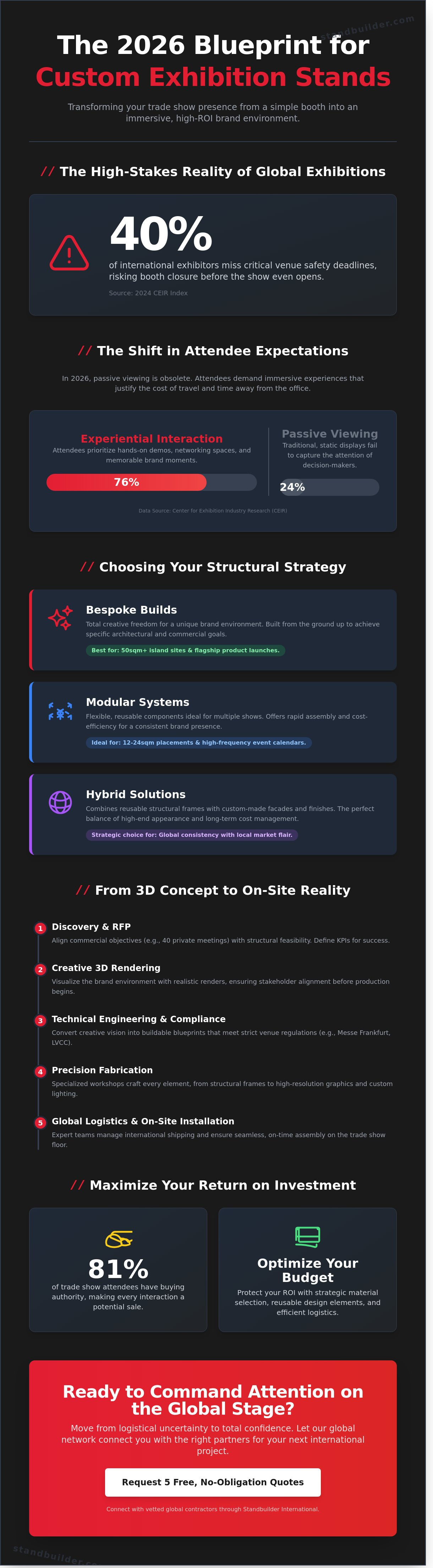
A staggering 40% of international exhibitors miss critical venue safety deadlines according to the 2024 CEIR Index, often leading to booth closures before the show even begins. Relying on guesswork for your custom exhibition stand design is a risk your 2026 marketing budget can't afford. You already know that standing out in a crowded global hall requires more than just a logo; it demands a precise blend of architectural impact and logistical perfection. The pressure to deliver a high-ROI presence while managing international transport costs is a challenge every serious brand faces.
This guide provides the blueprint to master bespoke booth creation while avoiding the common pitfalls of hidden fees and shipping delays. We'll help you distinguish between restrictive modular systems and true bespoke fabrication to ensure your brand commands attention. You'll learn how to streamline 3D conceptualisation and ensure a seamless on-site installation every time. We'll walk you through everything from navigating complex venue regulations to using our network to secure five free quotes from vetted global contractors, moving you from logistical uncertainty to a state of total decision-making confidence.
Key Takeaways
- Transform your trade show presence by shifting from standard booths to immersive brand environments tailored for the 2026 exhibition landscape.
- Master the custom exhibition stand design process by aligning your brand objectives with technical 3D concepts and realistic architectural renders.
- Navigate complex global logistics with confidence by understanding the critical differences between US general contractors and European stand builders.
- Optimize your event budget using strategic material selection and reusable design elements that protect your ROI without sacrificing visual impact.
- Accelerate your planning phase by leveraging a global network to request and compare five free, no-obligation quotes for your next international project.
What is Custom Exhibition Stand Design in 2026?
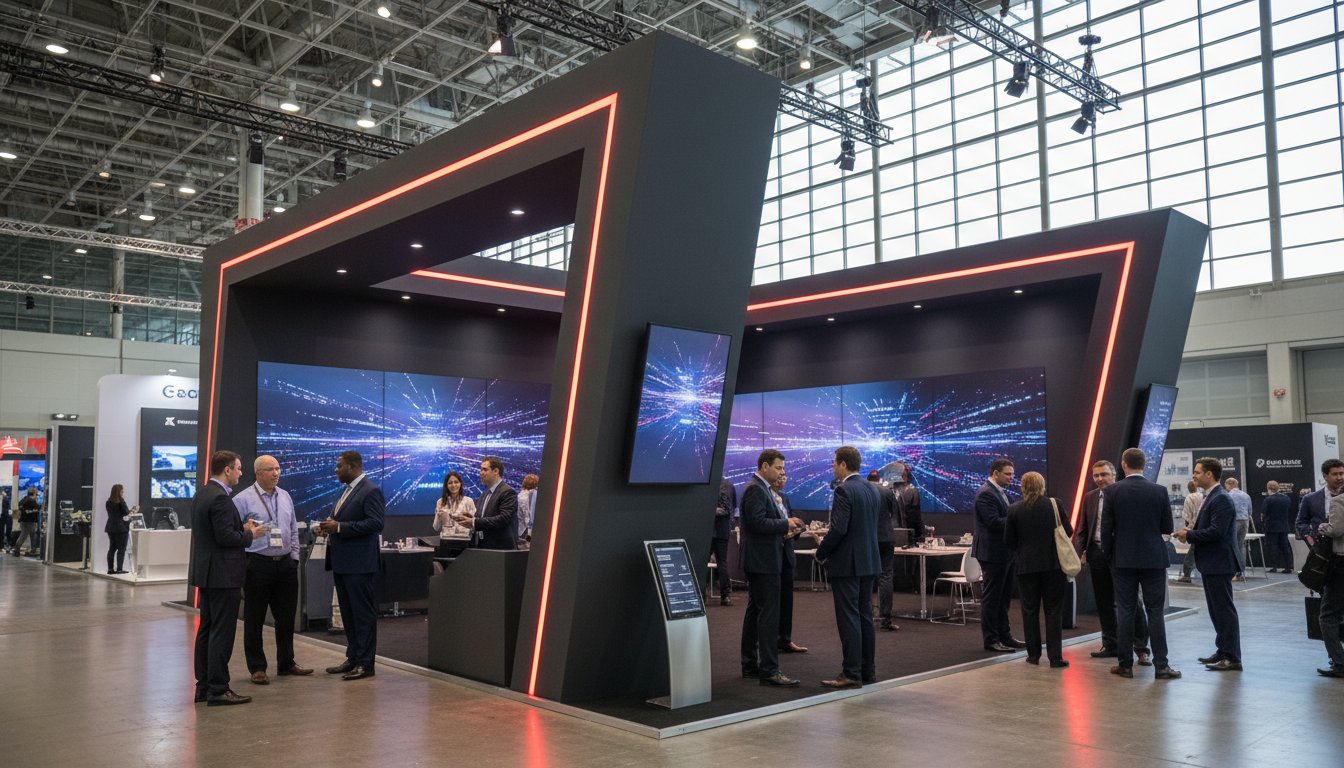
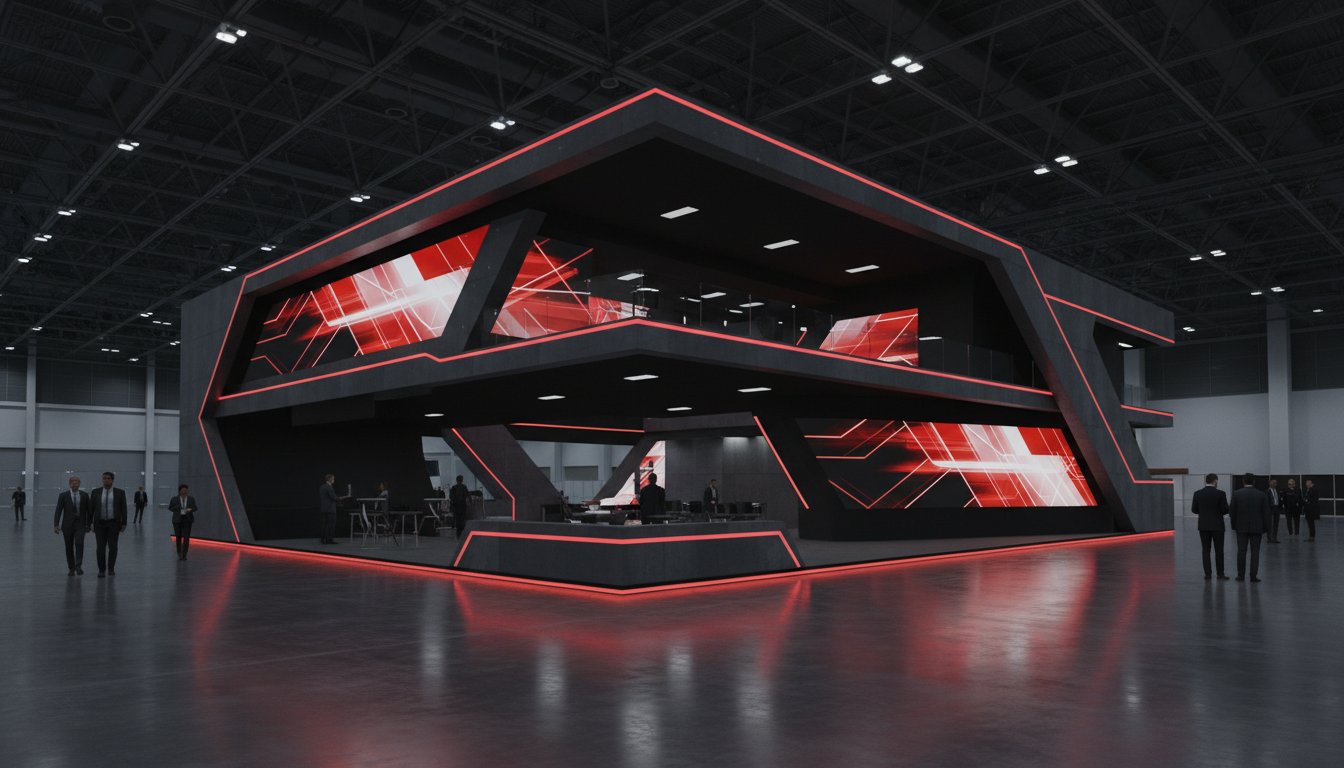
In the 2026 trade show environment, custom exhibition stand design has evolved from simple floor space management into the creation of high-performance brand ecosystems. A bespoke stand is a tailored environment built from the ground up to meet specific commercial objectives. Unlike standardized kits, these structures allow for total creative freedom and optimized visitor flow. Data from the Center for Exhibition Industry Research (CEIR) indicates that 76% of attendees now prioritize experiential interaction over passive viewing. This shift has pushed brands away from static "booths" toward immersive architectural statements that command attention on a crowded floor.
A deep understanding of what exhibit design is involves balancing aesthetics with functional logistics. Designers in 2026 focus on creating "brand worlds" where every surface communicates a message. This process starts with a blank canvas, allowing for unique shapes, non-linear floor plans, and integrated structural technology. When you invest in a custom build, you eliminate the constraints of pre-fabricated frames, ensuring your brand stands out at high-stakes events. Compare local contractors and request detailed proposals to see how a unique design can transform your presence.
Bespoke vs. Modular: Choosing Your Strategy
Selecting the right structural strategy depends on your event calendar and budget efficiency. Modular systems offer high flexibility for recurring local shows where rapid assembly is vital. However, for flagship international events like EuroShop 2026 or MWC Barcelona, bespoke design is essential to capture market share. Many exhibitors now adopt a hybrid approach; they combine reusable structural frames with custom-made facades and unique interior finishes. This method maintains a high-end look while managing long-term costs. Find a partner who can balance these requirements across different regions.
- Bespoke Builds: Best for 50sqm+ island sites and flagship industry launches.
- Modular Systems: Ideal for high-frequency 12sqm to 24sqm placements.
- Hybrid Solutions: A strategic choice for brands needing global consistency with local flair.
The Role of Brand Identity in Exhibit Architecture
Effective custom exhibition stand design translates corporate values into 3D physical spaces through texture, light, and form. A software company might use minimalist glass and cold-toned LED lighting to signal precision. Conversely, a sustainable manufacturing firm might utilize reclaimed timber and biophilic elements to prove their ESG commitments. Architecture must facilitate specific "Jobs to be Done," such as dedicated private meeting areas for closing deals or raised stages for live product demos.
In 2026, the integration of AI-driven interactivity and sustainable material choices is a non-negotiable standard. Real-time data tracking within the stand architecture helps exhibitors measure visitor dwell time and engagement levels. Request five free quotes through our network to connect with experts who specialize in these advanced integrations. Successful exhibit architecture doesn't just look good; it functions as a high-conversion sales tool that simplifies complex logistics for your team.
The Design & Fabrication Journey: From 3D Concept to Reality
Successful custom exhibition stand design starts with a rigorous Request for Proposal (RFP) process. This initial discovery phase aligns your commercial objectives with structural feasibility. You need to define whether your booth must facilitate 40 private meetings or host 300 product demos over a three-day period. Technical engineering then converts these creative visions into buildable blueprints. These documents ensure every structural element meets venue safety standards, such as the strict regulations found at Messe Frankfurt or the Las Vegas Convention Center.
Efficient planning is the only way to secure a great return on investment (ROI). Data from the Center for Exhibition Industry Research (CEIR) in 2023 indicates that 81% of trade show attendees have buying authority. Your design must capture this audience instantly. Once the engineering is approved, the project moves to specialized workshops where precision manufacturing begins. This phase bridges the gap between a digital file and a physical structure through expert craftsmanship.
The Importance of Creative 3D Rendering
3D renders act as functional simulations rather than just artistic previews. High-fidelity renders allow stakeholders to walk through the visitor journey before a single board is cut. You can evaluate sightlines for "hero" elements within a 20x20 footprint or test how ambient lighting affects brand colors. These visualizations help you plan AV placement and integrated graphic production accurately. This ensures your custom exhibition stand design remains functional and visually striking from every aisle approach.
Inside the Fabrication Workshop
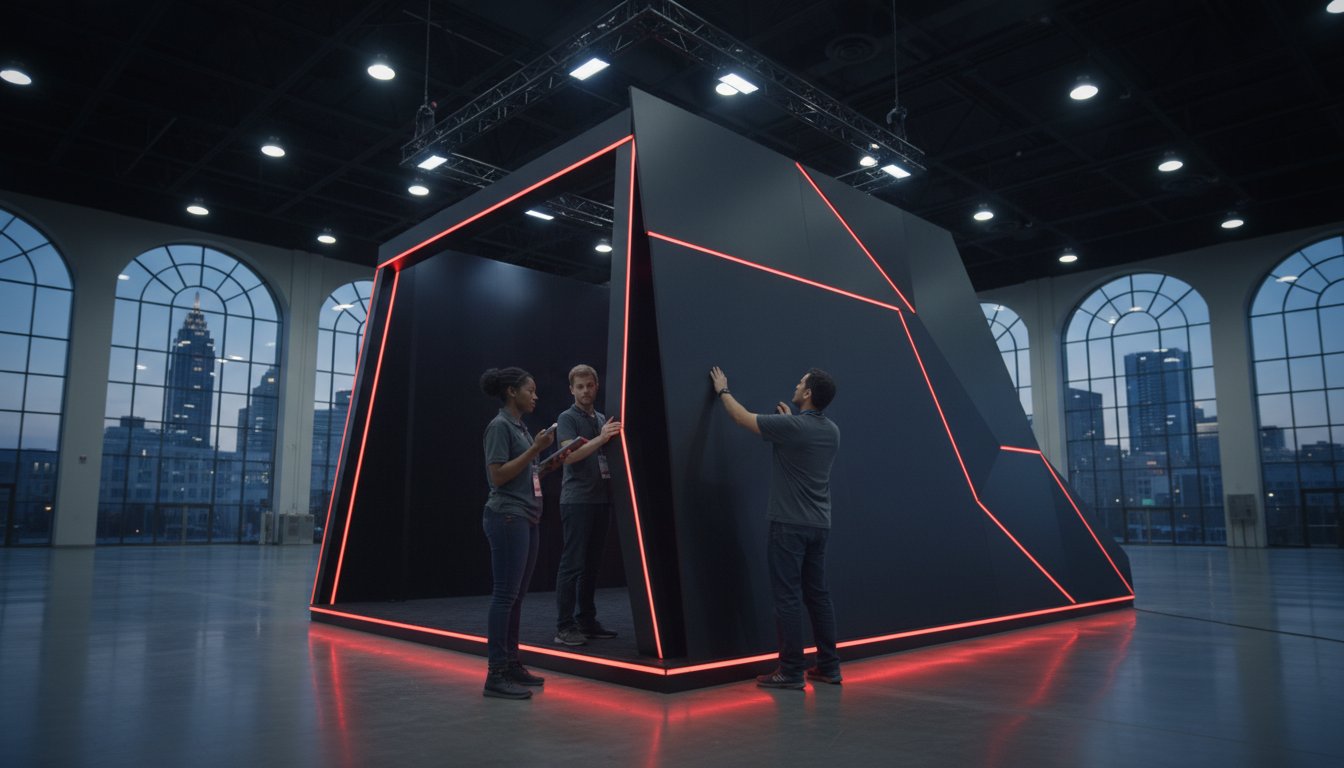
The workshop is where craftsmanship meets high-tech materials. Expert builders select sustainable wood, lightweight aluminum, or tension fabrics based on your specific durability needs. High-finish bespoke elements, like custom-curved counters or recessed lightboxes, require manual precision that modular systems cannot replicate. We recommend a mandatory pre-build inspection. A full test-assembly in the workshop identifies potential issues before shipping. This step is critical for international shows where you cannot afford last-minute mistakes. To streamline this transition from plan to production, you can find local contractors who specialize in high-quality fabrication through our network.
Navigating Global Venues: Compliance, Safety, and Logistics
Designing for different continents requires more than just aesthetic adjustments. It demands a deep understanding of the "International Gap." In the United States, the General Service Contractor (GSC) dominates the exhibition floor, managing drayage, material handling, and rigging. Conversely, the German Messebauer operates as a comprehensive design-build firm, providing a full-service experience from fabrication to final handover. These structural differences dictate how you budget for and execute your custom exhibition stand design.
Safety regulations vary significantly between major global halls. European venues strictly enforce DIN 4102-1 B1 or French M1 fire retardancy ratings for all construction materials. If your fabric, timber, or flooring lacks these specific certifications, safety inspectors will halt your build immediately. Structural stability is equally critical. Venues like Messe Frankfurt or the Javits Center in New York require stamped engineering drawings for any double-deck structures to ensure visitor safety and compliance with local building codes.
US and European Compliance Nuances
Electrical standards create immediate hurdles for international exhibitors. Europe operates on 230V systems, while North America uses 110V. Rigging requirements also diverge; US unions often mandate specific harness protocols and labor jurisdictions that don't exist in most Asian or European markets. The Standbuilder International-CBS Neospace partnership eliminates these headaches by providing local technical expertise. This ensures your custom exhibition stand design meets every venue-specific "Work Rule" and labor law without surprise fees. Request your project review now to receive five free quotes from contractors who understand these regional nuances.
International Freight and Warehousing
Global transport involves complex paperwork and strict timelines. You'll need ATA Carnets to move booth components across international borders without paying heavy import duties. Managing transportation logistics and freight handling requires extreme precision to meet narrow "move-in" windows. Missing a designated three-hour slot at a venue like ExCeL London can derail an entire installation schedule and inflate labor costs.
Strategic storage reduces long-term overhead for recurring exhibitors. Utilizing regional warehouses in Atlanta for North American shows and facilities in Germany for European events cuts shipping costs by up to 30%. This localized approach allows for faster maintenance and ensures your assets are ready for the next show. Coordinate your logistics early to secure the best freight rates and guarantee your installation crew has the necessary floor access on day one. Use the Standbuilder International platform to find partners who offer integrated storage solutions across all major trade show hubs.
Maximizing ROI: Balancing Creative Vision with Budgetary Realities
Every dollar spent on custom exhibition stand design must convert into tangible business value. Achieving a high return on investment requires a clear breakdown of four core cost centers: design fees, fabrication, logistics, and on-site labor. According to the Center for Exhibition Industry Research (CEIR), exhibit space typically consumes 32% of a total show budget, while the remaining 68% covers the build and operational costs. You can find significant efficiencies by focusing on the 18% usually allocated to logistics and transportation.
Smart planning allows you to amortize your initial investment over multiple shows. Instead of a single-use build, request a design that functions across different floor scales. This multi-show strategy reduces the cost-per-lead by spreading the fabrication expense across several years of your marketing calendar. Evaluate your success by looking beyond badge scans; track brand sentiment and the conversion rate of high-quality leads into signed contracts.
Budgeting for High-Impact Stands
Don't let hidden costs derail your financial projections. Drayage, the fee for moving materials from the loading dock to your booth, often fluctuates based on weight and timing. You'll also need to budget for venue service fees like electrical drops and internet connectivity. To maximize impact, invest in high-quality lighting and large-format graphics. These elements create 75% of the visual draw for a fraction of the price of heavy structural flourishes. Compare the benefits of the "Rent vs. Buy" model; renting a custom-looking framework while purchasing bespoke graphics provides a high-end appearance without the long-term storage fees.
Sustainable Exhibiting as a Financial Driver
Sustainability is now a fiscal necessity rather than just a corporate social responsibility goal. Using lightweight materials like tension fabric or recycled aluminum frames can reduce international freight costs by up to 20%. These materials also help you avoid rising carbon taxes and venue disposal fees. Use these strategies to stay lean:
- Modular-custom hybrids: Use a standardized frame with custom skins to allow for easy layout updates without a total rebuild.
- Second-life design: Build components that can be repurposed as office furniture or showroom displays after the event.
- Eco-friendly disposal: Select materials that are 100% recyclable to eliminate the hundreds of dollars charged for landfill waste at major venues.
Efficiency in procurement is the final step in protecting your budget. Requesting multiple bids ensures you receive the best market rate for your specific requirements. This transparency prevents overspending and allows you to allocate more resources toward on-site engagement and lead generation.
Ready to optimize your event spend? Compare five free quotes from local contractors to find the most cost-effective solution for your next show.
Partnering with Standbuilder International for Global Impact
Selecting the right partner for your custom exhibition stand design determines your ultimate success on the trade show floor. Standbuilder International simplifies this complex decision by offering a transparent, data-driven approach to procurement. Our platform provides the "Five Free Quotes" advantage, which allows you to compare bespoke solutions from multiple contractors without any initial financial commitment. This model eliminates the guesswork and price inflation often associated with international logistics, ensuring you receive the best value for your marketing budget.
We leverage a strategic global reach through our Atlanta-Ratingen axis, bridging the gap between North American and European exhibition standards. This dual-continent presence provides you with local expertise regardless of where your show is located. You gain a single point of contact for end-to-end project management, covering everything from the initial creative brief to the final post-show dismantle. Our vetted network includes over 500 international exhibition stand contractors, each rigorously screened for quality and reliability across 40 different countries.
The Standbuilder Process: Efficient and Professional
Marketing teams often face tight deadlines and fragmented communication. We streamline the Request for Proposal (RFP) process by filtering our global network to find the five contractors best suited to your specific industry and booth size. Our commitment to no-obligation consultations means you can explore creative possibilities without pressure. We've successfully delivered high-impact custom stands at world-class events, including Bauma in Munich and NAB in Las Vegas, proving our ability to handle large-scale technical requirements and strict venue regulations.
- Simplified RFP: Submit one brief and receive five tailored proposals.
- Transparent Pricing: Compare detailed cost breakdowns side-by-side.
- Vetted Quality: Every contractor in our network meets strict international build standards.
Ready to Elevate Your Brand in 2026?
Preparation is the most critical factor in trade show ROI. Successful brands typically start their custom exhibition stand design process 6 to 9 months before the show date to ensure material availability and early-bird venue discounts. When you're ready to begin, submit a brief that outlines your core objectives, budget, and functional needs like meeting rooms or product display zones. A detailed brief allows our design teams to provide more accurate and creative responses that align with your brand identity.
Don't leave your international presence to chance. Use our expert facilitation to find a partner who understands your vision and the local requirements of your next show. Take the first step toward a stress-free exhibition experience today.
Take the Lead in Your 2026 Exhibition Strategy
Success on the 2026 trade show circuit requires a strategic approach to custom exhibition stand design that merges high-impact 3D visuals with strict venue compliance across international borders. You've seen how balancing creative vision with budgetary realities maximizes ROI while maintaining brand integrity. Navigating complex global logistics becomes effortless when you leverage over 25 years of international exhibition expertise. Standbuilder simplifies this process through a strategic partnership with CBS Neospace GmbH, offering a powerful combination of Atlanta-based project management and precision German engineering. This ensures your brand meets every technical safety standard from European hubs to North American convention centers. Don't let procurement friction stall your progress. Use our platform to move from a state of uncertainty to a decisive action plan. We're here to bridge the gap between your vision and a physical masterpiece that drives measurable business growth.
Get 5 Free Quotes for Your Custom Stand
Your next global success is within reach, and we're ready to help you build it.
Frequently Asked Questions
What is the difference between a custom exhibition stand and a modular booth?
A custom exhibition stand design is built from scratch using unique materials like timber, metal, or glass to fit your exact brand requirements. Modular booths utilize pre-engineered frames and panels that connect in standard configurations. While modular systems offer 30% faster assembly times on average, custom builds provide total creative freedom for unique architectures and specialized branding.
How much does a custom exhibition stand design cost in 2026?
Total project costs for custom exhibition stand design in 2026 depend on material selection, floor space, and structural complexity. According to the UFI Global Exhibition Barometer, labor and material costs in the exhibition sector rose by 12% recently, impacting overall budgets. Request five free quotes through our platform to compare current market rates from 1,000+ verified contractors globally without any obligation.
How long does it take to design and build a bespoke trade show stand?
You should allow 12 to 16 weeks for the full design and construction cycle. The initial design phase typically takes 3 weeks, followed by 8 weeks for fabrication and 1 week for final logistics. Starting 6 months before your show date ensures you secure the best materials and avoid the 25% rush fees common across the industry.
Can I reuse a custom exhibition stand for multiple international shows?
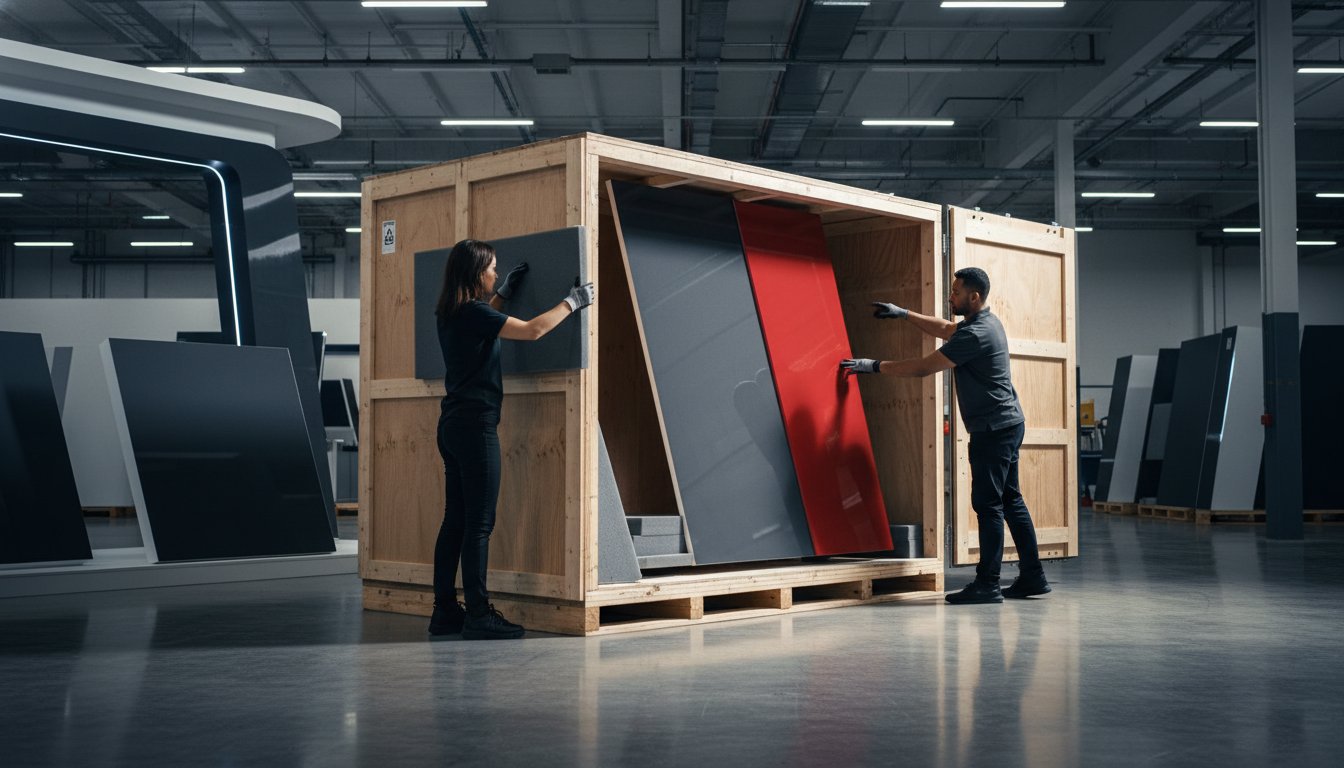
You can reuse your stand if the initial design incorporates modular elements or durable crating for long-distance transport. Data from Exhibit Surveys Inc. shows that 45% of exhibitors now request "multi-use" designs to lower their carbon footprint and maximize ROI. We connect you with contractors who offer storage solutions across 50 countries to facilitate your international tour schedule.
Do you handle the paperwork for fire safety and venue compliance?
Our network of contractors manages all technical submissions, including fire safety certificates and static load calculations required by venues like Messe Frankfurt or ExCeL London. They ensure every custom exhibition stand design meets B1 fire retardant standards or specific local equivalents. This process removes the burden of navigating complex 50 page technical manuals from your internal marketing team.
What are the benefits of working with an international stand contractor like Standbuilder?
Working with Standbuilder gives you immediate access to a vetted network of 1,500+ international contractors. You save time by receiving five free quotes within 48 hours, allowing you to compare local expertise and pricing side-by-side. Our platform simplifies the RFP process, making it effortless to find a reliable partner in cities from Las Vegas to Dubai.
What industries do you specialize in for custom booth design?
Our contractors specialize in high-growth sectors including automotive, medical technology, and renewable energy. In 2023, 35% of our successful matches were for pharmaceutical brands requiring complex double-decker structures. Whether you're in the tech sector or heavy machinery, we find builders with specific experience in your niche to ensure industry-specific compliance and design excellence.
How do I manage a booth build in Germany if my company is based in the US?
Manage your German build by hiring a local contractor who understands the specific regulations of venues like Messe München. Using a local partner eliminates 100% of international shipping costs and reduces your project's carbon emissions. Our platform facilitates this by matching your US-based team with German experts who provide real-time updates and handle all local logistics on your behalf.