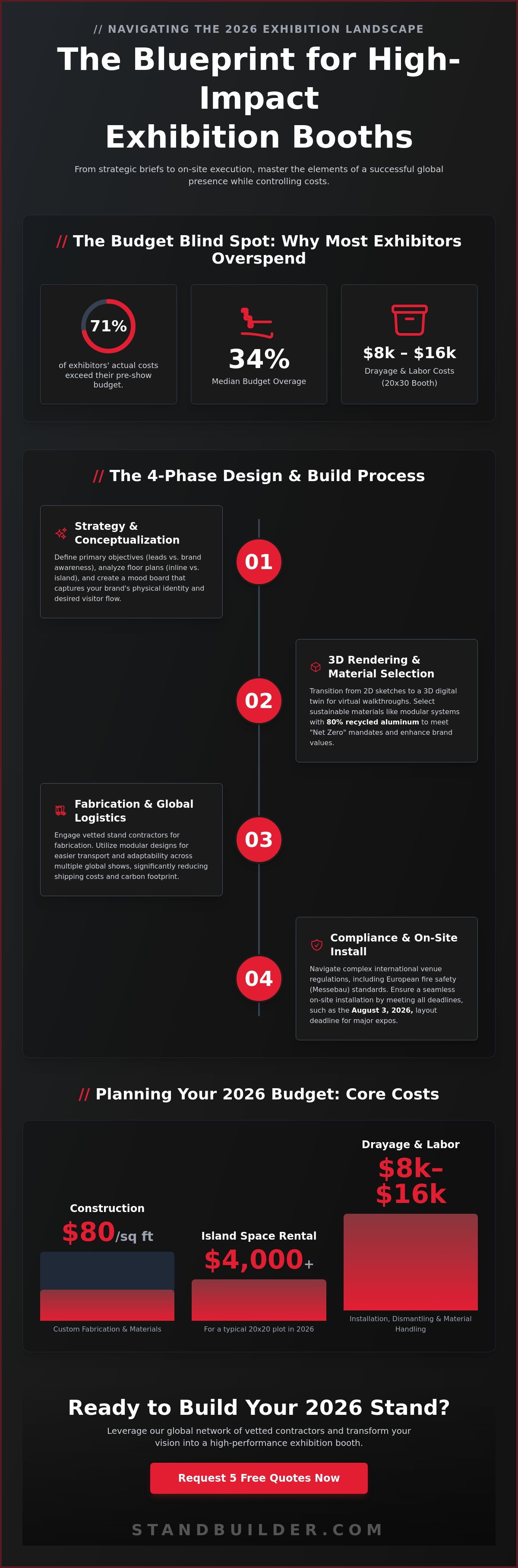
71% of exhibitors in 2025 discovered that their actual show costs exceeded their pre-show budget by a median of 34%. Most of these overages came from underestimated drayage and installation labor, which can cost between $8,000 and $16,000 for a 20x30 booth at a major 2026 show. You likely feel the pressure to create a standout presence while managing these rising costs and strict venue safety regulations. Mastering exhibition booth design shouldn't mean sacrificing your margins for the sake of a high-impact look.
We've built this guide to help you simplify the entire process, from initial 3D brand storytelling to final on-site installation. You'll learn how to leverage modular systems with 80% recycled aluminum to meet new "Net Zero" mandates while ensuring your stand is adaptable for multiple global shows. This roadmap provides the tools to secure a booth that attracts high-value leads, simplifies international logistics, and delivers measurable results. We will cover everything from budgeting for $80 per square foot construction costs to navigating the August 3, 2026, layout deadlines for major expos.
Key Takeaways
- Define your primary objective and floor plan configuration to ensure your exhibition booth design aligns with specific lead generation or brand awareness goals.
- Transition from 2D sketches to 3D digital twins to accurately visualize your brand identity in a physical space before the fabrication process begins.
- Adopt modular stand systems and integrated LED technology to reduce carbon footprints while maximizing attendee engagement at every show.
- Navigate complex international venue regulations, including European fire safety and Messebau standards, to ensure a seamless on-site installation without delays.
- Streamline your procurement process by requesting five free quotes from a global network of vetted stand contractors to find the best local expertise.
Mastering the Strategic Brief for Exhibition Booth Design
Successful exhibition booth design starts long before the first 3D render. It begins with a technical brief that defines your commercial intent. You need to decide if your primary objective is capturing 500 high-value leads or launching a new product line to 20,000 attendees. This choice dictates every architectural decision. If you don't define these goals early, your design will lack the functional zones required to convert visitors into customers.
Analyze your floor plan with precision. An inline booth requires a different strategy than a 20x20 island. Island configurations allow for 360-degree visibility but demand higher construction budgets, often starting at $4,000 for the space alone in 2026. If you're exhibiting in Frankfurt or Las Vegas, your contractor needs these specifics to optimize the visitor flow. Identify your target visitor persona immediately. A C-suite executive needs a quiet, private lounge, while a technical engineer might prefer an open demo station with interactive touchscreens.
Establish a realistic budget range that covers both design and fabrication. 71% of exhibitors in 2025 went over budget because they ignored drayage and labor costs. In 2026, custom construction in the US often starts at $80 per square foot. Use these figures to anchor your RFP. This ensures you attract the right tier of contractors from a global network who can deliver within your financial constraints.
Setting Measurable Goals for Your Stand
Quantify what success looks like for your 2026 show cycle. If your goal is lead generation, prioritize the number of scanned badges over general aesthetic flair. Allocate at least 30% of your floor space for private meeting areas if you plan to close deals on-site. Check your 2026 marketing calendar to ensure your stand messaging aligns with your global campaign launches. For a comprehensive overview of exhibit design, look at how professional designers balance these functional needs with artistic expression.
Translating Brand Identity into 3D Environments
Your brand shouldn't just be a logo on a wall. It needs to be a physical experience. Use strategic design for trade show displays to guide visitors through a logical narrative. Pick a color palette that cuts through the visual noise of a crowded hall. High-traffic areas require bold, high-contrast graphics that are legible from 20 feet away. Incorporate your brand story into the architecture itself. A software firm might use sharp, minimalist lines and LED accents, while a sustainable brand should opt for FSC-certified timber and modular aluminum frames to reflect its values.
The Step-by-Step Exhibition Booth Design Process
Successful exhibition booth design moves through a rigorous technical workflow. It isn't just about drawing; it's about engineering a temporary environment that survives high foot traffic and strict venue inspections. This journey translates your strategic brief into a physical reality using specific milestones that prevent costly on-site errors. By following a structured process, you ensure the final build matches the initial vision without technical surprises.
Phase 1: Conceptualization and Mood Boarding
Start by gathering visual inspiration from successful trade show exhibits. Create a mood board that captures the specific textures, lighting styles, and brand "vibe" you want to project. Draft an initial traffic flow map that accounts for how staff move between visitors and where the primary interaction points sit. The "Hero Element" of the booth is a high-impact central structure designed to anchor the visual experience and capture attention from the far end of the hall. This phase focuses on the emotional and functional layout before any structural commitments are made.
Phase 2: 3D Rendering and Material Selection
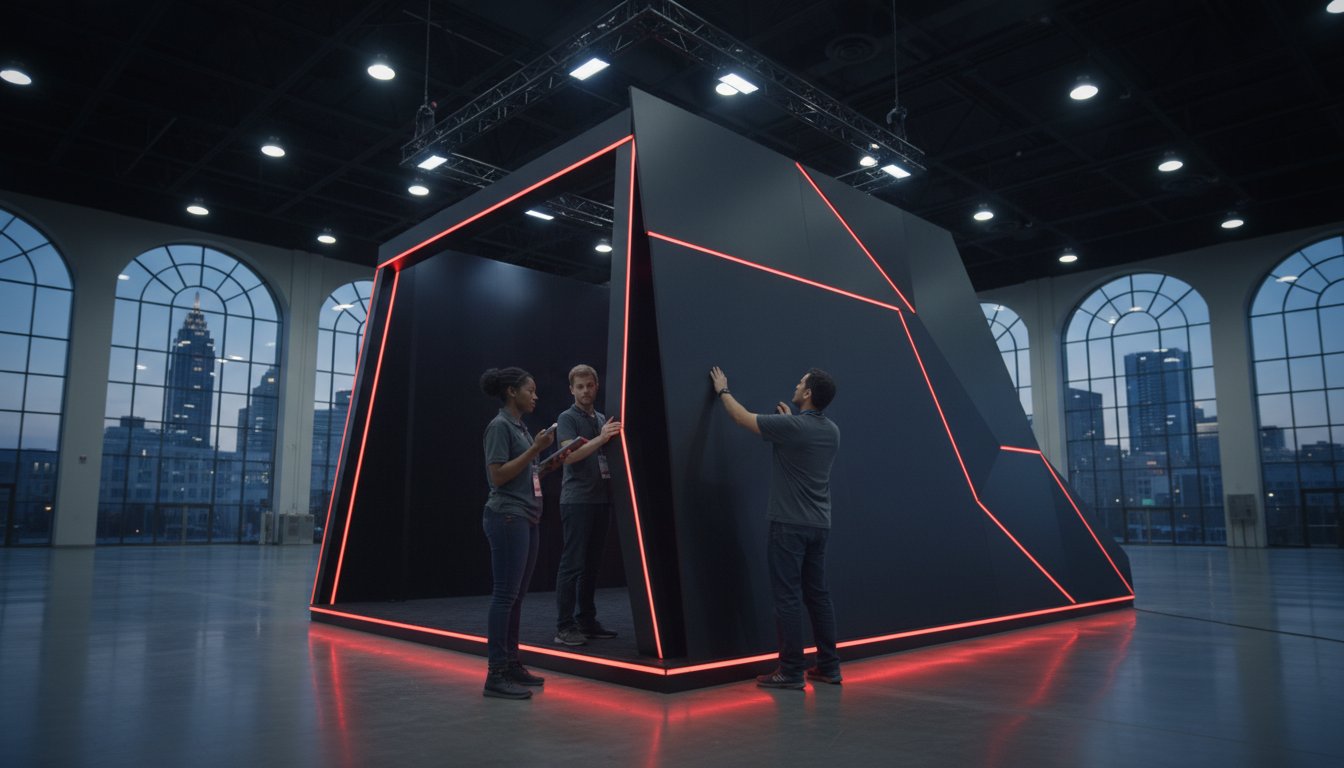
Once the concept is approved, move to 3D modeling. This creates a digital twin of your stand, allowing you to walk through the space virtually. Review these renders from at least six different angles to identify blind spots where visitors might feel trapped or where key graphics are obscured. Material selection is critical during this stage. In 2026, many global venues require a shift toward eco-friendly builds to meet "Net Zero" mandates. Consult the Sustainable Exhibition Design & Construction Toolkit to understand how to integrate recycled aluminum systems or tension fabrics that maintain high aesthetic standards.
Verify material availability in your target show city. If you're exhibiting in Munich, modular systems like beMatrix are readily available and significantly reduce shipping costs. In Atlanta, you might prioritize local custom timber fabrication to avoid international freight delays. Choosing materials that exist within the local supply chain of the venue city reduces your carbon footprint and eliminates customs risks. You can compare quotes from local experts who understand these regional material nuances.
Phase 3: Technical Engineering and Graphic Production
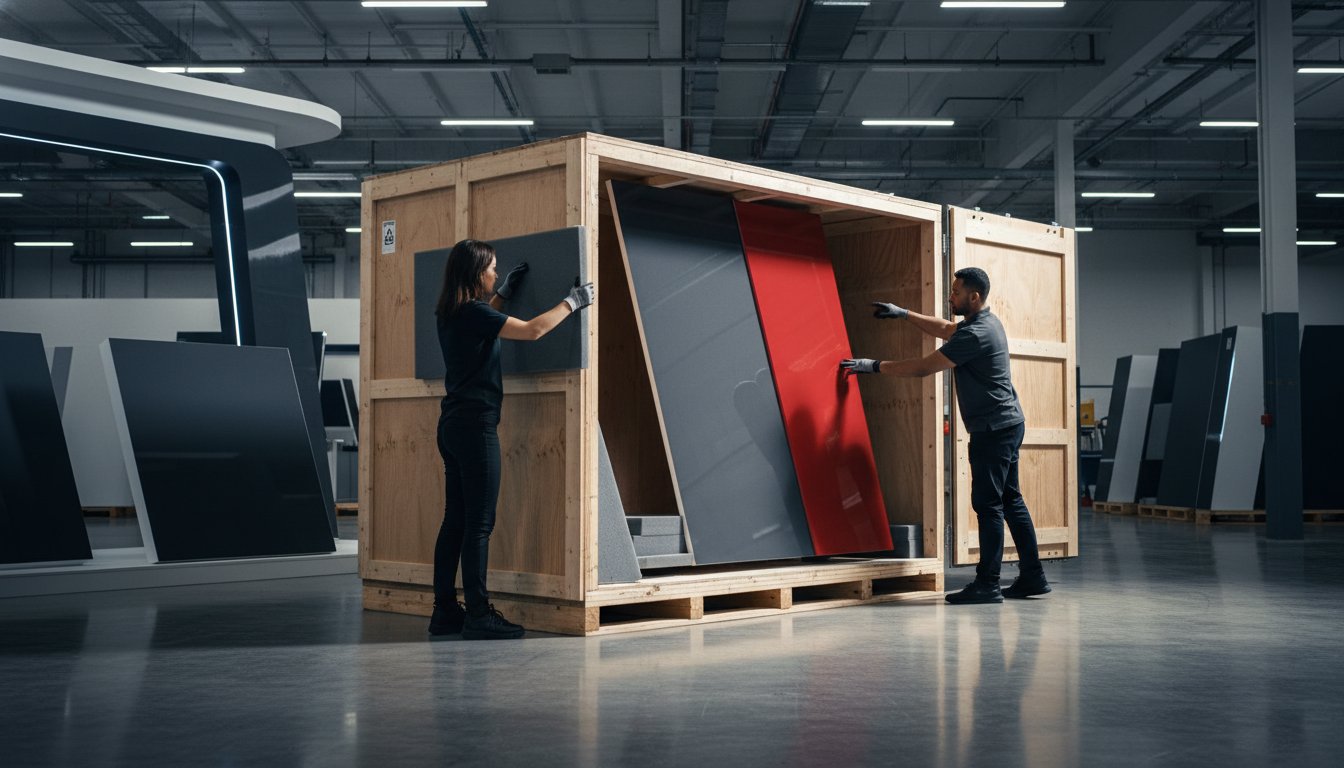
The final step involves technical engineering and structural safety. You must ensure the stand is stable, especially if you're planning a double-decker configuration. Your designer will produce detailed CAD drawings for the venue's health and safety team to meet strict 2026 compliance standards. Simultaneously, finalize your graphic production. Large-scale printing requires high-resolution files of at least 150 DPI at full size to avoid pixelation on 10-foot walls. This technical precision ensures that the "wow factor" seen in the 3D render translates perfectly to the physical show floor.
Integrating 2026 Technology and Sustainable Materials
Modern exhibition booth design in 2026 requires a seamless marriage between physical structures and digital layers. You can't just slap a screen on a wall and call it an activation. High-impact tech requires specific architectural planning to handle power loads and data cabling without cluttering the visitor experience. By designing for digital from day one, you avoid the common pitfall of exposed wires and cooling issues that plague poorly planned stands. Tech needs space. It needs ventilation. Most importantly, it needs a design that guides the user toward the interaction point without creating a physical barrier.
The Rise of Digital Activations in 2026
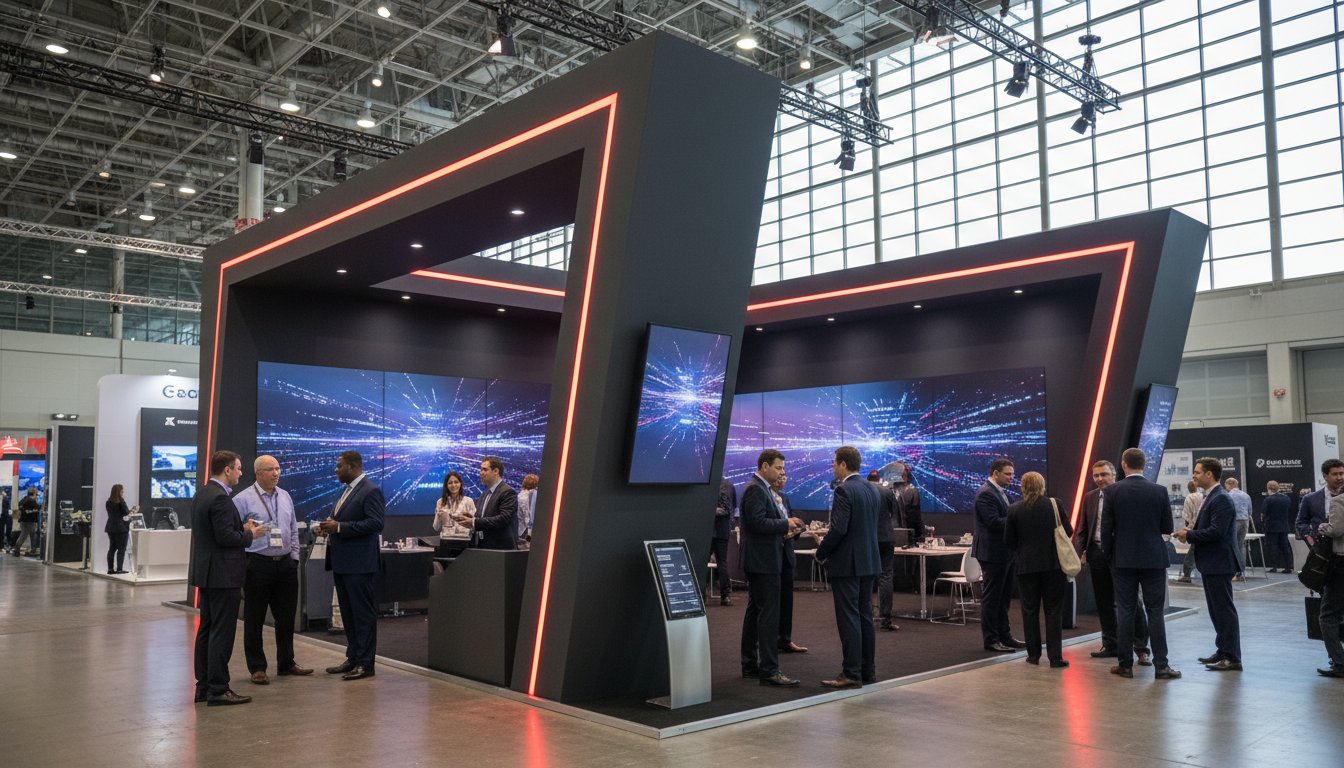
Planning for AR and VR zones is now a standard requirement for global exhibitors. To prevent traffic bottlenecks, place these high-engagement areas at least three feet inside your booth perimeter. This keeps the aisles clear while providing a dedicated "stage" for the user. Hidden cable management is your most important technical asset. Design your walls with internal channels to house high-speed data lines and power supplies. This ensures a clean, professional look that doesn't distract from your brand message. Many brands now use RFID technology to track visitor dwell time in specific zones. This data allows you to optimize your layout for the next show. Incorporate these sensors into your trade show backdrops and backlit elements to gather intelligence without intruding on the visitor experience.
Eco-Friendly Design and Modular Systems
Sustainability is no longer optional. The market for eco-friendly display solutions is growing at a rate of 27.1% annually through 2030. You should prioritize lightweight, modular systems engineered with up to 80% recycled aluminum content. These systems, like beMatrix or Aluvision, significantly reduce international shipping emissions because they pack flat and weigh less than traditional timber. Modular is smarter. It allows you to reconfigure the same components for a 10x10 booth in London or a 20x20 island in Chicago.
The "Double-Decker" vs. "Modular" debate often comes down to your sustainability goals. While double-decker stands offer prestige and extra meeting space, they require heavy structural steel and complex logistics. If your goal is a lower carbon footprint, stick to high-end modular frames with tension fabric graphics. Implement rental furniture and AV equipment from local suppliers in the show city. This strategy minimizes waste and slashes local transport costs. It also ensures you always have the latest tech without the burden of ownership or storage fees. Focus on reusability to maximize your ROI over a multi-show annual calendar.
Managing Global Logistics and International Venue Compliance
Logistics is where even the most brilliant exhibition booth design can fail if not backed by technical foresight. Crossing the Atlantic for a show in Germany or France requires more than just a shipping container; it requires a strategic partnership between US exhibitors and European "Messebauer" (stand builders). This local-global bridge ensures your stand doesn't just arrive, but actually complies with local labor laws and technical standards. You shouldn't try to navigate these waters alone. Use a partner who understands the specific friction points of international trade show participation to keep your project on schedule.
International Shipping and Customs Documentation
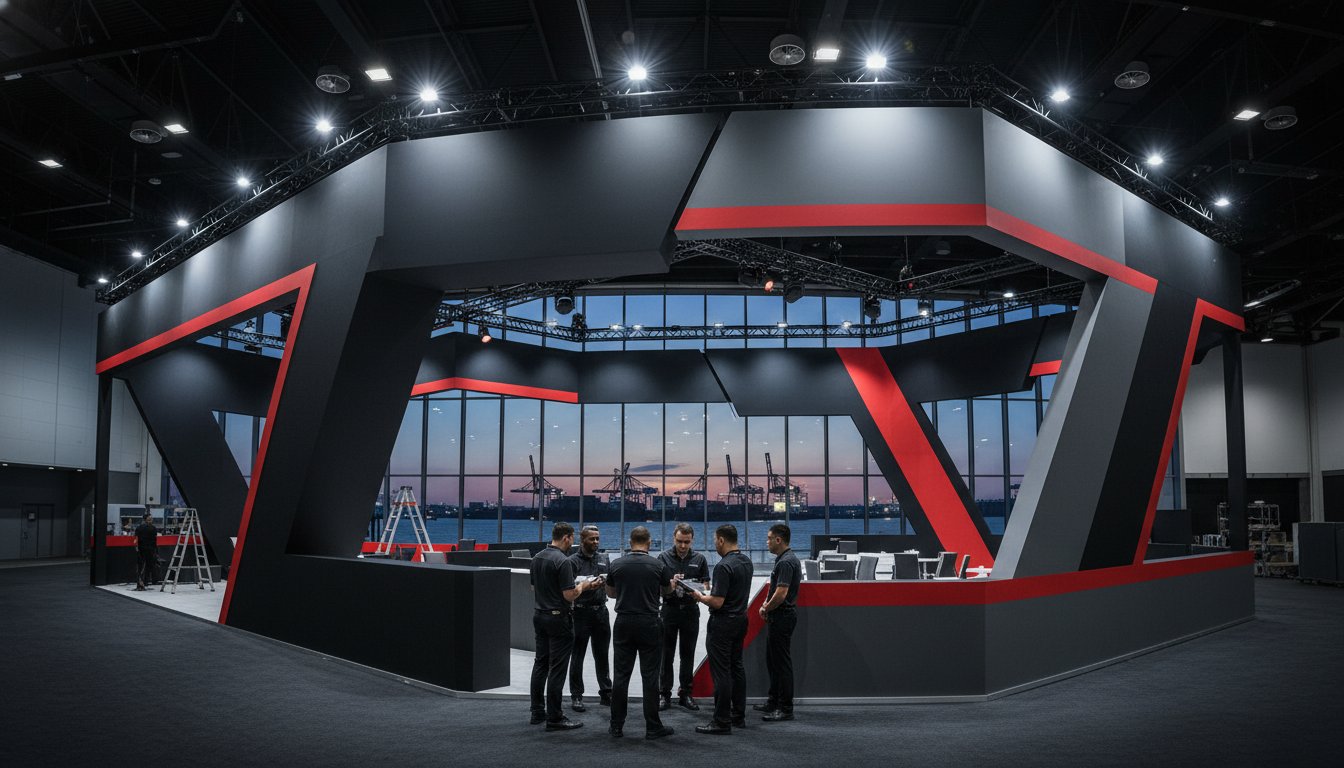
Prepare an ATA Carnet at least six weeks before your shipping date. This "merchandise passport" is essential for the temporary export of booth components, allowing you to avoid duties and VAT when moving materials from Atlanta to major European hubs like Frankfurt or Paris. Managing freight involves more than just transit. You must coordinate with a local Messebauer for the final assembly and technical oversight. These local experts handle the "last mile" logistics, ensuring your crates are delivered to the correct hall and that on-site labor teams are ready the moment the floor opens for build-up. This approach eliminates the risk of your materials being held in customs or lost in a foreign warehouse.
Venue Regulations and Safety Compliance
European venues operate under different fire safety and structural codes than those in North America. Most German venues require materials to meet the B1 fire retardancy standard, while French venues look for M1 certification. Metric measurements are the default; converting a 20x20 foot booth into a 6x6 meter space requires precise adjustments in the early design phase to avoid structural gaps. You must also verify height restrictions and suspension point availability early, as these vary by hall and show. For major 2026 events, the typical lead time for submitting technical booth drawings to venue organizers is at least 90 days before the show starts.
Finalize your Installation and Dismantle (I&D) schedule with the venue to avoid late-entry penalties. For the IAFE Trade Show in November 2026, exhibits must be ready by 11:00 a.m. on Monday, November 30, and cannot be dismantled before 5:00 p.m. the following day. Missing these windows can result in heavy fines or forced labor charges. Ensure all electrical components meet local voltage standards, typically 230V in Europe, to avoid blowing circuits on opening morning. To simplify this complex process, you can request five free quotes from international contractors who specialize in these specific regional requirements.
Choosing an International Stand Contractor for Seamless Execution
Finalizing your exhibition booth design is a major milestone, but the project's success depends on who you hire to build it. Transitioning from a 3D model to a physical structure requires a contractor who understands the technical nuances of your target venue. You need a partner who can translate your digital twin into a compliant, high-quality stand without administrative friction. This procurement phase is where you secure the best value by comparing vetted experts who operate near your event location. Choosing the right partner means looking beyond the render to ensure they have the local resources to execute your vision on time.
Evaluating the Request for Proposal (RFP) Process
Don't just look at the bottom-line price when reviewing bids. You must compare quotes based on specific line items: design fees, material fabrication, and on-site labor. A low initial bid often hides expensive "add-ons" like electrical hookups or graphic installation. Assess the technical engineering capabilities of each builder. Can they handle the structural requirements of custom exhibition stand design? Check their references for recent shows in both North America and Europe. A builder who succeeded at CES 2026 in Las Vegas might not have the same logistics network for a show in Paris. Verify that they have a dedicated project manager who will be your single point of contact during the build-up phase. This person is responsible for navigating venue safety inspections and ensuring the I&D team stays on schedule.
The Standbuilder International Advantage: Simplifying the Search
Our platform acts as a global matchmaker, connecting you with a curated network of vetted exhibition stand contractors. We focus on the "Global-Local" model. The Standbuilder International Atlanta-Ratingen partnership specifically helps US exhibitors reduce costs when attending European shows. By hiring a contractor based in the show city, you eliminate international shipping risks and tap into local labor pools. This strategy prevents the 34% budget overages common in 2025 by providing transparent, all-inclusive pricing from the start. You get the benefit of local expertise with the convenience of a centralized procurement process.
Requesting quotes shouldn't be a time-consuming chore. Our system allows you to submit one RFP and receive five competitive, no-obligation bids. You can then compare these options side-by-side to find the best fit for your brand and budget. This structured flow moves you from uncertainty to a final decision quickly, ensuring your exhibition booth design is in capable hands well before the venue deadlines. We vet every contractor in our network for quality and reliability, so you can focus on your show strategy instead of managing vendors. Ready to start? Request five free quotes for your next exhibition booth design here.
Take Control of Your 2026 Exhibition Strategy
Mastering exhibition booth design requires a shift from pure aesthetics to technical precision. You've seen how a strategic brief and a 3D digital twin prevent on-site errors. Integrating 80% recycled aluminum and immersive AR zones ensures your brand meets both modern "Net Zero" standards and attendee expectations for 2026. These steps move your project from a vague concept to a high-performing physical environment.
Logistics shouldn't be the bottleneck that breaks your budget. Our strategic US-Germany partnership and global logistics expertise simplify the journey from Atlanta to Asia. We provide Red Dot-quality 3D design combined with a curated network of vetted builders. This approach removes the friction from procurement and guarantees a compliant, high-impact presence in any hall worldwide. You don't have to navigate complex international regulations alone.
Get 5 Free Quotes for Your Custom Exhibition Booth Design
It's time to transform your trade show vision into a measurable commercial success. We're ready to help you find the perfect partner for your next show and ensure your installation is seamless.
Frequently Asked Questions
How much does custom exhibition booth design cost in 2026?
Custom exhibition booth design in 2026 starts at approximately $80 per square foot for construction in the USA. In Europe, custom builds typically begin at €340 per square meter. These figures exclude the space rental fee, which usually ranges from $100 to $200 per square foot. Budgeting should also account for installation labor, which can cost between $8,000 and $16,000 for a 20x30 island booth at a major show.
What is the difference between a modular stand and a custom booth?
Modular stands use standardized aluminum frames and interchangeable panels, while custom booths are bespoke structures built from scratch using wood or metal. Modular systems often feature up to 80% recycled aluminum content and are easier to reconfigure for different floor plans. Custom designs provide unique 3D brand storytelling but often involve more waste unless you specifically design them for multi-show storage and reusability.
How far in advance should I start the booth design process?
Start your booth design process at least 6 to 9 months before the show date. Major venues have strict deadlines, such as the August 3, 2026, layout submission date for the AMP Annual Meeting island booths. Starting early ensures you avoid late-payment penalties and provides enough time for technical engineering and customs documentation like an ATA Carnet for international shipping between the US and Europe.
What are the most common exhibition booth sizes for international shows?
The most frequent sizes are 10x10 inline booths and 20x20 island configurations in the US, while 3x3 or 6x6 meters are standard in Europe. Large-scale exhibitors often opt for 20x30 islands or double-decker stands to maximize vertical visibility. Knowing these dimensions helps you choose between corner, island, or inline configurations to optimize visitor traffic flow and meet specific venue height restrictions.
Do I need to hire a separate company for booth installation and dismantling?
You don't need a separate company if your stand builder provides a dedicated installation and dismantling (I&D) team. 31% of exhibitors in a 2025 survey failed to include I&D labor in their initial budgets, leading to unexpected overages. Using a "Global-Local" partner ensures that the team setting up your exhibition booth design is familiar with the specific union labor rules and safety regulations of the venue.
Can I reuse my custom exhibition stand for multiple trade shows?
Yes, you can reuse custom components if they are designed with a modular framework or durable materials. 2026 trends show a heavy shift toward reusable designs to reduce waste and meet "Net Zero" mandates. Storing your stand with a local contractor allows you to adapt the graphics for different shows without rebuilding the structural core. This strategy reduces your long-term costs and minimizes your environmental footprint.
What are the fire safety regulations for exhibition stands in Europe?
European fire safety regulations require materials to meet specific certifications like B1 in Germany or M1 in France. These standards ensure that all fabrics, timbers, and plastics used in your exhibition booth design are flame-retardant. You must provide official certificates for these materials to the venue organizers during the technical approval phase. Failure to comply can result in fines or the venue refusing to allow your booth to open.
How do I integrate digital screens into my booth design effectively?
Integrate digital screens by designing recessed wall mounts and internal cable channels during the initial 3D modeling phase. This prevents exposed wiring and maintains a clean, professional appearance. Place interactive touchpoints at least three feet inside your booth perimeter to avoid aisle bottlenecks. Use RFID technology to track visitor dwell time in specific engagement zones, providing you with data to optimize your layout for future shows.