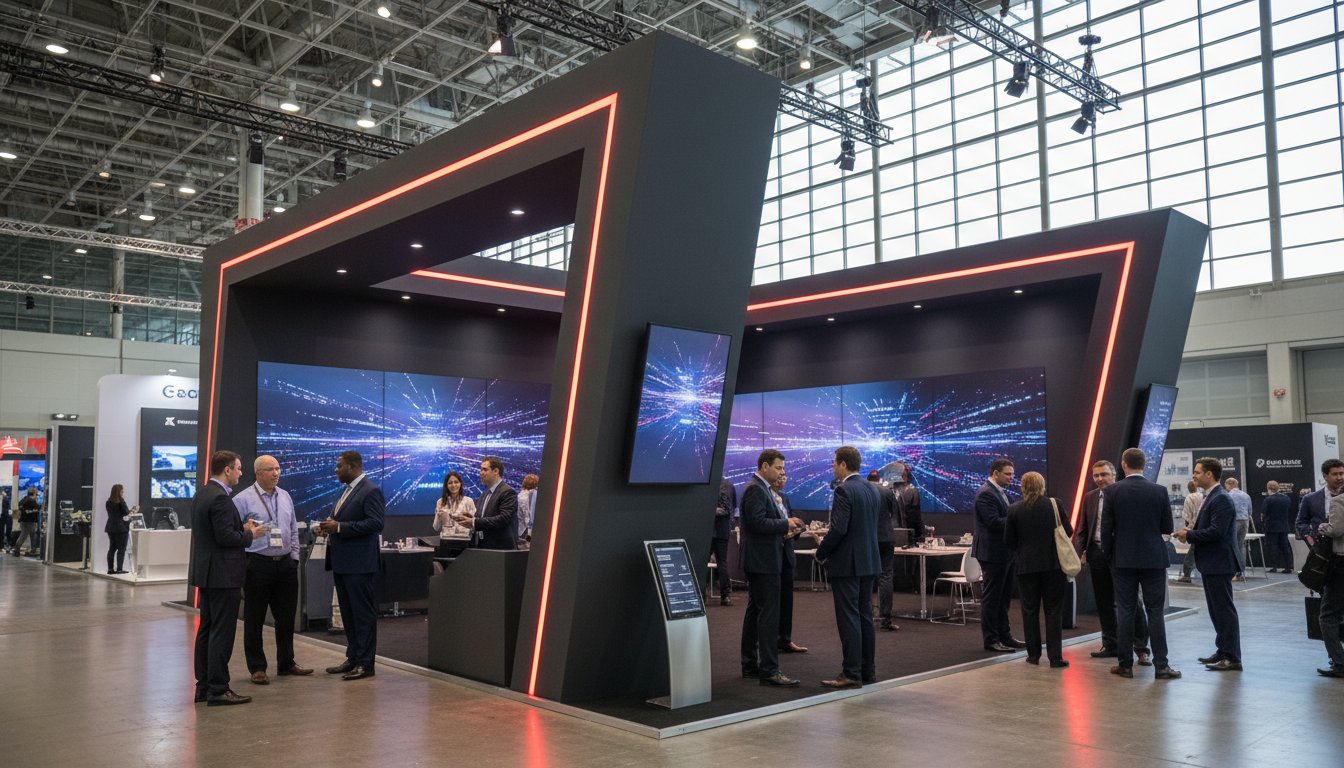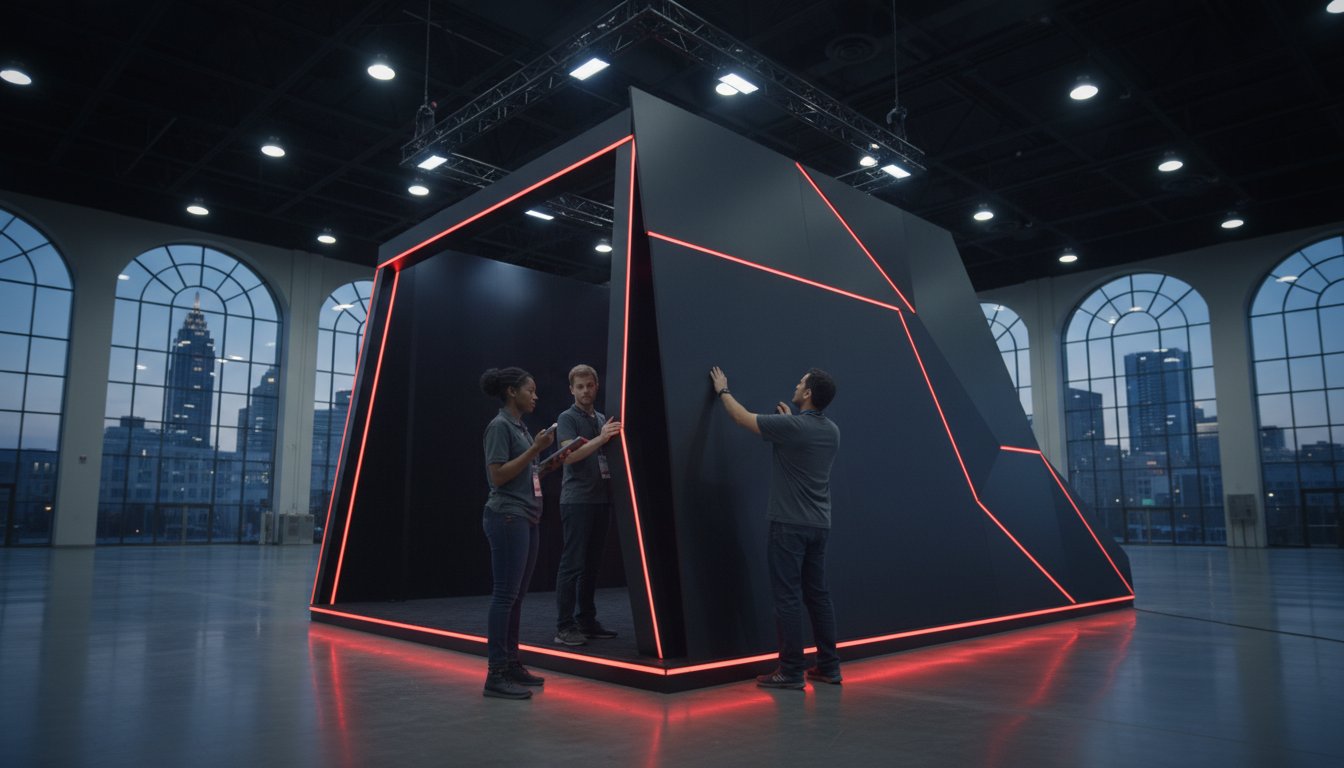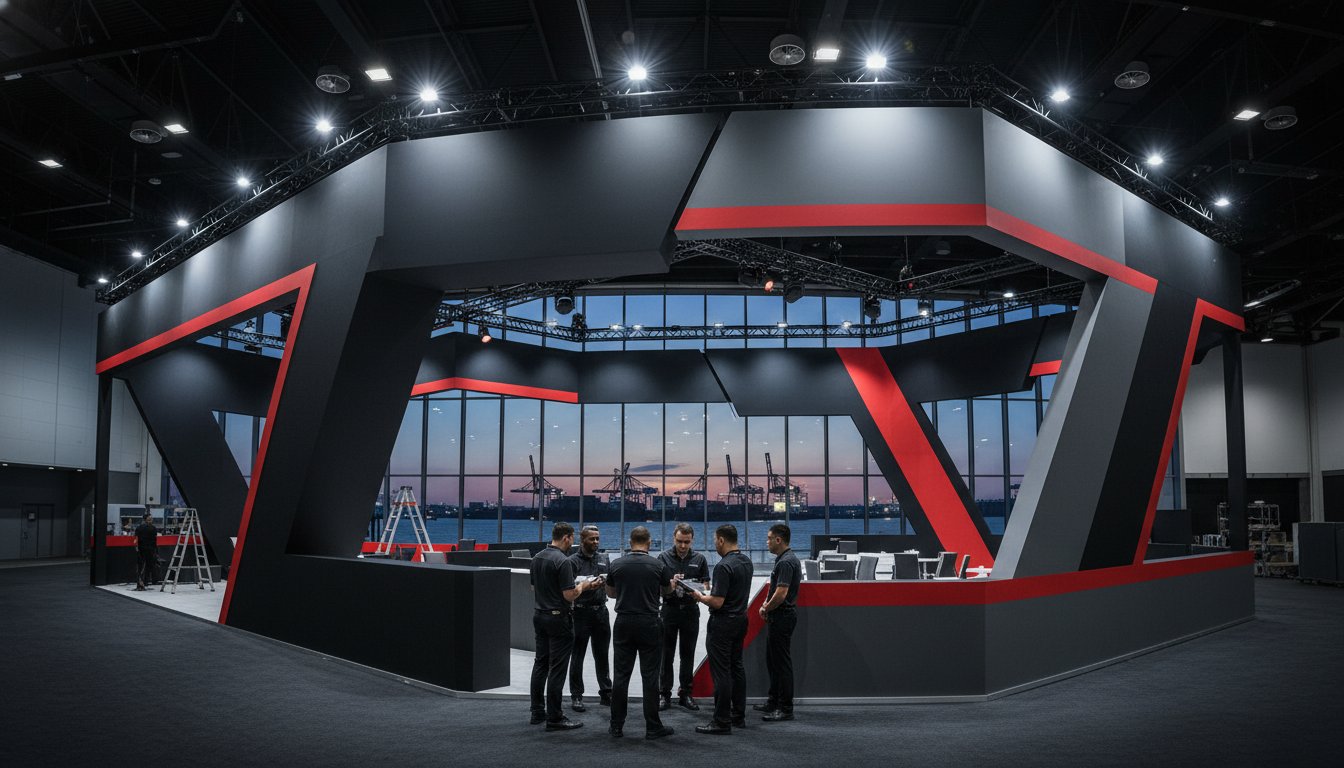
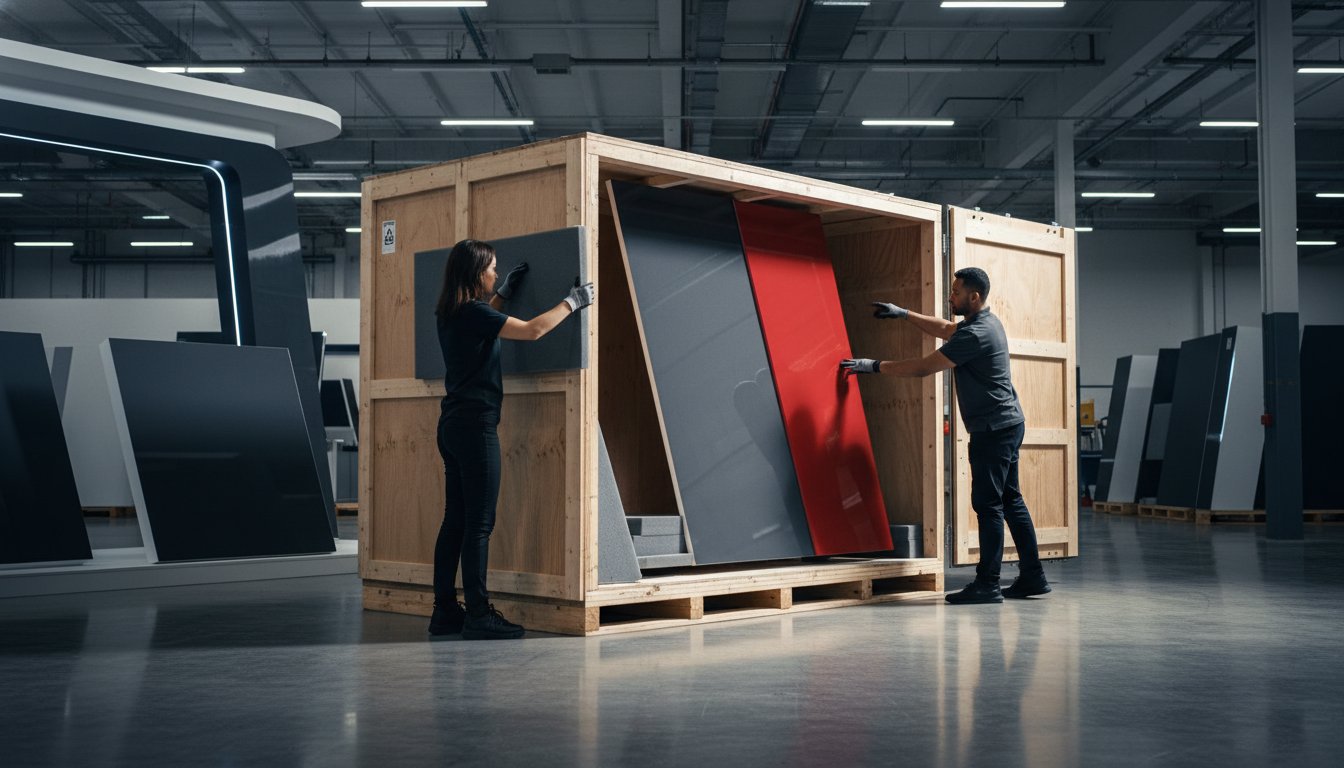
Damage prevention is a design choice, not just a logistics task. Resilient stands are engineered for the shipping crate as much as the show floor. With shipping costs accounting for roughly 9% of your total exhibit budget in 2026, the financial stakes of avoiding trade show shipping damage have never been higher. You likely already feel the stress of watching your high-value assets pass through multiple unknown handlers. It's a common pain to arrive at a venue like the Javits Center only to face expensive, last-minute repairs on your custom stand or modular booth.
We are here to simplify these complex logistics. This guide provides an expert design framework and a definitive checklist to ensure a zero-damage arrival for every show. You'll learn how to implement a repeatable packing process that lowers insurance premiums and protects your investment from the warehouse to the loading dock. We will preview the specific crating standards, updated 2026 maritime regulations, and documentation strategies that eliminate the risk of denied insurance claims and keep your exhibit schedule on track.
Key Takeaways
- Learn why damage prevention begins at the design phase by selecting resilient materials and utilizing modular stand systems to reduce your shipping footprint.
- Master the "No-Stack" rule and understand when to prioritize custom crating over palletizing for avoiding trade show shipping damage to delicate booth assets.
- Identify hidden risks in the logistics chain of custody, specifically during material handling and drayage at major international convention centers.
- Implement a repeatable internal inspection protocol and multi-layer padding strategy to ensure every component remains secure from the warehouse to the show floor.
- Discover how an end-to-end management approach simplifies global logistics by combining local fabrication expertise with dedicated freight oversight.
Why Trade Show Shipping Damage Happens (and the Real Cost)
Shipping damage refers to any physical impairment, structural compromise, or aesthetic degradation of exhibit assets occurring during transit from the point of origin to the final booth location. It is a persistent threat that can derail your entire event strategy. Shipping accounts for roughly 9% of a total exhibit budget, with average costs ranging between $2,000 and $5,000 per show as of 2025. However, the true cost of failing at avoiding trade show shipping damage extends far beyond the initial freight bill.
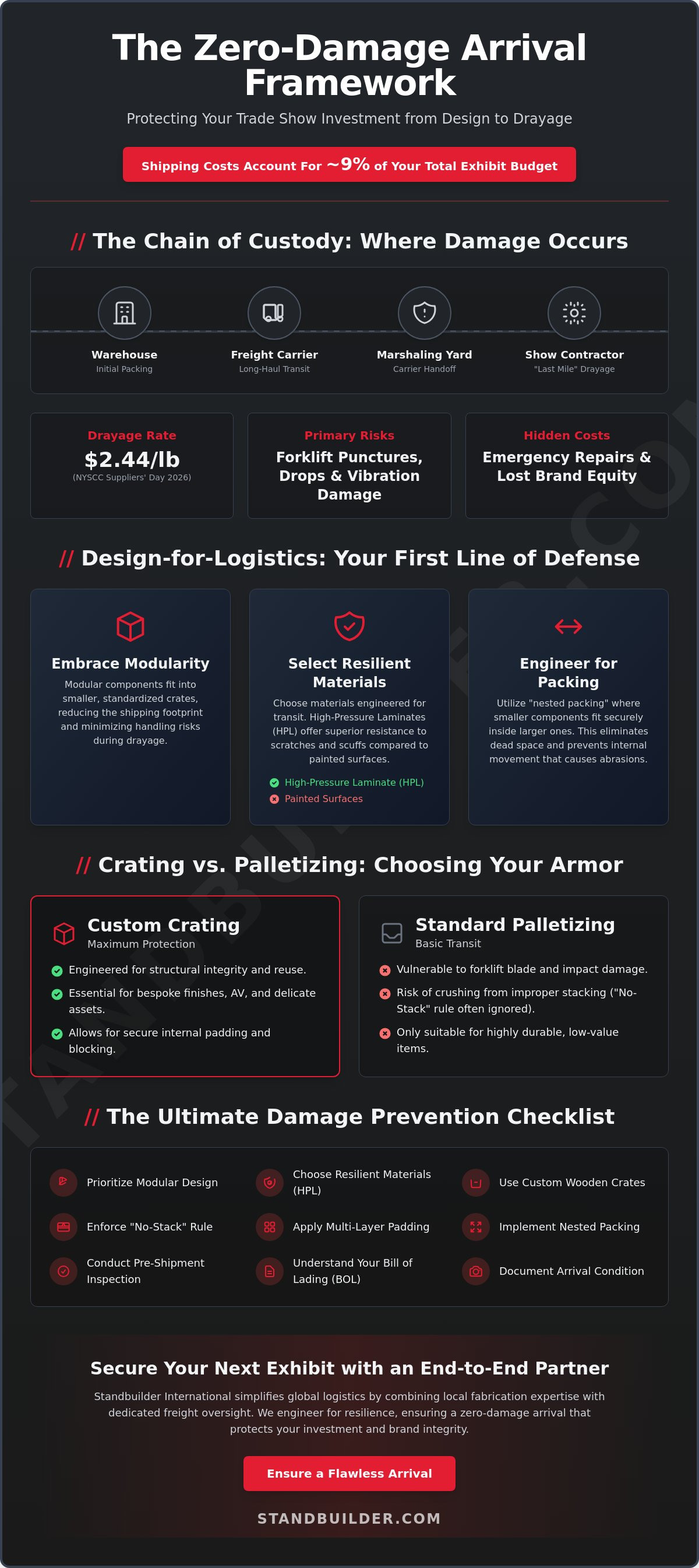
The "Chain of Custody" is the primary culprit. Your crates don't simply travel from point A to point B. They are handled by forklift operators at your warehouse, long-haul truck drivers, and third-party logistics providers. Once they reach the venue, the official show contractor takes over. At the NYSCC Suppliers' Day 2026, for example, the drayage rate for material handling is $2.44 per pound. This fee covers the movement from the loading dock to your booth, but every touchpoint increases the risk of a forklift blade piercing a crate or a pallet being dropped. If your booth arrives damaged, you face hidden costs like emergency on-site labor surcharges and a significant loss in brand equity. A scuffed or broken stand tells 2026 attendees that your brand lacks attention to detail.
The Vulnerability of Custom Exhibition Stands
Bespoke finishes are particularly sensitive to the rigors of the road. While a standard trade show display might use durable plastics, high-end custom stands often feature painted surfaces or high-pressure laminates that scratch easily. Vibration damage is another silent killer during long-haul trucking. Constant micro-movements can loosen fasteners in AV equipment or cause hairline cracks in glass panels and backlit graphics. Most exhibitors underestimate their total costs by 20% because they don't factor in the fragility of these high-value components during the design phase.
The Logistics Gap: Carrier vs. Show Contractor
Responsibility shifts at the convention center marshaling yard. Your freight carrier's liability typically ends once the shipment is offloaded, which is where the drayage crew begins. This "last mile" is a common point of failure. You must understand your Bill of Lading (BOL) as a vital legal protection. It serves as proof of the condition in which the carrier received the goods. If you don't document damage immediately upon arrival at the booth, insurance claims are frequently denied due to improper packaging or lack of evidence regarding when the damage occurred. Clear documentation is your first line of defense in avoiding trade show shipping damage disputes.
Design-for-Logistics: Preventing Damage Before Fabrication
Prevention starts at the design phase. Most exhibitors treat shipping as a post-production task, but avoiding trade show shipping damage requires an engineering mindset from day one. When you invest in a custom exhibition stand design, modularity should be your priority. Modular components fit into smaller, standardized crates, which significantly reduces your shipping footprint. This smaller profile minimizes the risk of accidental forklift impacts during drayage at venues like the Javits Center, where handling costs are $2.44 per pound as of May 2026. Smaller crates are simply easier to handle and less likely to be tipped or crushed.
Material selection is equally critical for long-term asset protection. While painted surfaces offer a sleek look, they're prone to chipping and scuffing during long-haul transit. High-pressure laminates (HPL) provide a more resilient alternative that withstands the friction of shifting loads. Professional designers also utilize "nested packing" techniques, where smaller booth elements fit securely inside larger structural pieces. This strategy eliminates dead space and prevents internal movement that leads to surface abrasions. Organizations like the Experiential Designers and Producers Association highlight these best practices in EDPA's educational programs, which focus on streamlining the transition from design to the show floor.
Engineering the Perfect Shipping Crate
Don't rely on standard cardboard or plastic tubs for high-value assets. Custom-built wooden crates are the only way to ensure structural integrity. These crates feature internal jigging, which involves custom-cut braces that lock heavy components into a fixed position. For heavy machinery or large double-decker stand components, we integrate shock-absorbing bases and skid-mates. These features dampen the vibrations experienced during transit, protecting sensitive AV equipment and glass panels from structural fatigue. This level of engineering ensures your booth arrives ready for assembly without a single loose screw.
Durable Finishes for International Transit
Choosing the right textures can hide the inevitable minor wear of international travel. Matte or textured finishes are far more forgiving than high-gloss surfaces. We also recommend edge protection strategies, such as recessed channels for large graphic panels, to prevent corner damage during the unpacking process. Our team utilizes European engineering standards to build stands that survive multiple show cycles without requiring expensive on-site repairs. If you're planning your 2026 schedule, request a quote to see how we integrate logistics into our fabrication process.
Crating vs. Palletizing: Choosing the Right Protection Level
Deciding on a protection level is a critical step in avoiding trade show shipping damage. While cost is always a factor, your choice must reflect the fragility and value of your booth components. Standard pallets are often sufficient for bulk collateral, low-value furniture, or durable modular frames. However, for high-end trade show backdrops and custom fabrications, the "No-Stack" rule makes crates essential. You must also weigh the benefits of specialized trade show van lines against general Less-Than-Truckload (LTL) carriers. The primary risk of using general LTL carriers for custom exhibits is the high frequency of freight transfers at multiple terminals, which exponentially increases the likelihood of handling damage.
Specialized van lines offer air-ride suspension and pad-wrapping services that LTL carriers simply don't provide. Since shipping accounts for roughly 9% of a total exhibit budget, paying a premium for a dedicated van line can save you thousands in on-site repair costs. These carriers understand the nuances of convention center marshaling yards and are less likely to misplace or mishandle your crates during the critical move-in window.
Standard Pallets: Pros, Cons, and Risks
Pallets are a budget-friendly option for non-fragile items, but they leave your equipment exposed. Forklift incursions are the most frequent cause of damage when items aren't fully boxed. To mitigate this, use high-quality shrink-wrap to protect against dust and moisture during the 2026 show season. Always ensure your load is bottom-heavy to maintain a low center of gravity. Despite these precautions, pallets remain vulnerable to common shipping challenges like shifting loads in a crowded trailer. If you can't guarantee your pallet won't be stacked upon, don't use one for sensitive components.
Custom Crating: The Gold Standard for Global Brands
Custom crating is the benchmark for international brands that demand a zero-damage arrival. If you're moving materials between the US and Europe in 2026, your crates must be ISPM-15 compliant to clear customs without delay. Beyond protection, well-designed crates feature hinged doors and built-in ramps. These elements reduce manual handling during the installation and dismantle phase, further avoiding trade show shipping damage. Clear labeling is your final safeguard. Use "This Side Up" and "Do Not Stack" indicators to instruct handlers exactly how to manage your high-value booth assets.
The Ultimate Trade Show Shipping Damage Checklist
Execution is the final barrier between a successful exhibit and a logistical nightmare. While design sets the stage, your avoiding trade show shipping damage strategy relies on a disciplined, chronological checklist. This protocol ensures that every high-value asset, from bespoke cabinetry to AV rental equipment, arrives in the same condition it left your facility. Rushed packing is the primary cause of transit failure. By following a standardized process, you eliminate the variables that lead to costly on-site repairs.
Phase 1: Secure Packing Protocols
Start with a multi-layer protection strategy. Use heavy-duty corner protectors on all structural panels and wrap graphics in non-abrasive foam to prevent surface scuffs. Electronics require double-boxing with at least two inches of cushioning between the inner and outer containers. Secure all cables and small hardware in dedicated, labeled kits rather than tossing them into open crates. Before you seal any container, take high-resolution photos of the internal packing. This photographic record provides undeniable proof of proper packaging if you need to contest an insurance claim later.
Phase 2: Documentation and Carrier Management
Your paperwork must be as robust as your crates. Verify that your Bill of Lading (BOL) matches the piece count exactly before the driver leaves your dock. For major events like the NYSCC Suppliers' Day 2026, advance shipments must arrive at the warehouse by 4:00 pm on May 8. Missing these windows often results in forced, last-minute freight handling that bypasses standard safety protocols. Affix impact indicators, such as ShockWatch labels, to the exterior of high-value crates. These devices provide a visual warning to handlers and record if a crate has been dropped or tilted beyond safe limits.
Phase 3: Post-Show Dismantle (The Danger Zone)
The return journey is when most exhibitors let their guard down. Move-out at the NYSCC Suppliers' Day begins at 4:01 pm on May 20, 2026, and the pressure to clear the floor is intense. You must supervise your installation and dismantle (I&D) crew to ensure every component is returned to its original internal jig. Rushed packing during the breakdown is a leading cause of hardware loss and structural scratches. Remove all old shipping labels to prevent "ghost shipments" where your crates end up at a previous venue. Finally, perform a full inventory check against your master packing list before the crates are loaded onto the truck. If you want to simplify this entire process, request five free quotes from our network of logistics experts who specialize in secure booth transport.
Standbuilder Logistics: Secure Global Booth Management
Managing international logistics requires more than just a freight carrier; it requires a partner that understands the structural nuances of your exhibit. Standbuilder bridges the gap between fabrication and the show floor. By controlling both the build and the transport, we eliminate the communication failures that lead to transit mishaps. Our end-to-end management approach is designed for avoiding trade show shipping damage by ensuring that the experts who engineered your stand are the ones overseeing its packing and transport protocols. This integrated model removes the "Chain of Custody" risks that typically plague fragmented logistics chains.
Our Atlanta-Ratingen Partnership
We provide a seamless transit corridor between North American hubs like Atlanta and European business centers such as Ratingen. This partnership allows us to navigate local venue regulations and drayage nuances with precision. For international shipments, we actively manage compliance with new maritime regulations. Starting January 1, 2026, amendments to SOLAS and MARPOL set new standards for lifting appliances and mandatory reporting of lost containers. We handle these technical hurdles to prevent delays at customs. Our teams also provide on-site supervision during installation at major global venues, ensuring that local drayage crews handle your custom exhibition stands with the necessary care.
Strategic Storage and Maintenance
Your booth assets face risks even when they aren't in motion. We offer climate-controlled warehousing solutions that prevent material warping and structural degradation between 2026 events. With logistics costs expected to rise by 3-8% in 2026, strategic storage near major exhibition hubs reduces long-haul expenses and minimizes the time your crates spend in transit. Every booth returning from a show undergoes a rigorous "Check and Repair" service. We identify and fix minor scuffs, structural fatigue, or hardware issues immediately. This proactive maintenance ensures your modular stand systems are ready for their next appearance without the need for emergency on-site fixes.
Ready for the 2026 show season? Our platform simplifies the procurement process by connecting you with a vetted contractor network. You can contact our logistics experts for a free quote and receive up to five competitive proposals tailored to your specific show schedule. This transparent, no-obligation process allows you to compare quality and logistics capabilities side-by-side. Focus on your event goals and let us handle the complexities of secure global booth management.
Secure Your 2026 Exhibition Success
Success on the trade show floor depends on what happens behind the scenes. By prioritizing a logistics-first engineering approach, you move beyond reacting to transit issues and start preventing them. Avoiding trade show shipping damage is possible when you implement the rigorous crating standards and documentation protocols we've discussed. Whether it's choosing high-pressure laminates or managing the critical move-out window at the Javits Center, every decision impacts your bottom line. Protective design and disciplined packing aren't just suggestions; they're essential business strategies for 2026.
Standbuilder simplifies this complex process through our strategic partnership with CBS Neospace in Germany. We provide full-service project management that includes international freight and custom fabrication designed specifically for the rigors of the road. Don't leave your brand equity to chance with unknown third-party handlers. Our global network ensures your booth receives the same care in Ratingen as it does in Atlanta. We act as your expert facilitator, bridging the gap between design and delivery to provide a seamless marketplace experience.
Take the first step toward a hassle-free event season. Request a logistics-ready booth design quote from Standbuilder today. We're ready to help you arrive at every show with confidence and zero damage. Your next stand should be as resilient as your brand.
Frequently Asked Questions
What is the most common cause of trade show shipping damage?
Improper internal packing and excessive handling are the primary culprits. While shipping accounts for 9% of an average exhibit budget, many exhibitors fail to account for the "vibration damage" that occurs during long-haul trucking. Using standard pallets for delicate items instead of custom crates often leads to structural failure when crates are transferred between multiple carriers and drayage crews.
How do I file an insurance claim for damaged trade show booth parts?
Document the damage on the Bill of Lading (BOL) immediately before the freight carrier or drayage crew leaves your booth. Take high-resolution photos of the exterior crate damage and the affected internal assets. Most 2026 insurance providers, such as ACT Insurance with per-event coverage starting at $49, will deny claims if you cannot prove the damage occurred during transit rather than during your own assembly process.
Should I use the official show carrier or my own logistics provider?
Use the official show carrier if your priority is simplified drayage billing and priority unloading at the venue. However, independent trade show van lines often provide superior air-ride suspension and pad-wrapping services for custom exhibition stands. Choosing a dedicated provider can offer more personalized oversight, which is a key strategy for avoiding trade show shipping damage during the complex "last mile" of delivery.
What is drayage, and why does damage often happen during this phase?
Drayage is the mandatory movement of your freight from the convention center loading dock to your specific booth space. At the NYSCC Suppliers' Day 2026, this service is billed at $2.44 per pound. Damage occurs during this phase because of the high-volume, high-speed environment where forklift operators must move thousands of pieces of freight within a very narrow move-in window, often leading to accidental impacts.
How can I protect my large-scale graphics from being scratched in transit?
Wrap all rigid panels in non-abrasive foam and use heavy-duty plastic corner protectors to prevent edge crushing. For fabric graphics, avoid folding them tightly to prevent permanent creasing; instead, roll them onto cardboard tubes. Integrating recessed channels into your shipping crates ensures that graphic surfaces never touch other booth components, which is the most effective method for avoiding trade show shipping damage to your branding.
What are ISPM-15 requirements for shipping my booth to Europe?
ISPM-15 regulations require all wood packaging materials thicker than 6mm to be heat-treated or fumigated and stamped with an official certification mark. This prevents the international spread of timber pests. If you ship a booth from the US to a 2026 event in Germany or the UK without this stamp, customs officials will likely impound your shipment, leading to missed show dates and potential fines.
Is it better to rent or buy a booth if I'm worried about shipping damage?
Renting is often the safer choice for exhibitors who want to eliminate the financial risk of asset degradation. When you utilize furniture and AV rental services, the provider manages the logistics and maintains the inventory. If you own a custom stand, you're responsible for 100% of the repair costs. For brands attending only one or two international shows in 2026, renting locally significantly reduces logistics-related stress.
What should I do if my booth arrives damaged just hours before the show opens?
Contact the on-site exhibitor service desk immediately to hire emergency union labor for "triage" repairs. Most large venues have carpenters and painters on standby who can fix structural issues or scuffs for a fee. Always carry a "show kit" that includes matching touch-up paint, extra laminates, and high-strength adhesives. This allows you to handle minor aesthetic issues yourself before the 2026 show floor opens to attendees.