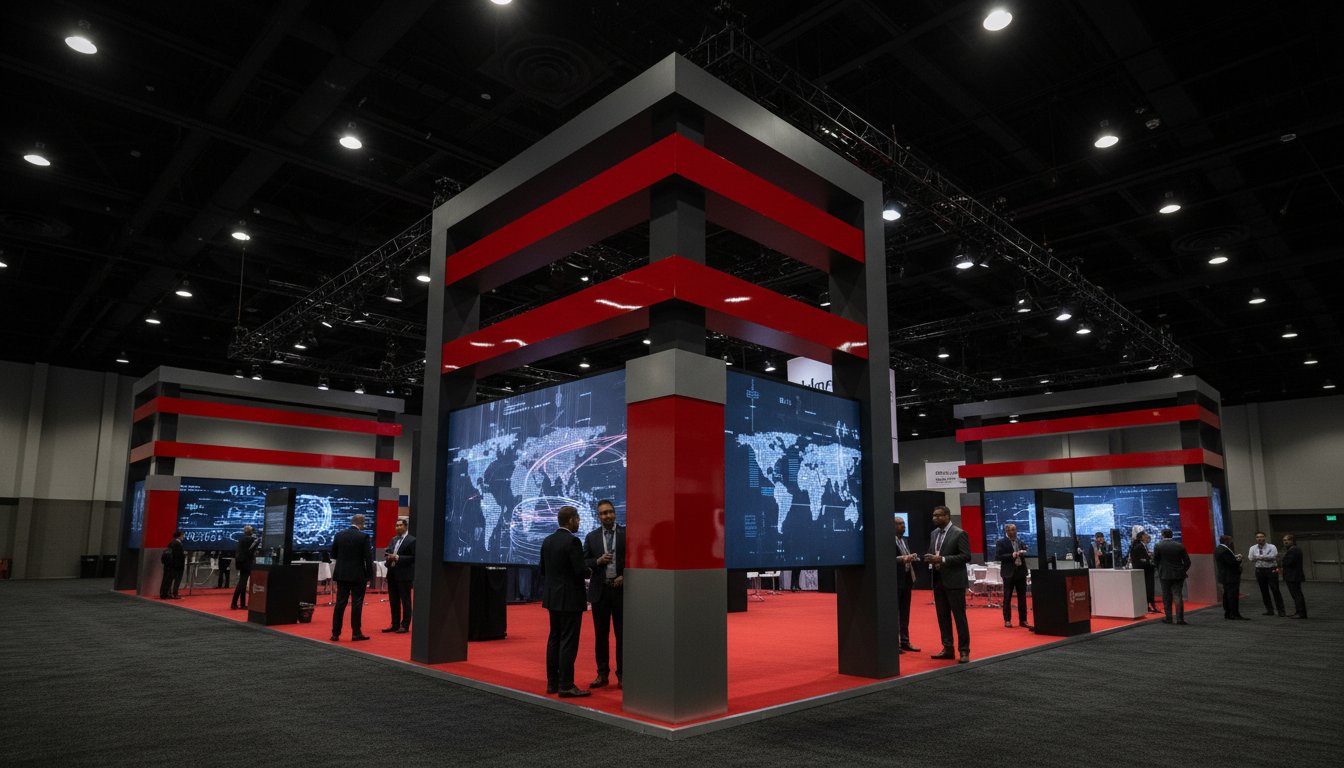
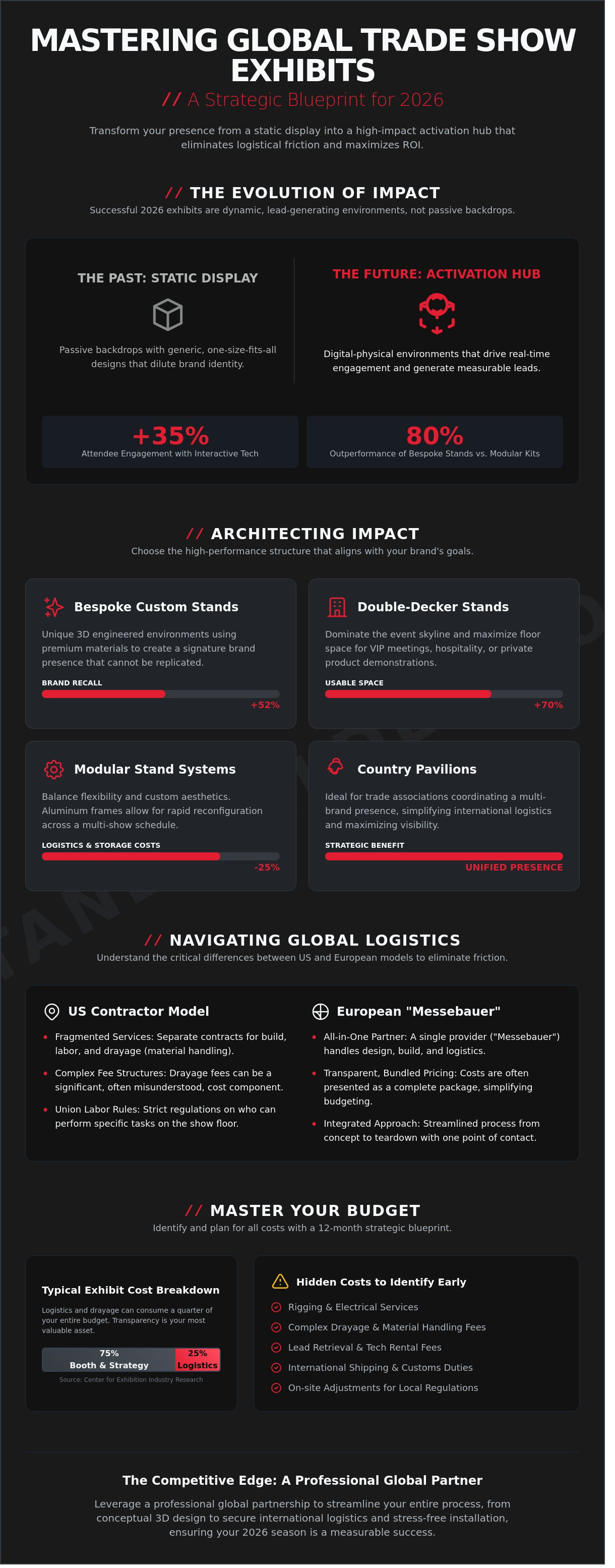
A single fire safety oversight in a European venue can stall your entire 2026 marketing launch, regardless of how much you spent on the booth. You already know that planning trade show exhibits on a global scale is a high-stakes balancing act where a minor shipping delay or a misunderstood drayage fee can wipe out your projected ROI. Logistics shouldn't be a gamble. It's frustrating to manage a vision for a bespoke stand while worrying if your local builder truly understands international brand consistency. According to the Center for Exhibition Industry Research, logistics and drayage often account for 25% of total show costs, making transparency your most valuable asset.
This guide helps you eliminate that uncertainty by mastering the complexities of global execution for the upcoming 2026 season. You'll learn how to secure transparent pricing, address the specific safety regulations across the US and Europe, and ensure a stress-free installation every time. We'll break down the strategic shift from simple modular booths to high-performance, lead-generating environments that deliver measurable results. Request the right data, compare your options, and find a reliable partner who simplifies the procurement process from start to finish.
Key Takeaways
- Learn how to transform your presence from a static display into a high-impact digital-physical activation hub designed for 2026.
- Discover how to maximize brand identity and dominate the event skyline using bespoke engineering and high-performance trade show exhibits.
- Navigate the critical differences between US contractor models and European "Messebauer" standards to eliminate international logistical friction.
- Master your budget with a 12-month strategic blueprint that identifies hidden costs like rigging and lead retrieval fees early.
- Leverage professional global partnerships to streamline your entire process from conceptual 3D design to secure international logistics.
The Evolution of Trade Show Exhibits: Defining Impact in 2026
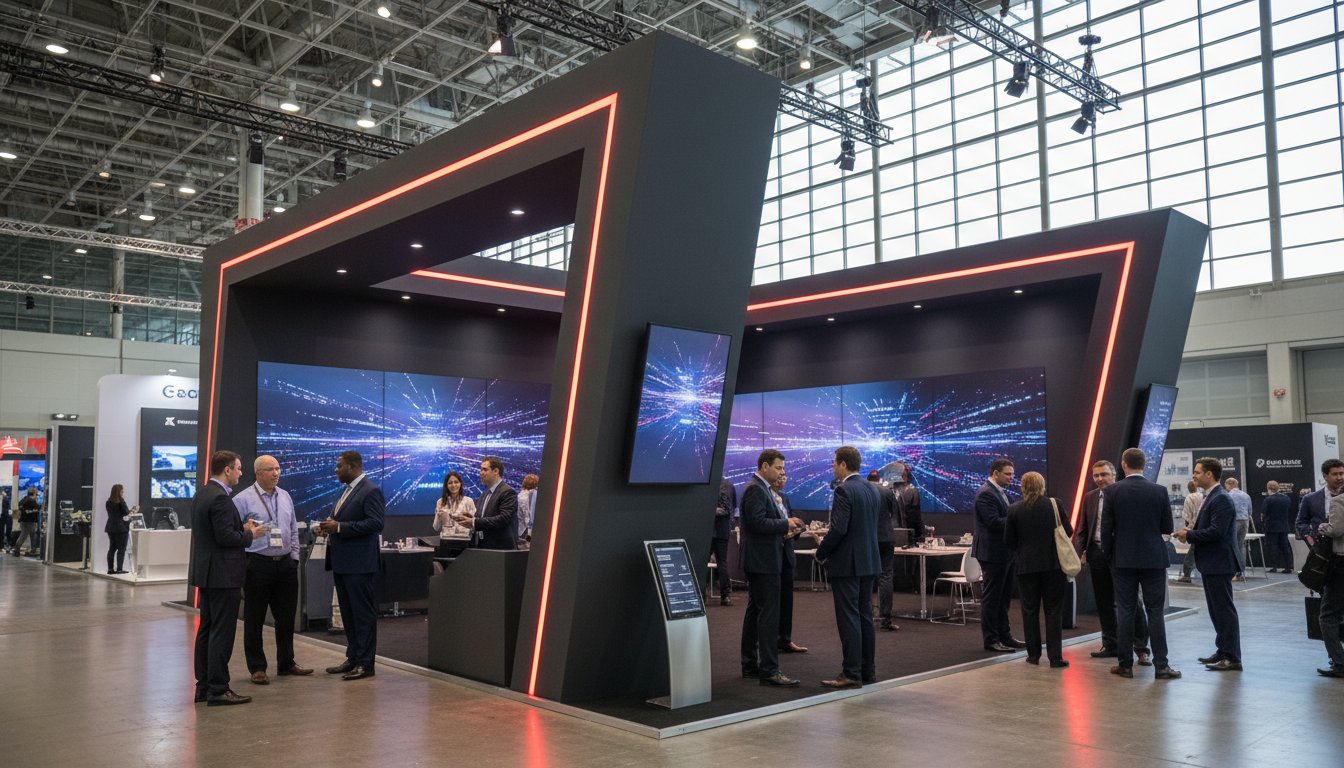
The definition of trade show exhibits has shifted from passive backdrops to active brand environments. By 2026, successful exhibitors treat their space as a digital-physical activation hub rather than a static display. Data from the Center for Exhibition Industry Research indicates that attendee engagement increases by 35% when booths incorporate interactive technology. To understand the foundation of these events, one should first define what is a trade show in the context of modern commerce. It's a high-stakes marketplace where bespoke stands now outperform modular kits in 80% of international trade fairs. Emotional storytelling drives these environments, turning a standard B2B meeting into a memorable brand experience that lingers long after the hall closes.
The transition toward activation hubs means every square meter must facilitate a specific user journey. Instead of just showing products, brands use their trade show exhibits to solve problems in real-time through live demonstrations and augmented reality overlays. This shift requires a move away from generic aesthetics toward high-concept environments that reflect a company's specific culture and technological edge. Find a partner who understands this shift to ensure your investment generates measurable leads.
The Core Components of a Modern Exhibit
Modern builds rely on hybrid structural architecture. This combines tension fabric for lightweight height with wood and metal for premium, tactile finishes. Sensory engagement is no longer optional. Designers use directional acoustics and haptic feedback to isolate the brand experience from the noisy hall. Lighting has evolved into a programmed element that changes based on the time of day or the number of visitors in the booth. Maintaining brand consistency across international borders requires a contractor network that understands local regulations in cities like Berlin, Dubai, or Las Vegas. Request five free quotes from local experts to ensure your build meets technical standards in every territory while maintaining a unified global identity.
Why One-Size-Fits-All Solutions Fail
Portable displays often fail at high-stakes industry events. They lack the presence needed to command authority in 10,000 square meter exhibition halls where competitors invest heavily in custom architecture. Generic designs dilute your brand identity and fail to optimize specific venue footprints. A custom build ensures every square inch of your floor plan serves a functional purpose, whether it's a private sound-proof meeting room or a high-traffic lead capture station. Generic kits also struggle with the logistics of international shipping and local electrical codes, often leading to unexpected onsite costs. Compare options carefully to avoid the pitfalls of low-quality modular booths that don't scale for major international shows.
Architecting Impact: Types of High-Performance Trade Show Displays
Selecting the right structure for your trade show exhibits determines your operational efficiency and attendee engagement levels. High-performance displays aren't just backdrops; they're engineered tools designed to drive specific business outcomes. Your choice of architecture impacts everything from drayage costs to the quality of your lead generation.
- Bespoke Custom Stands: These use 3D engineering to translate brand values into physical environments. Unique materials and custom lighting increase brand recall by up to 52% according to industry surveys. They're best for brands requiring a signature presence that can't be replicated with standard components.
- Double-Decker Stands: These structures dominate the hall skyline. By adding a second story, you gain roughly 70% more usable space for private VIP meetings or hospitality without increasing your floor rent.
- Modular Stand Systems: These balance flexibility with a custom-look aesthetic. Aluminum frames allow for rapid reconfiguration, which reduces logistics and storage costs by 25% over a multi-show schedule.
- Country Pavilions: Trade associations use these to coordinate a multi-brand presence. This strategy simplifies international trade show logistics for companies entering foreign markets under a unified national banner.
Custom vs. Modular: Making the Strategic Choice
Analyze your ROI by calculating show frequency. If you exhibit at three or more events annually, purchasing a permanent custom asset is often more economical than repeated rentals. For companies testing new markets, a rental hybrid minimizes financial risk. The "custom-modular" middle ground serves multi-city tours perfectly. Use a standardized frame with interchangeable high-impact graphics to adapt to varying hall dimensions. Compare five free quotes to see which configuration fits your annual event calendar and budget constraints.
Maximizing Vertical Space and Floor Plan
Footprints of 20x20 feet or larger provide enough room to create distinct "zones." Designate one area for high-energy product demos and a separate, quieter zone for closing deals. Island booths allow 360-degree traffic flow, while inline booths require a clear, inviting entry point to prevent bottlenecks. Integrate AV and tech into the wall structures to keep the floor clear. Hanging signs or LED walls at a 12-foot height ensures your brand is visible from the hall entrance, maximizing your trade show exhibits' reach without cluttering the physical design. This vertical strategy attracts eyes from across the floor while preserving valuable square footage for face-to-face interaction.
Navigating Global Exhibition Logistics: US vs. International Standards
Success in international trade show exhibits depends on understanding regional operational models. In the United States, the contractor model dominates. Exhibitors hire an exhibit house for design and a General Service Contractor (GSC) for on-site services. This often leads to drayage fees, where you pay for material handling based on weight. In contrast, the European Messebauer model offers a full-service approach. One partner manages everything from structural design to the final bolt on the show floor. This reduces vendor friction and simplifies the billing process.
Compliance varies significantly between regions. US venues require NFPA 701 fire certifications for fabrics. European venues demand B1 or M1 ratings. Failing to provide these certificates can stop a build 24 hours before the show opens. Strategic partnerships between hubs like Atlanta and German cities like Ratingen help bridge this gap. This connection allows for local asset management, ensuring your booth meets local safety codes without last-minute modifications. It also eliminates transatlantic friction by keeping hardware closer to the venue.
The Logistics of International Shipping
Moving trade show exhibits across oceans requires precise documentation. Use an ATA Carnet to bypass VAT and import duties for temporary exports. This document acts as a passport for your goods, simplifying customs clearance in over 80 countries. US-based small businesses should explore the State Trade Expansion Program (STEP) for financial assistance with these export activities. To mitigate just-in-time arrival risks, store your primary assets in regional warehouses. Keeping a set of booth hardware in Atlanta for North American shows and another in Ratingen for European events reduces shipping costs and prevents customs delays.
On-site Installation and Dismantle (I&D)
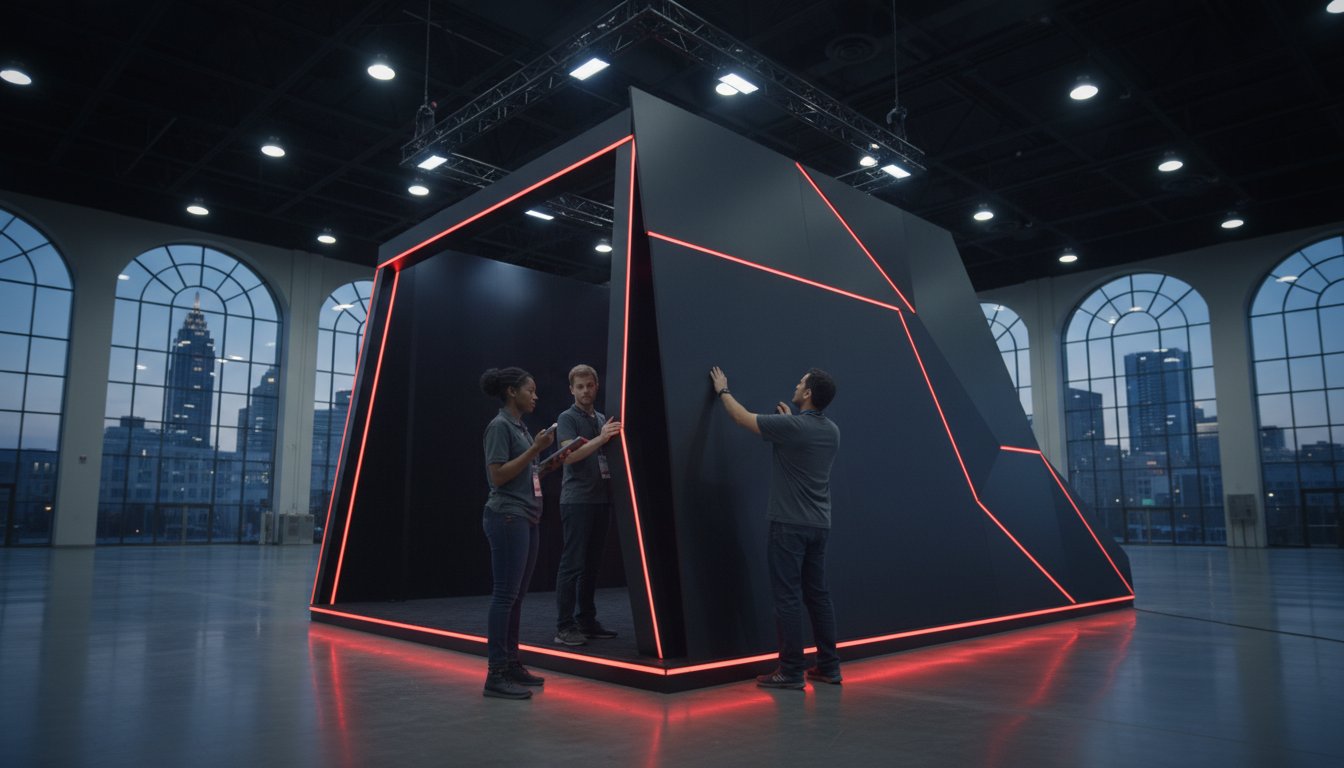
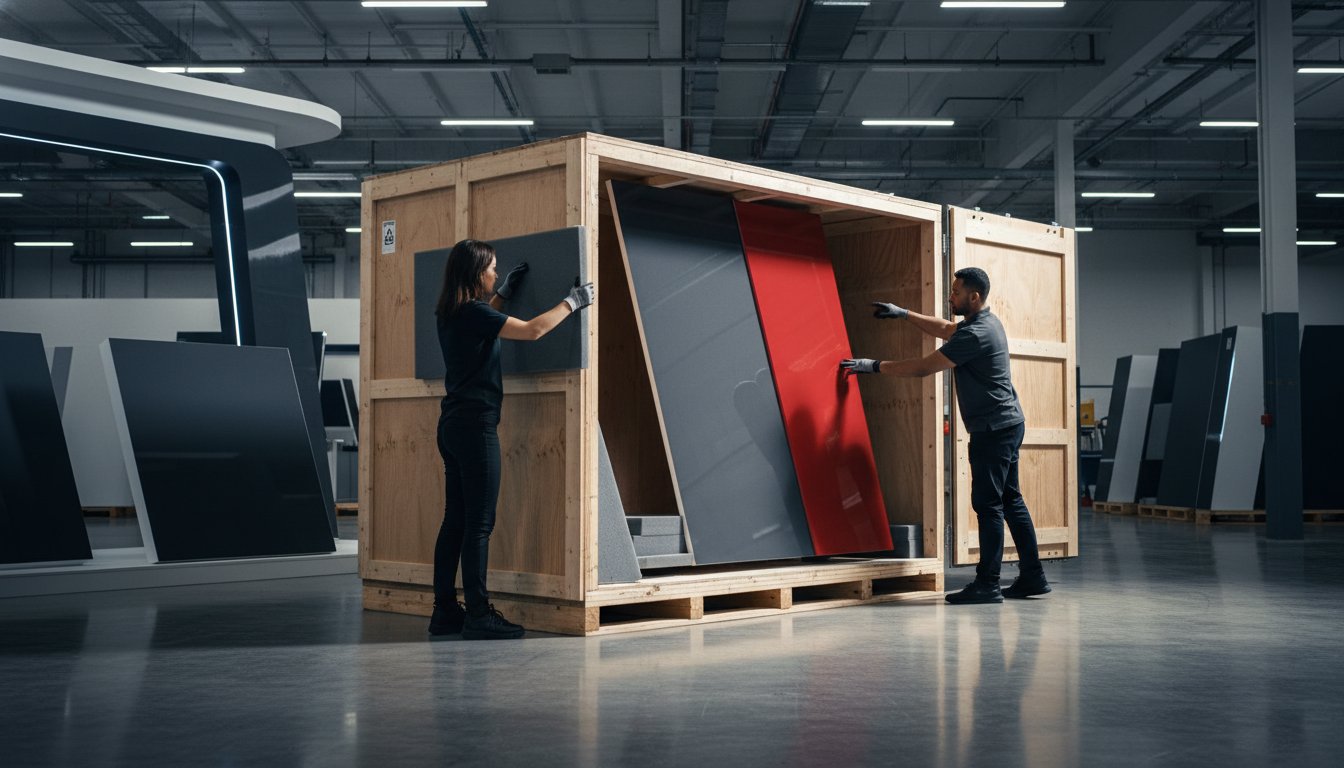
Professional labor crews offer better value than general venue services. These specialists understand the technical requirements of bespoke stands and modular systems. They ensure the physical build matches the 3D design exactly. Technical supervisors oversee the process to prevent structural errors that lead to safety violations. Once the event ends, your logistics plan must address the post-show phase. You can choose to store assets for future use, refurbish damaged panels, or opt for sustainable disposal. Modular booths are increasingly popular because they allow for easy refurbishing, which extends the lifecycle of your investment across multiple show cycles. This approach reduces waste and keeps your presence consistent across global markets.
The Strategic Blueprint: Planning Your Exhibit Budget and Timeline
Securing high-impact trade show exhibits requires a disciplined 12-month countdown. You should define your primary objectives and set a preliminary budget exactly one year before the show opens. By the nine-month mark, you must issue your Request for Proposal (RFP) to ensure enough time for design iterations. Finalize your stand builder by month seven to avoid rush fees, which often add 10% to 15% to production costs. The final three months should focus on logistics, staff training, and show service orders.
Budgeting for 2026 requires accounting for a 3.5% projected annual increase in material costs. Beyond the build, hidden fees frequently disrupt financial planning. Show site services often consume 15% to 20% of your total spend. Budget specifically for:
- Electrical drops: These are priced per outlet or kilowatt.
- Rigging: Hanging signs require specialized labor and equipment rental.
- Lead retrieval: Software licenses for scanning attendee badges can cost between $500 and $1,200 per event.
The RFP Process for Custom Stands
A precise brief prevents expensive mid-project changes. Include your target audience personas, specific lead generation goals, and technical requirements like LED walls or interactive kiosks. When you evaluate 3D designs, look past the visual rendering. Ask about technical viability, such as load-bearing points for monitors and cable management. Compare quotes by scrutinizing labor rates and freight estimates; ensure every contractor uses the same shipping weight and distance to keep comparisons fair.
Sustainable Exhibiting in 2026
Sustainability is no longer optional for trade show exhibits. In 2026, focus on a circular economy approach by selecting recycled aluminum frames and PVC-free tension fabric graphics. These materials reduce environmental impact and often weigh less, which lowers shipping costs. To cut your carbon footprint further, source labor and materials through local contractor networks near the venue. The "Rent and Re-graphic" model is an efficient strategy for 2026. It allows you to rent a high-quality modular structure and only pay for custom graphics, reducing material waste by up to 40% compared to traditional bespoke builds.
Ready to streamline your procurement process and find the right partner for your next event? Request five free quotes from expert stand builders today and compare the best options for your budget.
Executing Excellence: Why Standbuilder International is Your Competitive Edge
Maximizing your budget requires more than just smart math. It demands a partner who understands the friction of international logistics. Standbuilder International bridges the gap between North America and Europe through our strategic Atlanta-Ratingen axis. This dual-hub system allows us to manufacture and manage trade show exhibits with local precision on both continents. We eliminate the high costs of trans-Atlantic shipping and customs delays by building closer to your venue. Our team handles everything from the initial RFP to the final dismantle, ensuring your brand maintains a premium finish without the logistical headaches that often drain marketing budgets.
Our results-oriented approach to project management means we don't just build walls; we facilitate brand experiences. We provide end-to-end management that includes secure logistics and on-site support. This ensures that the materials arriving at your booth space are exactly what you approved in the design phase. Whether you're navigating the complexities of a venue in Las Vegas or a convention center in Frankfurt, our local expertise ensures compliance with all regional fire and safety regulations, saving you from last-minute fines or expensive modifications.
Our Design and Fabrication Philosophy
Precision engineering starts in our dedicated workshops. Our Atlanta and Germany facilities use high-grade materials to ensure every bespoke stand meets rigorous safety and aesthetic standards. We utilize advanced 3D design software to create a digital twin of your booth. This allows you to visualize the floor flow and brand impact before any fabrication begins. It's a data-driven way to secure your ROI early in the planning process. By seeing the layout in a virtual environment, you can make adjustments to high-traffic areas without spending a dime on physical alterations.
Our track record includes successful deliveries at major global events like Bauma 2022 in Munich, MWC Barcelona 2023, and the NAB Show in Las Vegas. These high-stakes environments demand the reliability that our integrated design-build process provides. We focus on:
- Material Quality: Using sustainable, premium finishes that reflect brand authority.
- Modular Flexibility: Designing trade show exhibits that can scale across different floor plan sizes.
- Technical Integration: Seamlessly incorporating AV and interactive elements into the structure.
Start Your Global Exhibit Journey
Success on the international stage requires transparency and speed. We've streamlined the procurement process so you can focus on your marketing goals rather than contractor management. Request your first concept and quote today to see how we simplify complex builds. The Standbuilder International promise is built on reliability and global reach. We provide a clear path to receiving five competitive quotes, giving you the power to compare and choose the best fit for your specific needs. This transparency ensures you never overpay for local services. Stop worrying about the logistics of distant venues and start planning your engagement strategy. Request a consultation for your next international show to lock in your project timeline and secure a competitive advantage on the show floor.
Master Your Global Event Strategy for 2026
Winning on the international stage requires more than a visual presence. It demands a rigorous fusion of high-performance design and technical logistics. Successful trade show exhibits for the 2026 season must balance bold aesthetics with strict adherence to regional standards. Whether you're navigating the nuances of US fire codes or European modular requirements, your strategy needs to be as adaptable as it is ambitious.
Standbuilder serves as your expert facilitator in this high-stakes environment. Headquartered in Atlanta, we leverage a robust global logistics network and a strategic partnership with CBS Neospace GmbH to streamline your procurement process. We apply over 25 years of international exhibition expertise to eliminate the friction of cross-border execution. Our team focuses on the technical details so you can focus on your leads. It's time to move from planning to performance with a partner that understands the global marketplace.
Get a Custom Quote and 3D Design for Your 2026 Trade Show Exhibit
Your brand deserves a stage that reflects its potential. We're ready to help you build it.
Frequently Asked Questions
What is the average cost of custom trade show exhibits in 2026?
Custom trade show exhibits in 2026 are projected to cost between $170 and $300 per square foot based on current industry inflation data. This price range covers professional design, fabrication, and basic graphic production. High-end bespoke stands featuring integrated LED walls or complex architectural elements often exceed $450 per square foot. Use our platform to request five free quotes and compare current market rates from top-tier builders in your specific region.
How far in advance should I start designing my trade show booth?
You should start the design process at least 6 to 9 months before your show date. Large bespoke projects or double-decker structures often require a 12-month lead time for engineering and permit approvals. Starting early ensures you secure your preferred contractor and avoid 20% rush fees that many builders apply to last-minute projects. Request quotes today to lock in your production slot and maintain your budget.
What is the difference between a custom booth and a modular stand?
A custom booth is a one-of-a-kind structure built from scratch, while a modular stand uses pre-engineered frames and connectors. Custom builds offer 100% design flexibility but require higher storage and shipping budgets. Modular systems are 30% lighter on average and allow for easy reconfiguration across different floor plans. Both options help you create impactful trade show exhibits that attract high-quality leads and maximize your brand presence.
Do you provide trade show booth installation and dismantling in Europe?
Standbuilder provides access to a network of certified contractors who handle installation and dismantling across all major European venues. Our partners operate directly in hubs like Paris, Milan, and Barcelona to eliminate expensive travel costs for labor crews. You'll receive five free quotes from local experts who understand the specific technical regulations of your chosen venue. This local approach typically reduces onsite labor costs by approximately 25%.
Can Standbuilder manage logistics for a US company exhibiting in Germany?
Standbuilder manages the entire logistics chain for US companies exhibiting in German cities like Frankfurt, Cologne, and Munich. We connect you with local German builders who construct your stand on-site. This eliminates international shipping fees and complex customs delays. This strategy saves US exhibitors an average of $5,000 to $15,000 in trans-Atlantic freight costs alone. Compare five qualified German contractors through our platform to simplify your international expansion.
What are the fire safety regulations for exhibition stands in the EU vs. the US?
European venues strictly enforce the EN 13501-1 fire safety standard, while US shows typically follow NFPA 701 or ASTM E84 guidelines. In Germany, every material must meet the B1 flame retardant classification to pass inspection. US fire marshals often accept certificates that European inspectors won't recognize. Always request a valid fire certificate from your builder to avoid booth closure during the mandatory pre-show inspection. It's a critical step for safety.
Is it better to rent or buy a trade show exhibit for multiple shows?
Renting is the better financial choice if you attend fewer than three shows per year or require different booth sizes for each event. Buying becomes more cost-effective after the fourth use of the same configuration within a two-year period. Rental packages include I&D and storage, which can reduce your total event spend by 40% compared to full ownership. Evaluate your three-year event calendar before making a final purchase decision.
How can I make my 10x10 trade show booth look like a custom exhibit?
You can make a 10x10 booth look custom by integrating high-quality backlit fabric graphics and specialized raised flooring. Using 3D backlit logos or custom-built rental furniture creates a premium feel without the high price of a full bespoke build. Request quotes for "rental-plus" options that combine modular frames with custom finishes. This approach gives your trade show exhibits a unique identity while staying within a modest 10x10 budget.