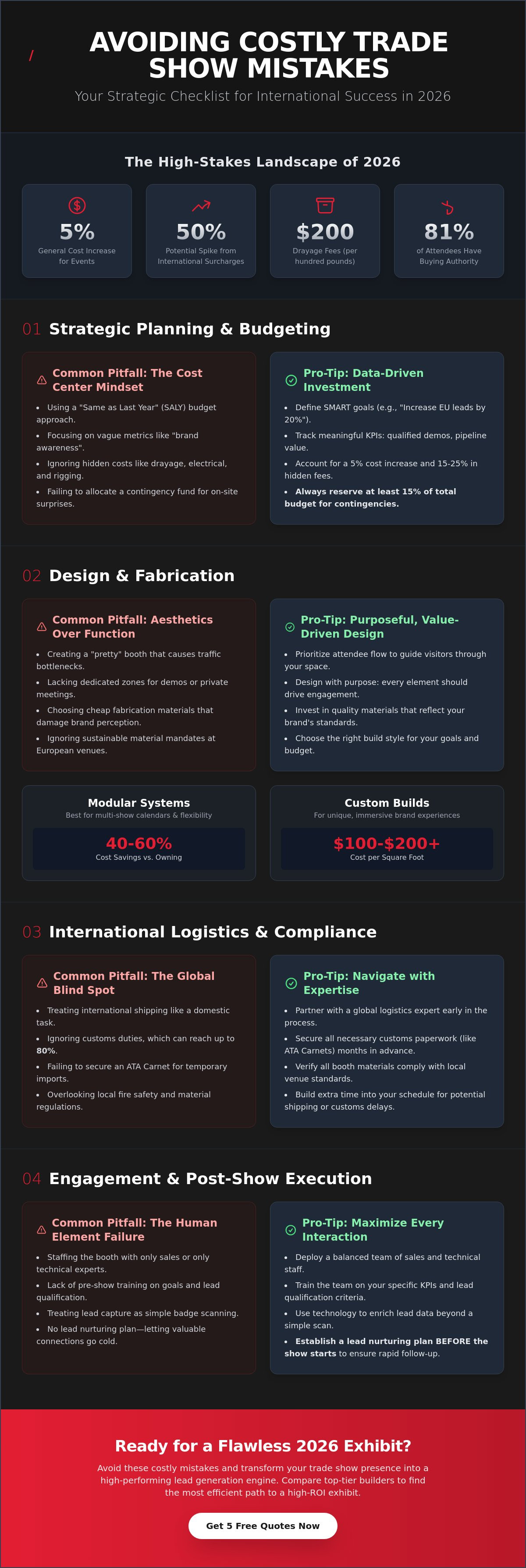
Did you know the average trade show ROI is $20.98 for every $1 spent, yet many brands see their budgets evaporate before the first lead is even scanned? In 2026, exhibiting at international venues requires more than just a creative design. It demands a strategy that accounts for a 5% general cost increase and international surcharges that can spike your budget by 50%. Most common trade show planning mistakes happen when exhibitors treat global logistics like local tasks, leading to technical compliance failures or unexpected drayage fees that range from $50 to $200 per hundred pounds.
You likely understand that a high-traffic booth doesn't always equal high-quality leads. It's frustrating to invest in a bespoke stand only to face shipping delays or customs duties that reach up to 80%. This guide will show you how to avoid these costly pitfalls and execute a flawless international presence. We'll provide a foolproof 2026 checklist to help you secure better lead quality, manage hidden costs, and ensure seamless execution from graphic production to furniture rental across our global network.
Key Takeaways
- Define success metrics beyond simple badge scans to transform your exhibit from a cost center into a high-performing lead-generation engine.
- Prioritize attendee flow and functionality in your stand design to ensure your layout actively drives engagement rather than just visual appeal.
- Navigate international compliance by securing ATA Carnets and adhering to local fire safety standards to avoid costly delays at global venues.
- Identify and avoid common trade show planning mistakes by deploying a balanced mix of sales and technical experts to your booth.
- Establish a lead-nurture plan before the event starts to bridge the gap between the show floor and your CRM for maximum post-show ROI.
Strategic Planning and Budgeting: Where ROI is Won or Lost
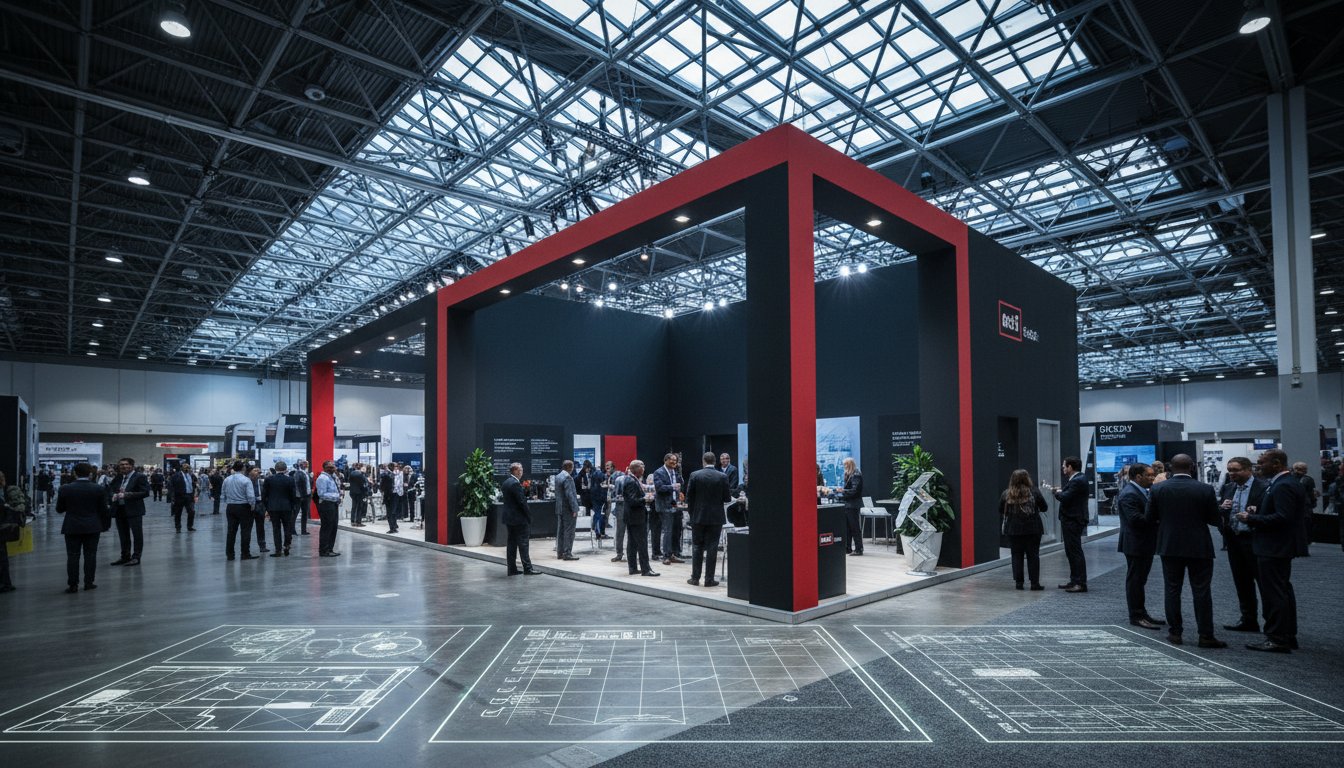
Planning for a 2026 trade show requires a shift from passive participation to aggressive, data-driven strategy. One of the most common trade show planning mistakes is viewing the event as a fixed expense rather than a lead-generation engine. Since 81% of attendees have buying authority, every square foot of your booth should be optimized for conversion. If you treat your presence as a "cost center," you'll likely stop at simple badge scans instead of tracking the metrics that actually impact your bottom line.
Treating the upcoming season with a "Same as Last Year" (SALY) mentality is a recipe for budget exhaustion. In 2026, exhibitors must account for a 5% general increase in event costs. Failing to define success metrics early means you won't know if your $100,000 investment was a win or a waste. You need to identify "hidden" costs before they appear on your final invoice. Expenses like drayage, which can range from $50 to $200 per hundred pounds, and electrical rigging often add an unexpected 15% to 25% to the total bill. Identify these variables during the RFP process to maintain control over your capital.
Defining SMART Goals for the 2026 Landscape
Move your focus from vague "brand awareness" to specific pipeline contribution targets. If your corporate growth strategy for 2026 demands a 20% increase in European market share, your booth KPIs must reflect that goal. Track the number of qualified demos or the total value of on-site contracts rather than foot traffic alone. A bespoke stand acts as a strategic physical asset that accelerates the sales cycle by providing a tailored environment designed specifically to hit lead-gen targets. Align every design choice with these hard numbers to ensure your team stays focused on high-value interactions.
The Realistic 2026 Trade Show Budget Framework
Successful budgeting requires a balance between custom exhibition stand design and logistical execution. Allocate your funds with precision; don't let shipping and drayage eat into your engagement tools. Always reserve at least 15% of your total budget for on-site contingencies, such as last-minute AV rental needs or technical adjustments. When choosing your build style, compare the long-term ROI of owning vs. renting. While modular stand systems offer a 40% to 60% cost saving for multi-show calendars, a custom double-decker stand might be necessary to stand out in high-competition markets like Las Vegas or Frankfurt. Request five free quotes through our platform to compare these options side-by-side and find the most efficient path to a high-ROI presence.
Design and Fabrication Pitfalls: Aesthetics vs. Functionality
Visual appeal draws a crowd, but functionality keeps them there. One of the most common trade show planning mistakes is prioritizing a "pretty" design over an effective attendee flow. A beautiful exhibit that creates a physical bottleneck effectively drives potential leads into the arms of your competitors. In high-traffic halls, the "cluttered booth" syndrome is a major ROI killer. Every element in your space must serve a purpose, whether it's a dedicated demo area or a semi-private meeting zone. If your stand feels like an obstacle course, you'll lose the 81% of attendees who possess buying authority before your staff can say hello.
Choosing "cheap" over "value" in fabrication materials is another trap that backfires on the show floor. Subpar materials reflect poorly on your brand perception, especially when compared to the high-end finishes of 2026 competitors. Beyond aesthetics, ignoring the industry shift toward sustainable, eco-friendly booth materials can lead to technical compliance failures. Many European venues now enforce strict waste reduction mandates. Review common trade show planning mistakes to see how failing to plan for these venue-specific regulations can result in on-site fines or forced booth modifications.
Bespoke vs. Modular: Making the Right Choice
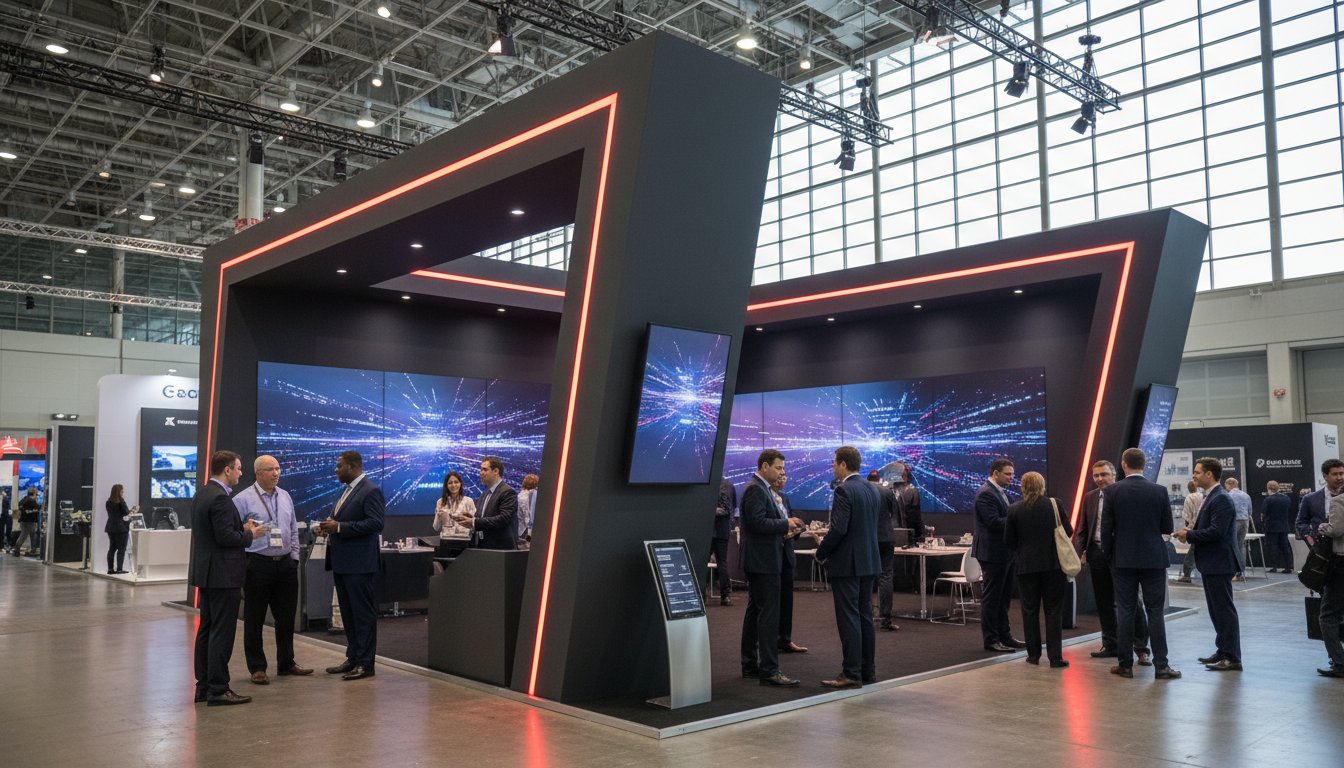
Investing in custom exhibition stand design is essential for brands needing a unique, immersive presence that modular systems can't replicate. While custom builds cost between $100 and $200+ per square foot, they offer the structural freedom to include double-decker stands, which are perfect for maximizing footprint in high-density halls. However, don't dismiss modular systems. They offer a 40-60% cost savings and are increasingly sophisticated. Modern modular booths, priced between $75 and $225 per square foot, allow for high-quality brand identity through interchangeable components. Compare five free quotes to see which build style aligns with your 2026 tour schedule.
Technical Fabrication and Material Selection
Fabrication quality is often the silent ambassador of your brand. High-resolution trade show backdrops and premium finishes signal reliability to prospective partners. Ensure your fabrication partner uses fire-retardant materials that meet global standards like the European B1 or the US NFPA 701. Using non-compliant materials can lead to an inspector shutting down your stand before the doors even open. Focus on quality over quantity; a clean, professional finish on a smaller footprint always outperforms a massive, poorly constructed pavilion.
International Logistics and Compliance: The Global Exhibitor’s Blind Spot
Crossing international borders adds layers of complexity that local exhibitors often overlook. One of the most common trade show planning mistakes is assuming that domestic safety and electrical standards apply globally. While your booth might meet US fire codes, European venues typically require B1 fire-retardant certification for all materials. Similarly, electrical systems in Asia or Europe operate on 230v, requiring different transformers and plugs than the 110v standard used in North America. Ignoring these technical nuances leads to "red tags" from venue inspectors, potentially shutting down your stand before the doors even open.
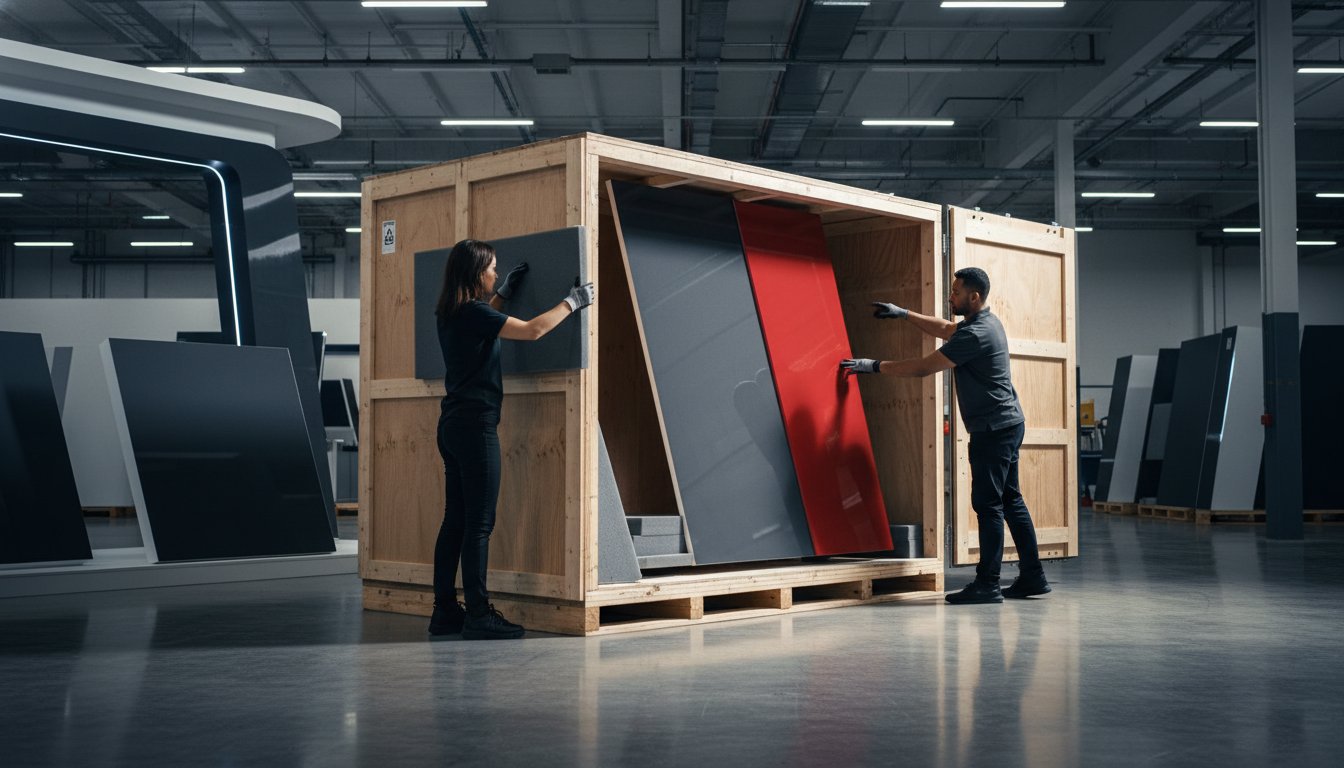
Failing to account for customs documentation is another major pitfall that drains ROI. You must secure an ATA Carnet when moving exhibits through any of the 87 participating countries to avoid import duties and taxes that range from 0% to 25%. Without this "passport for goods," your shipment can be held at the border for weeks. With logistics costs expected to increase by 3% to 8% in 2026, falling into the "last minute" trap is dangerous. International shipping and customs fees already range from $5,000 to $15,000; waiting until the final month to book freight can easily double these figures and jeopardize your entire presence.
Navigating the US-Germany Exhibition Axis
Exhibiting in Germany requires a different approach than in the US. You'll need to work with a "Messebauer," a specialized exhibition contractor who understands the specific rigging and height restrictions of German venues. For example, while US inline booths often have strict 8-foot height limits, European halls allow for much taller structures if they are structurally sound. Our Atlanta-Ratingen partnership simplifies these transatlantic logistics by providing local expertise on both continents. This ensures your design complies with local Messe regulations while maintaining your global brand identity across every city you visit.
Compliance, Safety, and On-site Technical Supervision
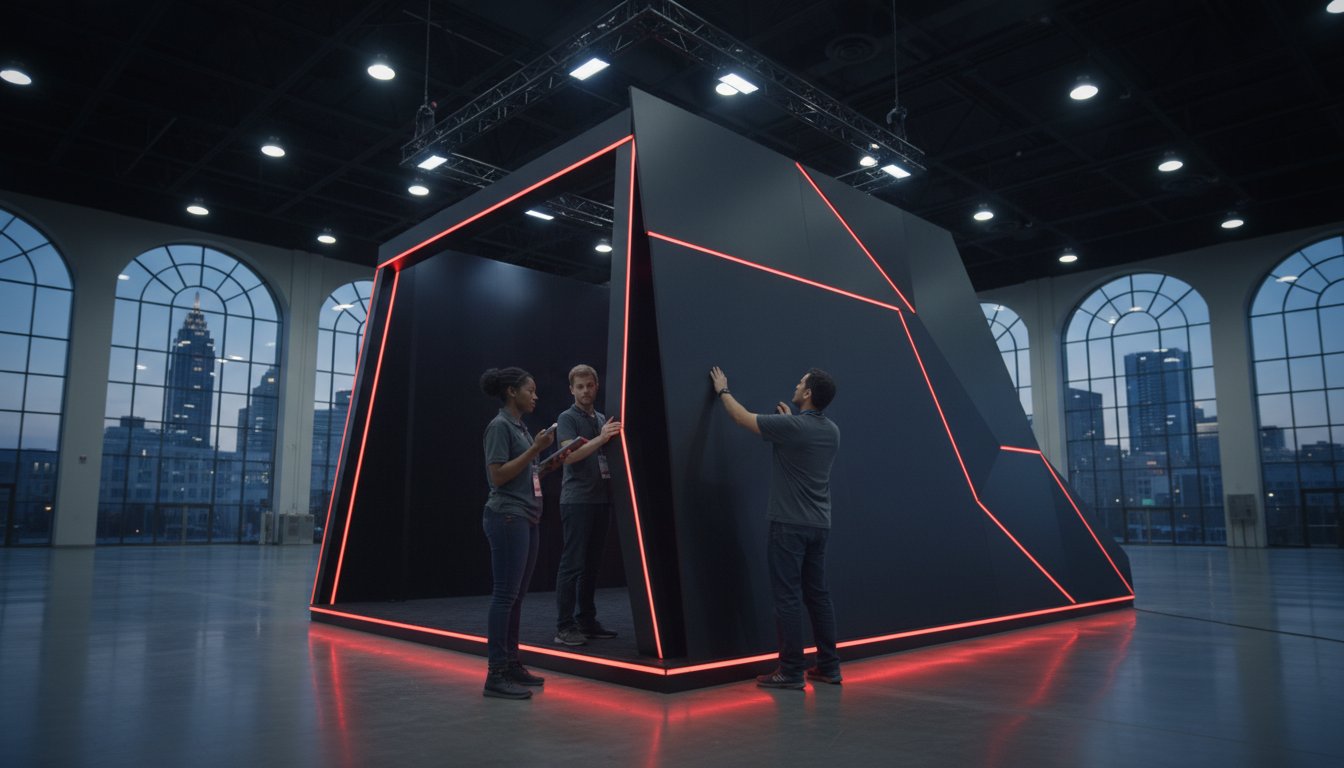
Complex structures like double-decker stands require more than just a build crew; they need certified technical engineering and on-site project management. Local labor laws also vary significantly. Major venues in Atlanta may have strict union requirements, while Munich follows rigorous safety and insurance protocols. Use this checklist to stay compliant:
- Verify B1 or NFPA 701 fire-retardant certification for all fabrics and graphics.
- Submit structural engineering drawings for any double-decker stands 90 days in advance.
- Secure comprehensive liability insurance that meets specific venue minimums.
- Appoint an on-site project manager to oversee installation and dismantling (I&D) to handle real-time technical hurdles.
Managing these details alone is a recipe for stress. Find a partner who understands these global variables to ensure your execution is seamless and compliant.
Engagement and Staffing: The Human Element of Trade Show Failure
Your exhibit design provides the stage, but your team determines the final ROI. One of the most common trade show planning mistakes is staffing the booth with the wrong mix of personnel. While sales teams are essential for closing, 2026 attendees increasingly demand deep technical insights before they commit. If your booth lacks product specialists who can answer complex questions, you'll lose high-value leads to competitors who brought their engineers. Staffing is not the place to cut costs; the standard for brand awareness is one staff member per 150 square feet of active floor space to ensure no prospect is ignored.
The "Bored Staffer" effect is a silent budget killer. When attendees see your team sitting down or checking phones, they keep walking. Since 81% of trade show attendees have buying authority, every minute of disengagement is a missed opportunity. This lack of presence is often compounded by a missing pre-show marketing plan. Many brands wait for the hall doors to open before they start selling, but successful exhibitors book 50% of their on-site appointments weeks in advance. Without a pre-show campaign to drive traffic, you're relying entirely on luck in a hall with over 2,000 competing events.
Training Your Booth Staff for 2026
Your team has exactly three seconds to hook a passerby before they're gone. Train your staff to use open-ended questions rather than "Can I help you?" to break the ice. You can use strategic furniture and AV rental to create dedicated "conversation zones" that pull people off the aisles and into your brand environment. Role-playing is essential to help staff quickly identify and pivot away from "swag hunters" who are only looking for freebies. With the average cost per lead sitting at $112, your team must focus their energy on the visitors who actually fit your buyer persona.
Leveraging Technology for Deeper Engagement
Modern engagement requires more than just a screen playing a loop. Use interactive 3D designs to showcase heavy machinery or large-scale products that are physically impossible to fit into a standard booth. This saves on shipping costs while providing an immersive experience. Integrating live-streaming from the floor also extends your reach to a global audience who couldn't attend in person. AI lead-scoring is now replacing traditional badge scanning by using real-time data to categorize lead quality instantly, allowing your sales team to prioritize follow-ups before the show even ends. Find the right equipment to support your team by requesting five free quotes for furniture and AV rental today.
Post-Show Execution: Where Most ROI Goes to Die
The final day of the exhibition isn't the finish line; it's the start of the conversion race. One of the most common trade show planning mistakes is failing to have a lead-nurture plan ready before the event even begins. When your team returns to the office with a digital list, the lack of a pre-defined workflow often results in "lead decay." Industry data suggests that 80% of leads are never followed up, which directly undermines the potential for a high ROI. If you haven't automated your follow-up sequence, you're essentially leaving your investment on the exhibition floor.
Avoid the "Data Silo" problem by integrating your lead capture directly into your CRM. Keeping leads in a manual spreadsheet prevents real-time collaboration between sales and marketing teams. This friction delays the first touchpoint, allowing competitors to swoop in. To justify your 2026 budget, you must calculate your true Cost Per Lead (CPL). Compare your total expenditure, including furniture and AV rental, against the number of qualified prospects. If your CPL is significantly higher than the industry average of $112, you need to re-evaluate your booth strategy or lead qualification process during your next planning cycle.
A 5-Step Post-Show Lead Conversion Process
Success in the weeks following the show depends on speed and precision. Follow this framework to ensure no high-value prospect slips through the cracks:
- Immediate Categorization: Tag leads as Hot, Warm, or Cold while you're still on the show floor to prioritize the first wave of outreach.
- The 48-Hour Rule: Send a personalized follow-up within 24 to 48 hours of the event closing to capitalize on your brand's top-of-mind awareness.
- Sales-Marketing Alignment: Hold a hand-off meeting to ensure the sales team understands the specific context of each high-value interaction.
- Content Tailoring: Send specific resources, such as technical drawings or case studies, that address the pain points discussed during the show.
- Pipeline Tracking: Monitor these leads for 6 to 12 months to measure the long-term impact on your corporate growth strategy.
Evaluating Your Standbuilder Partnership
A post-show debrief with your exhibition stand contractor is vital for refining your 2026 tour. Review the performance of your custom stand to determine if the layout effectively facilitated attendee flow or if certain areas remained underutilized. Assess the efficiency of your logistics; were there any technical compliance issues or unexpected on-site costs that could be avoided next time? For brands prioritizing sustainability, discuss how to reuse bespoke components within modular stand systems for future events. This strategic review ensures that every subsequent show is more efficient than the last. When you're ready to plan your next international presence, request five free quotes to compare the best local contractors in your next destination city.
Execute Your 2026 Trade Show Strategy with Precision
Navigating the global exhibition landscape requires more than just a presence; it demands a meticulous strategy that accounts for the 5% general cost increase projected for 2026. Avoiding common trade show planning mistakes means shifting your focus from simple aesthetics to high-impact lead generation and seamless international compliance. By prioritizing technical standards like B1 fire certification and implementing a lead-nurture plan before the hall doors even open, you secure the high ROI that the 81% of decision-making attendees can provide.
Standbuilder simplifies this complex journey through our strategic Atlanta-Germany partnership and expert project management for global events. We provide bespoke 3D designs tailored to your brand, ensuring your message resonates in any city, from Las Vegas to Munich. Don't leave your international success to chance. Request 5 free quotes for your next custom stand from Standbuilder International and transform your 2026 vision into a measurable business victory. Your global audience is waiting; let's build something extraordinary together.
Frequently Asked Questions
What are the most common trade show planning mistakes for first-time exhibitors?
First-time exhibitors often fail to account for "hidden" venue costs such as drayage, electrical drops, and rigging, which can add 15% to 25% to the initial budget. Another common trade show planning mistakes involves underestimating the complexity of international logistics. Many new brands skip the ATA Carnet process or fail to book freight early, leading to shipping surcharges that can spike total costs by 50%. Focus on a comprehensive budget that includes these variables to protect your ROI.
How far in advance should I start planning my trade show booth for 2026?
You should begin the strategic planning and budgeting process 9 to 12 months before the show opens. Secure your booth space at least 6 to 12 months out to obtain prime locations near entrances or main aisles. For custom builds, the design and documentation phase needs to start 9 months in advance. This timeline allows you to lock in current rates and avoid the 7% to 10% cost increases expected for high-tech 2026 installations.
Why is a custom exhibition stand better than a modular rental?
Custom exhibition stands are superior for brands that require a high-impact, immersive environment to stand out among 2,000 competing exhibitors. While modular booths offer 40% to 60% cost savings, a bespoke design provides the structural flexibility to include double-decker levels and tailored demo zones. Custom builds are designed specifically to meet your 2026 pipeline targets, ensuring your physical presence aligns perfectly with your corporate growth strategy and brand identity.
What are the fire safety regulations for exhibition stands in Germany vs. the US?
German venues strictly enforce the B1 fire-retardant standard for all stand materials, including flooring and graphics. In the US, exhibitors must typically comply with NFPA 701 or local fire marshal codes. Using non-compliant materials in a German "Messe" can result in an immediate shutdown of your booth before the doors open. Always verify that your fabrication partner uses certified materials that meet the specific technical requirements of your destination country to ensure a seamless setup.
How do I calculate the ROI of my trade show participation?
Calculate your ROI by dividing the total revenue generated from show leads by your total expenditure, including booth space, custom fabrication, and travel. Use the global average ROI of $20.98 for every $1 spent as a benchmark for your performance. To get an accurate figure, you must track leads through your CRM for 6 to 12 months post-show. This prevents the common trade show planning mistakes of measuring success through booth traffic rather than actual sales conversion.
What is the best way to follow up on trade show leads?
The most effective follow-up occurs within 24 to 48 hours after the event closes. Use AI-driven lead capture tools to categorize prospects as Hot, Warm, or Cold while still on the show floor. Personalize your outreach by referencing the specific pain points discussed during the interaction. Rapid CRM integration ensures your sales team can act while your brand is still top-of-mind, significantly increasing the conversion rate compared to delayed, generic email blasts.
How much should I budget for international trade show logistics?
Budget for international logistics to cost 30% to 50% more than domestic events due to customs, duties, and extended freight timelines. Shipping and customs fees for a standard exhibit typically range from $5,000 to $15,000. Factor in a 3% to 8% increase in logistics costs for 2026 to account for rising freight rates. You can reduce these expenses by sourcing furniture and AV rental locally through a global contractor network rather than shipping every item internationally.
Can I reuse my custom booth for multiple international shows?
You can reuse a custom booth if you incorporate modular components during the initial design phase. High-quality graphic production and specialized structural elements can be stored for future use, but you must weigh this against storage and shipping fees. In many cases, it's more cost-effective to use a hybrid approach; own your custom brand assets but utilize furniture and AV rental locally in each city to minimize international freight costs and environmental impact.