A single compliance error or a missed time zone update can inflate your 2026 trade show budget by 25% before the doors even open. You've likely felt the frustration of hidden drayage fees or the stress of a contractor who stops responding right when you need a fire safety certificate. It's a common reality. Industry data from 2024 shows that 38% of international exhibitors face unexpected costs specifically due to local non-compliance and logistical friction. You deserve a partner who values transparency and efficiency.
Finding the right exhibition stand contractors shouldn't feel like a gamble. This guide empowers you to master the vetting process so your international presence remains seamless, compliant, and high-impact. We'll help you secure a booth that mirrors your brand identity perfectly while ensuring your installation is entirely stress-free. By following this 2026 selection checklist, you'll gain predictable pricing and a reliable workflow. We'll examine everything from local regulation compliance to the specific RFP questions that reveal a contractor's true global capabilities.
Key Takeaways
- Understand how your choice of partner directly impacts trade show ROI and establishes brand authority on the international floor.
- Learn the essential steps to vet exhibition stand contractors by distinguishing between 3D renders and proven, in-house fabrication capabilities.
- Navigate global logistics and regional safety standards, including the critical differences between European B1 and US NFPA 701 certifications.
- Master a structured RFP process to effectively compare multiple quotes and ensure your design brief meets every technical requirement.
- Discover a streamlined path to global execution by accessing five free, no-obligation quotes through a vetted international contractor network.
Why Your Choice of Exhibition Stand Contractors Determines Trade Show ROI
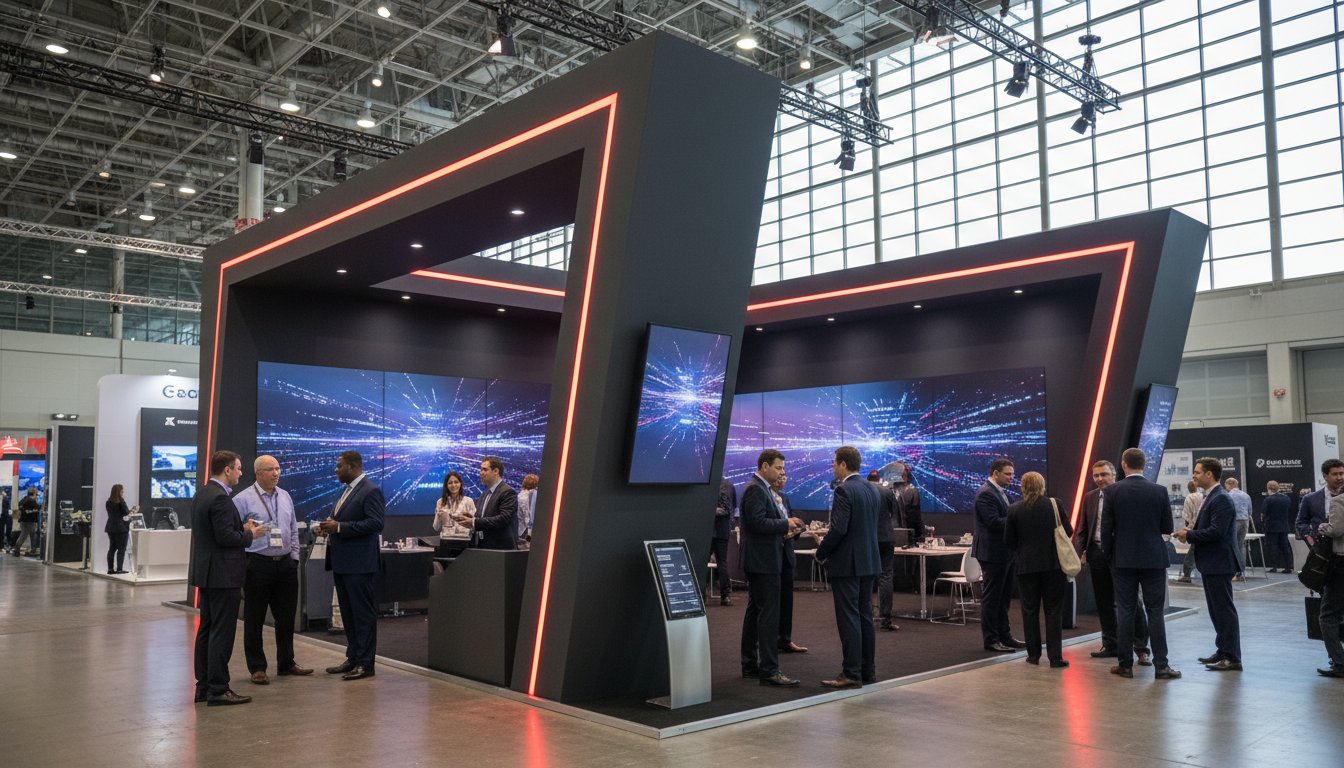
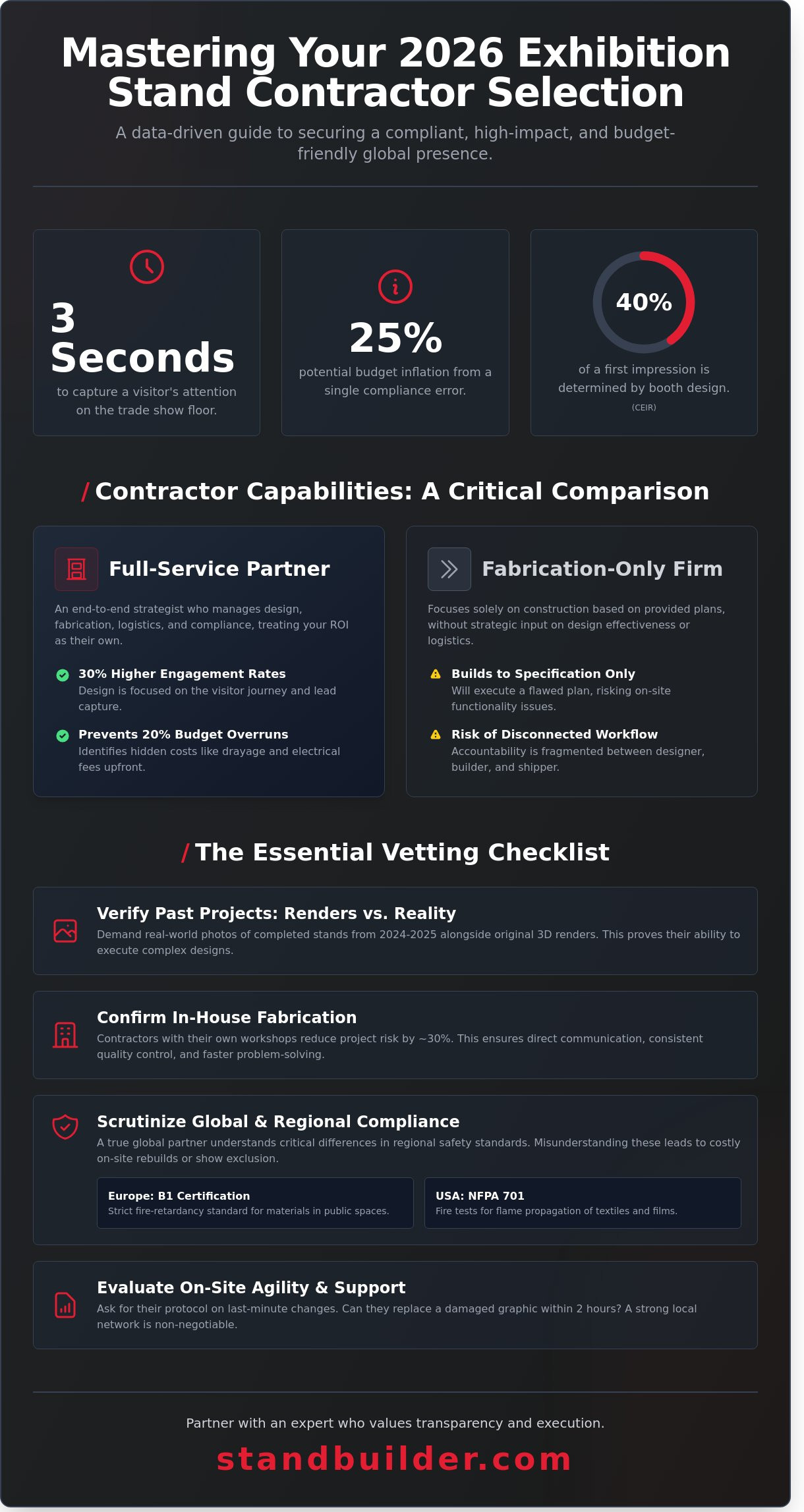
A trade show floor is a high-pressure environment where your brand has exactly 3 seconds to capture a visitor's attention. Your choice of exhibition stand contractors directly impacts whether those seconds turn into a qualified lead or a missed opportunity. While many exhibitors view a contractor as a simple fabricator, they actually function as the architect of your physical marketing strategy. High-quality construction signals brand authority. A flimsy wall or poorly finished counter doesn't just look bad; it actively erodes trust in your product quality. According to data from the Center for Exhibition Industry Research (CEIR), booth design accounts for 40% of a visitor’s first impression of a brand.
A strategic partner acts as a project manager who oversees every technical detail from logistics to local fire regulations. When you hire an expert Exhibition designer, you aren't just buying wood and metal. You're investing in a workflow that prevents the 20% budget overruns commonly seen with unmanaged builds. These full-service partners identify potential hidden costs like drayage fees, electrical surcharges, or rigging complexities before they appear on your final invoice. They handle the friction of procurement so your team can focus on the sales script.
The Full-Service vs. Fabrication-Only Debate
Design-led contractors produce 30% higher engagement rates because they prioritize the visitor journey over simple assembly. Fabrication-only firms build exactly what you tell them, even if the plan is flawed for the specific venue. Full-service partners provide end-to-end accountability. They ensure the render you approved matches the physical reality on the show floor. For recurring events, these partners help you decide if modular systems are 25% more cost-effective than bespoke builds over a three-year cycle. Compare your options carefully to ensure the contractor's capabilities match your long-term event calendar.
Measuring Contractor Success Beyond the Build
Success isn't just a standing structure; it's about how the layout drives traffic. Strategic exhibition stand contractors optimize booth flow to increase lead generation. They use integrated AV and lighting to boost visitor dwell time by an average of 2.5 minutes per interaction. Evaluate a contractor’s value through these specific performance markers:
- Lead generation support: Does the layout include dedicated zones for private consultations and data capture?
- Technical integration: Can they seamlessly manage high-speed internet and interactive touchscreens without visible cabling?
- On-site agility: Do they have a local network to resolve issues, such as replacing a damaged graphic panel, within two hours of the show opening?
Request a detailed portfolio that shows how they've handled last-minute changes in the past. A contractor who can't adapt to the realities of a busy loading dock will eventually cost you more than their initial quote suggests. Find a partner who treats your ROI as their own success metric.
The Essential Capability Checklist: Vetting Design and Fabrication
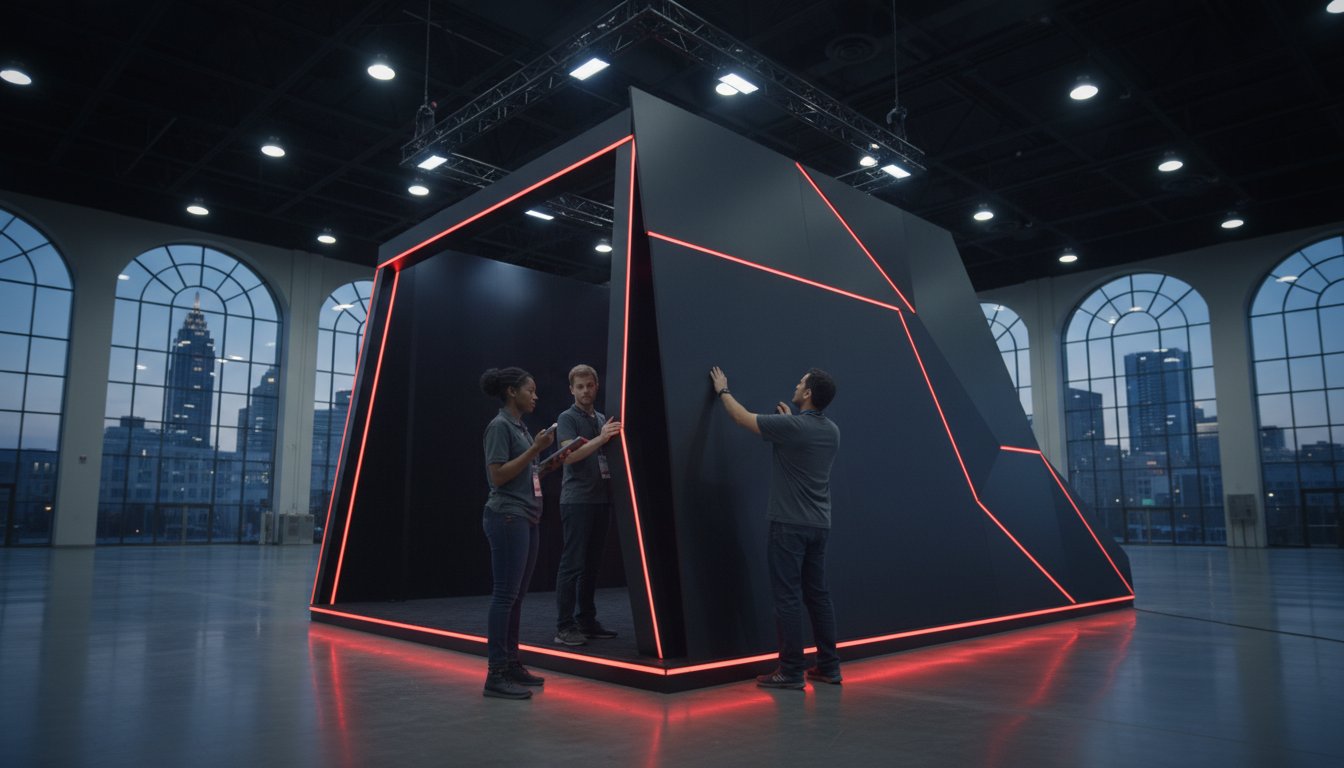
Vetting exhibition stand contractors requires looking past polished marketing materials. Many firms present 3D visualizations that look impressive but don't translate well to a physical hall. You must demand real-world photography of completed projects alongside their original renders. This comparison reveals if a contractor can actually execute complex lighting or structural details. If a builder can't show you a finished stand from a 2024 or 2025 show that matches the initial design, they likely lack the technical skill to deliver on their promises.
Ownership of the production process is a critical differentiator. Contractors who own their fabrication workshops reduce project risk by approximately 30% compared to those who outsource to third-party builders. When you work with an in-house team, communication is direct and quality control is constant. Ask for technical data sheets for all finishes and flooring. You need to verify that materials meet fire safety regulations and durability standards for high-traffic environments. As you Prepare for a Business Trade Show, ensuring your partner has these technical details ready prevents last-minute onsite failures.
Modern stands also require digital proficiency. High-performing exhibits now frequently incorporate VR walkthroughs and interactive AV elements to engage visitors. Ensure your contractor has the internal expertise to manage these digital assets. If you want to see how top-tier builders handle these logistics, compare five free quotes from our vetted network of professionals.
The 3D Design Vetting Process
Evaluate every design for spatial flow and visitor traffic management. A 50-square-meter booth should comfortably accommodate your staff and at least 10 visitors simultaneously without bottlenecks. Ensure the proposal aligns with custom exhibition stand design principles, focusing on brand visibility from 20 meters away. Watch for red flags like unrealistic structural spans or lighting effects that can't be achieved with standard rigging. If a 3D concept looks too good to be true, it usually is.
Manufacturing Standards and Quality Control
Precision is non-negotiable in bespoke construction. Quality exhibition stand contractors use CNC (Computer Numerical Control) machinery to ensure every component fits perfectly. This level of accuracy is vital for modular elements that must be reused. If a contractor claims to be sustainable, ask for FSC certifications for timber or ISO 14001 credentials. Always insist on a pre-build inspection at the workshop 10 to 14 days before the show. Seeing the stand partially assembled allows you to catch errors in branding or finish before the crates are shipped to the venue.
Navigating Global Logistics and Regional Regulations
Managing an international exhibition presence requires more than just a creative design; it demands a deep understanding of the regulatory friction between continents. Experienced exhibition stand contractors understand the technical gap between US and European standards. In the US, imperial measurements and NFPA 701 fire certifications are the standard. In Europe, you must meet the DIN 4102-1 (B1) flame retardant standards. Failing to provide the correct certification can result in a fire marshal shutting down your booth hours before the show opens.
Logistics management involves complex customs documentation, such as the ATA Carnet, which allows for the temporary duty-free import of goods across 87 countries and territories. You must also account for the labor landscape. In US cities like Chicago or Las Vegas, strict union rules dictate who can move crates or plug in electrical components. Conversely, European venues typically allow contractor crews to handle the entire build from start to finish. These operational differences impact your budget and your timeline. To ensure a smooth execution, consider these three critical compliance areas:
- B1 Certification: This is mandatory for all fabrics and wood elements in German halls to ensure fire safety.
- Union Jurisdiction: This is specific to US venues and covers everything from drayage to heavy machinery operation.
- Technical Load Limits: These are crucial for suspended ceiling rigs and "Double-Decker" upper levels.
European Trade Fair Expertise (The Messebauer Advantage)
German exhibitions, or "Messe," operate with surgical precision. Venues in cities like Cologne or Munich require technical floor plans submitted 8 to 12 weeks in advance to verify static load calculations. This is especially critical for multi-story structures. These stands must meet stringent safety codes that vary by specific hall height and floor weight capacity. To minimize shipping overheads, find exhibition stand contractors who maintain local hubs. Partnering with a team that has facilities in Ratingen, Germany, or Atlanta, Georgia, ensures your team has immediate access to local materials and emergency support without international freight delays.
Logistics and Warehouse Strategy
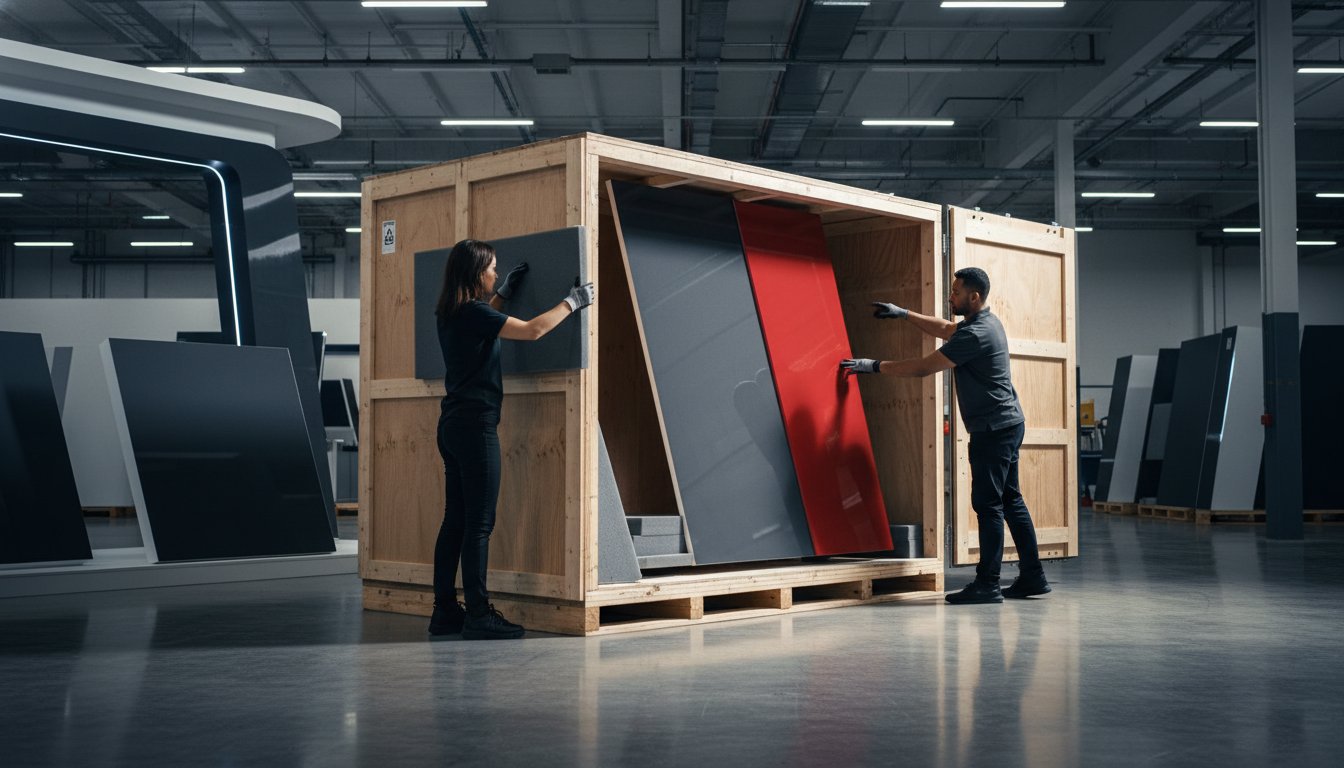
Success depends on what happens between the shows. Professional contractors provide climate-controlled storage to maintain booth quality for multi-city tours. During the "Dismantle and Secure" phase, teams must follow a strict protocol to ensure high-end graphics and trade show backdrops aren't creased or damaged during packing. This level of care extends to the broader strategic planning phase. Following established Steps for Using Trade Shows helps you coordinate these moving parts, from choosing the right venue to preparing your physical assets. A well-integrated logistics plan ensures that your booth components remain show-ready for three to five years, significantly maximizing your return on investment.
The Step-by-Step RFP Checklist for Stand Selection
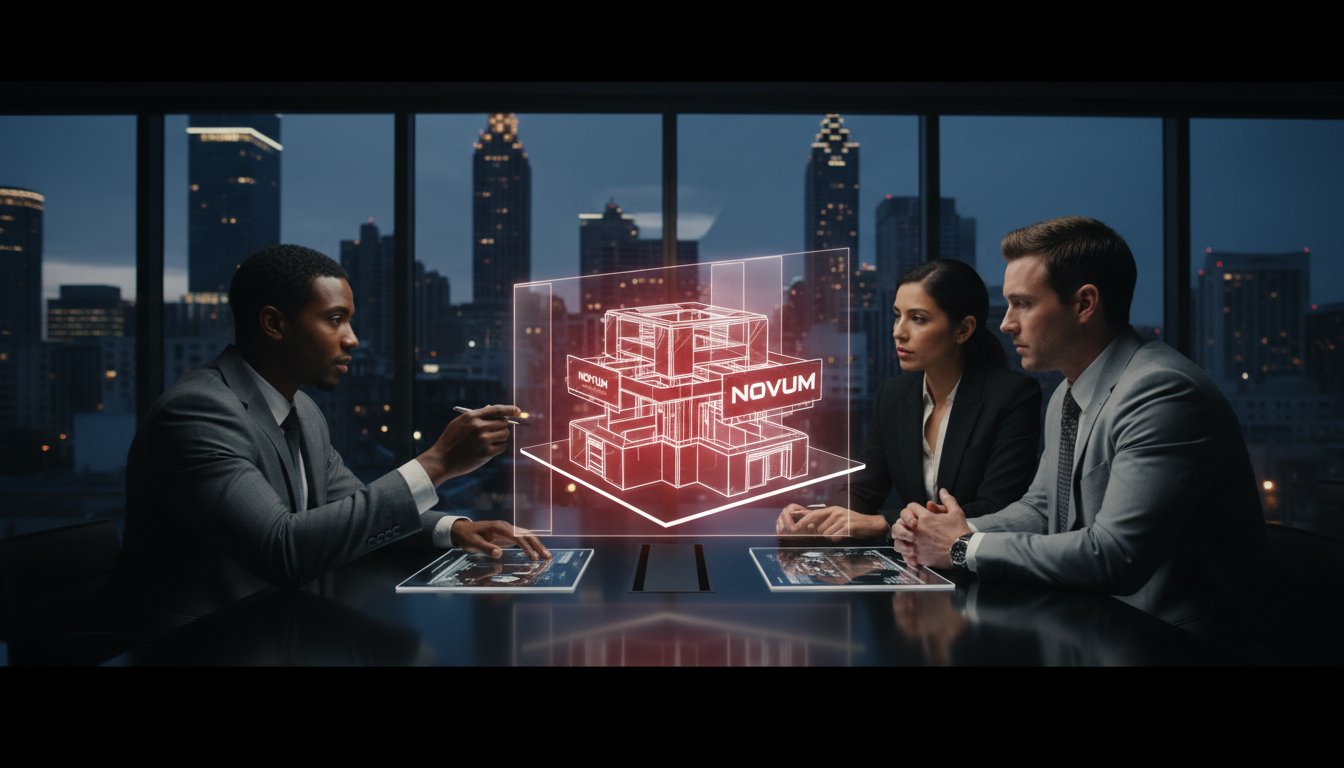
Selecting the right exhibition stand contractors requires a structured Request for Proposal (RFP) process to eliminate guesswork. Start by drafting a brief that defines your technical needs and marketing goals. Specify your exact square footage, such as a 36-square-meter island or a 10x20 inline space, and outline your budget range. Clear parameters prevent contractors from submitting unrealistic designs that exceed your financial limits.
A standardized comparison framework is essential when you evaluate your five quotes side-by-side. Look beyond the 3D renders. Verify the 16-week production timeline, ensuring milestones for design finalization, fabrication, and shipping are realistic. Contractual transparency is your best defense against budget creep. Identify potential hidden fees for site services like electricity, rigging, and daily booth cleaning. These logistics often account for 15% to 25% of the total show spend but are frequently omitted from initial fabrication quotes.
Final selection depends on more than just the lowest price. Cultural fit and communication speed determine the success of your partnership. If a contractor takes four days to answer a simple email during the RFP stage, they won't be reliable when a crisis hits the show floor. Trust your instincts on their responsiveness and transparency.
Questions to Ask Every Potential Contractor
- Who is the dedicated project manager for the on-site phase? You need a single point of contact who will be physically present during the build, not just a sales representative in a remote office.
- What is the contingency plan if the freight is delayed? Ask for specific protocols regarding local rental backups or modular replacements if your primary shipment is stuck at a port.
- Can you provide references for the Georgia World Congress Center? Venue-specific experience is vital. Contractors familiar with the Georgia World Congress Center understand the local union labor regulations and drayage workflows, which prevents costly delays.
Evaluating the Financial Proposal
Successful procurement depends on a granular breakdown of costs. Separate the fabrication expenses from the service and labor fees. This allows you to see exactly how much you're paying for materials versus the "I&D" (Installation and Dismantle) phase. Standard industry payment schedules usually follow a 50-40-10 structure: a 50% deposit to start construction, 40% before the stand leaves the warehouse, and the final 10% after successful delivery on-site.
Confirm insurance and liability details before signing. You must know who is responsible if a digital screen is damaged during the I&D phase. Most professional exhibition stand contractors carry comprehensive general liability insurance, but you should verify their coverage limits for high-value equipment. This clarity ensures your investment is protected from the moment the crates arrive at the loading dock until the final dismantle is complete.
Partnering with Standbuilder International for Seamless Execution
The collaboration between Standbuilder and CBS Neospace creates a robust global bridge for modern exhibitors. We solve the logistical headaches that typically plague international trade shows. By merging Atlanta-based design sensibilities with the technical precision of German engineering, we guarantee your brand makes an impact on any stage. Our platform speeds up the hunt for exhibition stand contractors by offering a direct RFP path that yields options within 48 hours.
Our "Five Free Quotes" promise is more than a slogan; it's a functional tool for your procurement team. You don't need to waste weeks vetting individual companies. We deliver five comprehensive proposals from our pre-qualified network. This allows you to compare structural details, material choices, and pricing structures in a single view. This transparency ensures you find a partner who aligns with both your creative vision and your budget constraints. We've simplified the process so you can focus on your show strategy instead of vendor paperwork.
Our Global Presence and Local Expertise
Our Atlanta headquarters acts as your strategic gateway for North American success. We handle the unique labor regulations and drayage complexities found in US convention centers. Meanwhile, our Ratingen facility delivers expert Messebau services across Europe. This German hub is essential for navigating the strict safety and sustainability codes of the EU market. You get a unified project management experience regardless of the location. One expert team coordinates your presence, whether you're exhibiting in Las Vegas or Cologne, ensuring your brand standards never waver.
Your Next Steps to a High-Impact Stand
Smart brands are already finalizing their 2026 exhibition calendars. Leading exhibition stand contractors fill their production schedules quickly; waiting until the last minute often leads to higher rush fees and limited material choices. By requesting a consultation now, you secure priority access to the best design and build teams in the industry. Our vetted network includes contractors with proven track records in 15+ countries, ensuring local expertise is always within reach.
Don't leave your brand's physical presence to chance. Find your perfect exhibition stand contractor and get 5 free quotes today. Our team is ready to help you move from an initial concept to a finished, high-impact stand without the usual stress of international logistics.
Secure Your 2026 Trade Show Success
Your 2026 trade show ROI depends on moving beyond basic aesthetics to find a partner that masters both high-value design and complex regional regulations. By following a structured RFP process and vetting fabrication capabilities, you ensure your brand stands out on a global stage. Standbuilder International simplifies this search through its strategic partnership with CBS Neospace GmbH, a firm established in 1998. With dual headquarters in Atlanta, USA, and Ratingen, Germany, we provide the local authority and international reach needed for high-value bespoke and double-decker stands.
Don't let logistics or poor vendor selection drain your marketing budget. Our platform connects you with elite global partners who understand the specific demands of the 2026 event calendar. We've streamlined the procurement process so you can focus on meeting your sales targets while we handle the technical friction. It's time to build with confidence and precision. You've got the vision; we have the network to make it happen.
Compare 5 free quotes from top exhibition stand contractors
Frequently Asked Questions
What should I look for in an exhibition stand contractor’s portfolio?
Look for high-resolution photos of completed projects that match your specific industry and stand size. A strong portfolio features 10 to 15 diverse examples of bespoke stands and modular booths. Check for consistent branding across different scales and evidence of technical complexity like double-decker structures or integrated AV technology. This ensures the exhibition stand contractors you evaluate have the practical experience to execute your design vision.
How far in advance should I hire a contractor for an international show?
Secure your contractor at least 4 to 6 months before the event's opening date. This timeframe allows 8 weeks for design finalization and another 12 weeks for fabrication and logistics planning. International shows require extra lead time to navigate customs and shipping schedules. Booking early ensures you receive competitive quotes and guarantees the contractor's availability during peak exhibition seasons in cities like Dubai, Las Vegas, or Frankfurt.
Are modular exhibition stands better than custom-built stands?
Modular stands are better for brands attending 3 or more shows per year because they're reusable and easier to reconfigure. They reduce shipping costs by up to 30 percent compared to bespoke builds. However, custom-built stands offer total creative freedom for one-off flagship events. Choose modular for flexibility and cost-efficiency over a multi-show calendar; choose custom for high-impact brand statements where unique architecture is the priority.
What are the typical payment terms for exhibition stand construction?
Industry standards usually require a 50 percent deposit upon signing the contract to secure materials and labor. You'll typically pay another 30 percent to 40 percent approximately 30 days before the show build begins. The final balance is often due upon completion of the stand on the trade show floor. Always review the specific RFP terms to ensure the payment schedule aligns with your corporate procurement cycles and internal budget milestones.
How do contractors handle local fire safety regulations for custom builds?
Contractors must submit material safety data sheets (MSDS) and fire retardancy certificates to venue organizers at least 30 days before move-in. They use B1 or M1 certified materials for all timber and fabric elements to meet European and North American safety standards. Your contractor handles these technical filings as part of the project management process. They ensure every structural component passes the mandatory on-site inspection by the local fire marshal.
Can one contractor manage my booth across multiple global shows?
Yes, a lead contractor can manage your global presence by utilizing a vetted network of local partners in cities like Paris, Singapore, or London. This "hub and spoke" model ensures brand consistency while saving you the 20 percent markup often associated with international shipping. You'll have a single point of contact who coordinates with exhibition stand contractors worldwide. This approach simplifies communication and guarantees a uniform quality level across every continent.
What is the difference between an exhibition stand builder and a contractor?
An exhibition stand builder focuses on the physical fabrication and assembly of the booth components. In contrast, a contractor provides end-to-end project management, including design, logistics, and venue liaison services. Most modern firms act as both, handling everything from the initial 3D render to the final dismantle. Using a full-service contractor reduces your administrative burden by consolidating all show-related tasks under one professional and legally binding agreement.