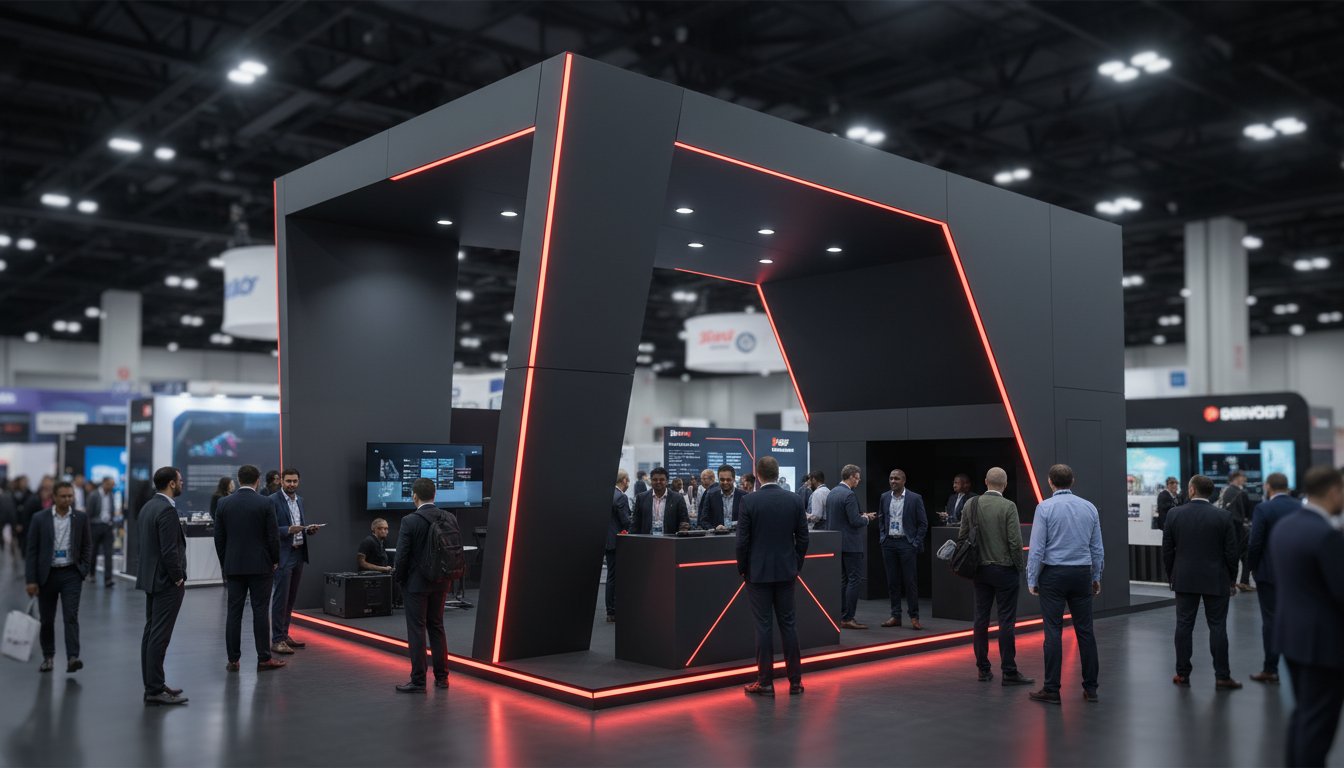
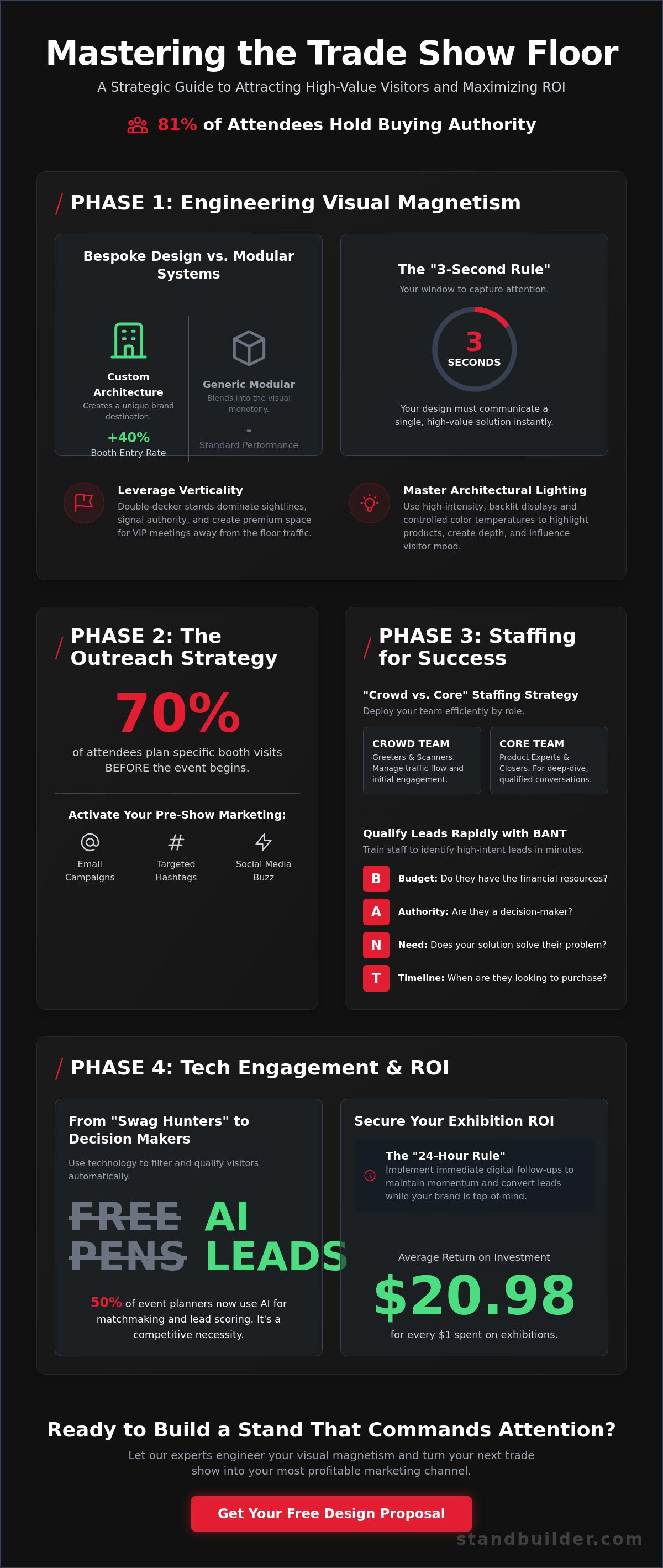
With 81% of trade show attendees holding buying authority in 2026, the stakes for your exhibition floor presence have never been higher. You might spend up to $50,000 on a 20x20 foot custom build, but without a clear strategy for how to attract more visitors to your trade show booth, that investment risks yielding nothing but "swag hunters" and empty leads. It's a common struggle to stand out against massive competitors while justifying every dollar of your budget. We recognize that simply showing up isn't enough when you're competing for attention in a global market projected to reach $51.3 billion this year.
This guide provides a roadmap to master high-impact attraction through bespoke design and advanced engagement strategies. You'll learn how to integrate AI-driven matchmaking, which 50% of event planners now use as a competitive necessity, to ensure your team spends time with decision-makers rather than tourists. We'll break down the specific tactics to achieve a consistent brand identity across international shows while aiming for that average $20.98 ROI for every dollar spent. We'll explore how to combine architectural visual magnets with streamlined lead qualification to transform your next event into a high-standard marketplace for your brand.
Key Takeaways
- Learn why bespoke exhibition stand design creates "visual magnetism" through architectural lighting and brand narrative to outperform standard modular systems.
- Discover how to attract more visitors to your trade show booth while using AI-driven scoring to prioritize high-intent decision-makers over casual browsers.
- Leverage pre-show digital marketing and targeted hashtags to reach the 70% of attendees who plan their specific booth visits before the event even begins.
- Optimize your team by deploying a "Crowd vs. Core" staffing strategy and training staff on the BANT framework for rapid, efficient lead qualification.
- Secure your exhibition ROI by implementing the "24-Hour Rule" for post-show digital follow-ups and tracking Cost Per Lead (CPL) against industry benchmarks.
Engineering Visual Magnetism: Design Strategies for 2026
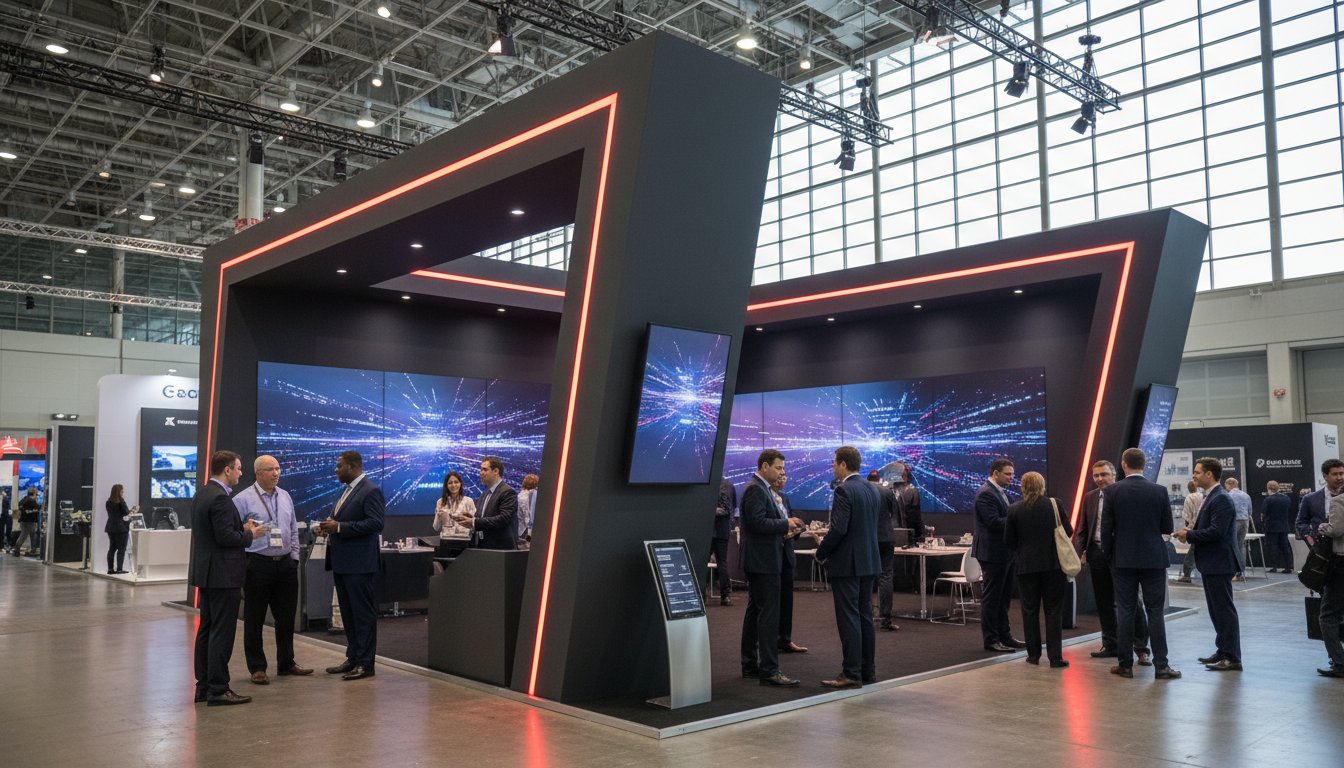
Visual magnetism isn't a happy accident; it's a calculated alignment of architectural lighting, structural height, and a compelling brand narrative. In a crowded hall, understanding how to attract more visitors to your trade show booth begins with breaking the horizontal plane. While modular systems offer efficiency, they often fail to disrupt the visual monotony of a high-traffic exhibition. Custom architecture acts as a silent director, dictating exactly where visitors enter, how they navigate the space, and where they linger for deep-dive conversations. With 81% of attendees holding buying authority in 2026, your structure must perform the heavy lifting of qualification before a single word is spoken.
To win the floor, you must respect the "3-Second Rule." This is the brief window an attendee grants your stand as they walk past. Your graphics shouldn't tell your life story; they must communicate a single, high-value solution that stops them in their tracks. A successful trade show presence relies on this immediate clarity to transform a casual passerby into a high-intent lead.
Leveraging Verticality and Lighting
Dominating sightlines is critical in massive venues like Messe Frankfurt or the Georgia World Congress Center. Utilizing double-decker stands allows your brand to be seen from across the hall, signaling authority and providing a premium environment for private VIP meetings. Lighting serves as the secondary layer of attraction. Backlit trade show displays create a sense of depth and focus, especially in windowless environments where standard overhead lighting is flat and uninviting. High-intensity LEDs can highlight specific product zones, drawing the eye toward your most profitable solutions while leaving storage areas in the architectural shadows. By adjusting color temperature, you can influence visitor comfort; warmer tones invite comfort for long consultations, while cooler, brighter lights suggest innovation and high energy.
Bespoke Branding vs. Generic Templates
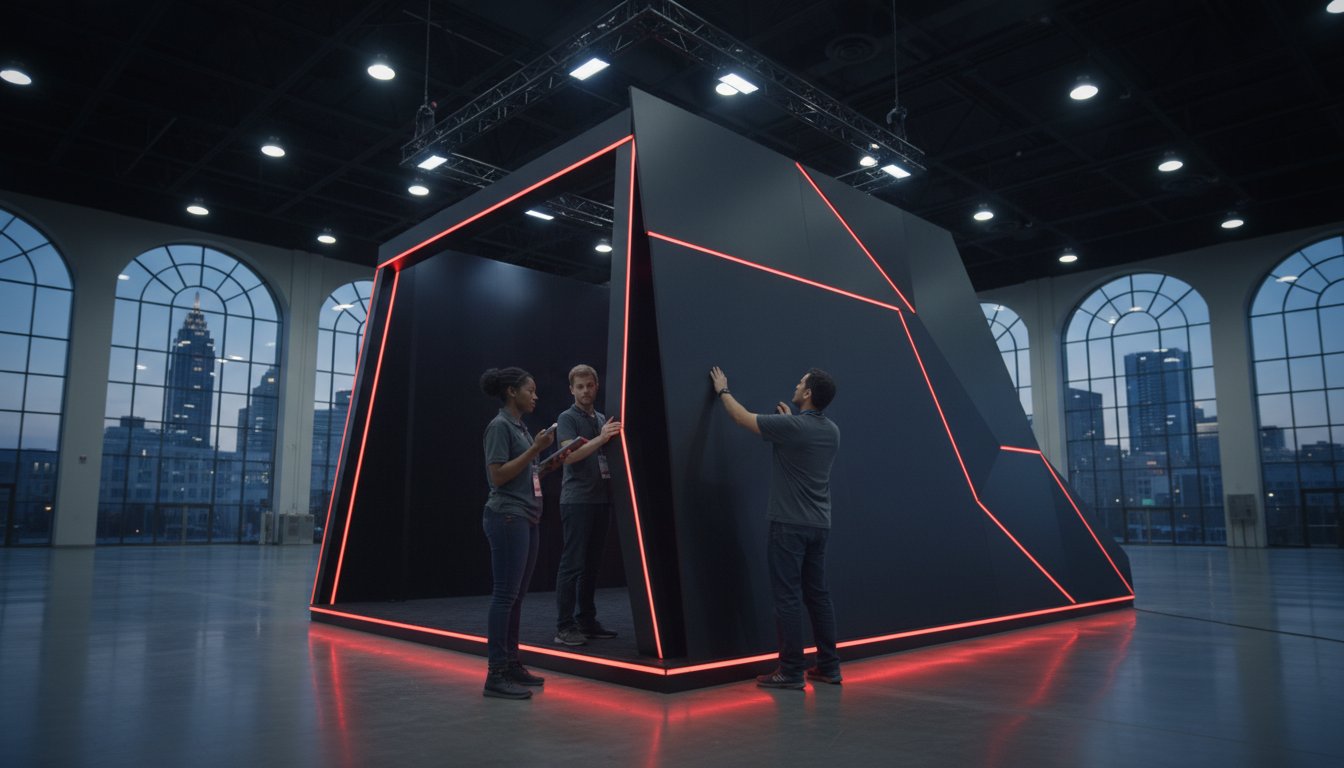
A truly effective strategy for how to attract more visitors to your trade show booth involves integrating your brand identity into the physical structure, not just the graphics. Choosing a custom exhibition stand design ensures that every curve, material, and portal reflects your company's unique DNA. This structural consistency builds trust faster than generic templates ever could. For example, implementing a custom-fabricated entrance portal has been shown to increase booth entry by 40% by creating a clear, inviting threshold that psychologically signals a transition into a specialized environment. This approach turns your booth into a destination rather than just another stop on the floor, moving the user from a state of uncertainty to a state of decision-making as quickly as possible.
Interactive Engagement: Using Tech to Qualify Leads
Static, passive displays are officially obsolete. If you're looking for how to attract more visitors to your trade show booth, you must shift your focus from "swag hunters" to high-intent decision-makers. AI adoption among event planners reached 50% in 2025; it's now a baseline requirement for any exhibitor wanting to stay competitive. By replacing generic giveaways with value-based digital interactions, you filter out the noise. AI-driven touchscreens score leads in real-time by analyzing visitor responses to interactive prompts. This data allows your sales team to focus on the 81% of attendees who possess buying authority.
Biometric engagement analytics represent the next frontier in booth strategy. These systems measure visitor sentiment and dwell time in real-time. They provide an objective heat map showing which booth zones perform best. Pair this with RFID or NFC integration to deliver a friction-free experience. Instead of handing out heavy brochures, let visitors tap their badges to receive personalized digital collateral. This approach meets the consumer-style expectations of modern B2B buyers who demand hyper-personalization. To ensure these systems work flawlessly across borders, you should find a reliable contractor who specializes in high-tech stand builds.
Gamification with a Purpose
Effective gamification acts as a diagnostic tool. Design interactive challenges that require specific industry knowledge. This naturally pre-qualifies the visitor before they speak to a staff member. Use digital leaderboards to spark competition and encourage social sharing. This extends your reach beyond the physical hall. Ensure your international exhibition stand contractor handles the technical backend. On-site technical failures can damage your brand's reputation for dependability. A seamless digital experience is essential for maintaining a professional image.
Hyper-Personalized Product Demos
Augmented Reality (AR) allows you to showcase the internal components of massive machinery or visualize complex software flows. You don't need extra square footage for these demos. These immersive experiences often integrate directly into a high-tech trade show backdrop. This turns a structural element into an interactive narrative. Pair these demos with dedicated "Consultation Zones." These semi-private areas facilitate the deep-dive technical discussions that convert a lead into a client. Since 63% of organizers are investing in virtual components, your physical booth must offer a level of depth that digital-only platforms cannot match.
The Global Outreach Strategy: Pre-Show Marketing
Success on the exhibition floor is often won weeks before the first attendee arrives. If you're wondering how to attract more visitors to your trade show booth, look at the data: 70% of attendees already have a list of stands they intend to visit before the doors open. This means organic traffic is only a small piece of the puzzle. You must secure a spot on those pre-planned itineraries by launching targeted digital campaigns. Utilize LinkedIn ads focused on specific show hashtags like #EuroShop2026 or #NABShow to reach registered attendees while they're in the planning phase.
Navigating the cultural divide is equally important for global exhibitors. In Germany, the "Messe" culture is deeply technical and emphasizes long-term engineering partnerships. Conversely, the US "Trade Show" environment often prioritizes high-energy engagement and immediate lead volume. Adjusting your pre-show messaging to match these local expectations is a vital part of how to attract more visitors to your trade show booth in foreign markets. Coordinate with local logistics partners early to ensure your promotional materials and digital assets are ready. Relying on international shipping at the last minute is a risk that can derail your entire strategy.
Account-Based Marketing (ABM) for Exhibitors
Focus your resources on the leads that matter most. Invite high-value prospects to exclusive "In-Booth" VIP events or private product reveals. Build personalized landing pages for show-specific bookings to reduce friction in the meeting-set process. For a more aggressive approach, use geo-fencing ads. These target attendees specifically within the hotels and transport hubs surrounding the convention center, ensuring your brand stays top-of-mind throughout the event week. This strategy ensures you aren't just waiting for traffic; you're actively driving it.
Navigating International Regulations
Compliance is a technical hurdle that varies by region. Fire safety and height restrictions in German hubs like Ratingen or Munich are often stricter than those found in Atlanta or Las Vegas. A design that works in Nevada might be rejected by a safety inspector in Bavaria. This is where a bilingual project management team becomes an asset, bridging the gap between your vision and local hall regulations. For European shows, utilizing a partner like CBS Neospace ensures your stand meets all Euro-compliance standards without compromising on design impact. This specialized knowledge is what separates a smooth global rollout from a logistical nightmare.
Staffing for Success: Qualification Over Conversation
High-impact design creates the initial draw, but your team determines the final ROI. While you've already engineered a visual magnet, understanding how to attract more visitors to your trade show booth requires a shift from passive greeting to active qualification. With the average cost per lead at a trade show sitting at $112 in 2026, you can't afford to waste time on low-intent conversations. Implementing a "Crowd vs. Core" strategy is the most efficient way to manage high-traffic halls. Use junior staff at the perimeter to handle initial attraction and senior experts at the core for deep-dive qualification. This ensures your most expensive assets are only talking to the 81% of attendees who possess buying authority.
Training your team on the BANT framework (Budget, Authority, Need, Timeline) is essential for rapid filtering. Every interaction should move through these four pillars within the first few minutes. Physical presence also dictates approachability. Avoid "booth huddles" or staff members checking phones, as these create psychological barriers that drive prospects toward your competitors. An optimal staff-to-square-foot ratio for custom stands is one representative for every 50 square feet of traversable floor space to prevent the booth from looking overcrowded or empty. To ensure your booth layout supports this professional flow, compare quotes from expert stand builders who specialize in strategic floor planning.
The Lead Qualification Script
Ditch the generic "How are you doing today?" for a problem-solving question. Your team must transition to a qualifying question in under 30 seconds. Ask about specific pain points your product solves to identify "tire kickers" early. Once a prospect is qualified, use digital lead capture apps that sync directly with your CRM, such as Salesforce or HubSpot. This prevents data loss and allows for immediate follow-up. Identifying a lack of fit early is just as important as finding a lead; it frees up your floor space for genuine prospects who are ready to buy.
The Role of Hospitality
Hospitality should be a strategic tool, not just a courtesy. Position coffee bars or charging stations at the back of your booth to force visitors to walk through your product zones. This increases dwell time and exposes them to your brand narrative. In European "Messe" culture, sit-down hospitality is a standard expectation for serious business discussions. You must manage your furniture rentals to balance this need for comfort with the necessity of keeping the floor open for traffic. High-quality seating in a semi-private zone can be the difference between a quick chat and a signed contract.
Measuring ROI: Closing the Loop Post-Show
The final measure of success isn't the number of badges scanned, but the conversion of those interactions into measurable revenue. While previous sections detailed how to attract more visitors to your trade show booth, this stage focuses on the data-backed evidence of engagement. You must track Cost Per Lead (CPL), which averaged $112 in 2026, against your total investment. Comparing this to Cost Per Impression (CPI) helps you understand your brand's reach even among those who didn't stop to talk. With companies reporting an average ROI of $20.98 for every $1 spent, clear data is the only way to justify future budgets.
Immediate follow-up is the hallmark of a professional operation. Adhering to the "24-Hour Rule" ensures you capitalize on the attendee's memory of your brand before they return to their daily routine. Modern B2B buyers have consumer-style expectations for speed and personalization. Use the data harvested from in-booth analytics, such as heat maps and dwell time sensors, to tailor your first outreach. If a visitor spent five minutes in your AR demo zone but only 30 seconds at the hospitality bar, your follow-up email should lead with technical insights rather than a generic thank-you note.
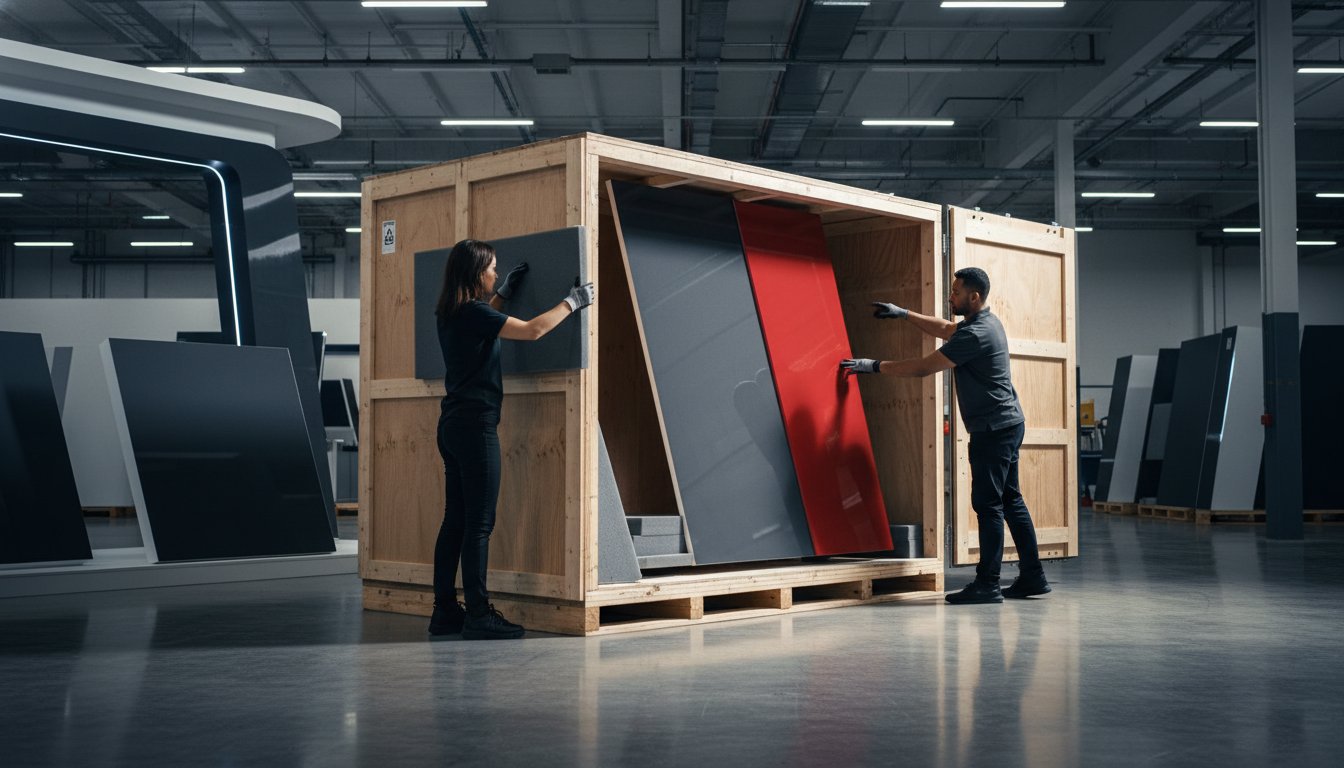
Long-term ROI is also driven by structural efficiency. Work with your exhibition stand contractor to identify modular components within your custom build that can be repurposed for future events. This reduces the cost of subsequent shows while maintaining a consistent brand identity across international borders. Saving 10% to 20% on future material handling and production costs significantly boosts your bottom line over a multi-show calendar. This strategic approach ensures your exhibition presence is an asset, not just an expense.
Data-Driven Design Iteration
Review your booth's performance zone by zone. If your "Consultation Zones" were underutilized in Las Vegas but packed in Munich, you may need to adjust your floor plan for specific regional cultures. Use these insights to refine your RFP for the following year. This iterative process ensures your strategy for how to attract more visitors to your trade show booth evolves alongside attendee behavior. Base your next design on hard data rather than aesthetic guesswork to maximize floor space efficiency.
The Final Conversion: From Booth to Booking
Bridge the gap between the on-site handshake and the first discovery call by offering "Booth-Only" exclusive incentives. These drive immediate action and provide a clear tracking mechanism for show-attributed sales. Your goal is to move the prospect from a state of curiosity to a state of decision-making as efficiently as possible. Ready to dominate your next show? Request a free 3D design from Standbuilder International.
Secure Your Competitive Edge on the Global Stage
Success in the 2026 trade show landscape requires moving beyond generic setups. You've seen that engineering visual magnetism and using AI for lead qualification are no longer optional. They're essential for capturing the 81% of attendees with buying authority. By combining targeted pre-show marketing with a disciplined staffing approach, you transform your booth from a simple display into a high-performance sales engine. Mastering how to attract more visitors to your trade show booth is about precision, from the initial 3D design to the final post-show ROI analysis.
Our expert teams in Atlanta and Ratingen simplify these complex logistics for you. Through our strategic partnership with CBS Neospace, we ensure your brand meets strict international regulations while maintaining a premium aesthetic. We specialize in bespoke 3D design and seamless global rollouts to help you win every floor. It's time to stop guessing and start measuring your success with a partner who understands the high-standard marketplace. Request 5 Free Quotes for Your Next Custom Stand and start building your success today.
Frequently Asked Questions
How much should I spend on a custom exhibition stand to ensure I attract visitors?
A custom-built 10x10 foot exhibit typically costs between $10,000 and $20,000, while a 20x20 foot build ranges from $20,000 to $50,000. These investments are justified by an average return of $20.98 for every $1 spent on trade shows. Focus your budget on high-impact visual magnets like architectural lighting and structural height to maximize your presence in crowded halls.
What is the most effective way to qualify leads at a trade show without being pushy?
Implement the BANT framework (Budget, Authority, Need, Timeline) within a problem-solving script. Instead of a generic greeting, ask a question that addresses a specific industry pain point in under 30 seconds. This allows you to filter for the 81% of attendees who possess buying authority while letting casual browsers move on politely, keeping your booth open for genuine prospects.
Can I use a modular stand and still stand out against custom-built booths?
Yes, by maximizing high-quality graphic production and integrated technology. A modular 10x10 rental costing $8,000 to $13,000 can compete effectively if it uses backlit displays and interactive touchscreens. The key is to ensure your brand narrative remains professional and consistent, which simplifies logistics for international shows while maintaining a high-standard marketplace appearance.
How do I attract visitors to a 10x10 booth in a large exhibition hall?
Focus on verticality and the "3-Second Rule" for your graphics. Since floor space is limited, use high-contrast lighting and a single, clear value proposition to stop passersby. This is a critical part of how to attract more visitors to your trade show booth when your footprint is small. Avoid cluttering the entry points with furniture to keep the space inviting.
What technology is most effective for trade show engagement in 2026?
AI-driven lead scoring and biometric engagement analytics are the current gold standard. AI adoption reached 50% among event planners in 2025 because it allows for hyper-personalization and real-time sentiment tracking. Use RFID or NFC tags to deliver digital collateral instantly. This meets the consumer-style expectations of modern B2B buyers who demand friction-free, personalized interactions during their visit.
How do I manage the logistics of exhibiting at an international trade show in Germany?
Partner with a local expert who understands "Messe" regulations and fire safety standards. Requirements in cities like Munich or Ratingen differ significantly from US standards in Las Vegas or Atlanta. A bilingual project management team can navigate these technical hurdles and ensure your pre-show marketing materials arrive on time, preventing costly on-site delays or structural rejections.
What are the most common mistakes that drive visitors away from a trade show booth?
Staff "huddling" and physical barriers like large reception desks are the primary deterrents. If your team is looking at phones or blocked by furniture, attendees will simply walk past. Another mistake is failing to launch pre-show campaigns. Considering that 70% of visitors decide which stands to visit before the show begins, missing this window reduces your organic traffic significantly.
How can I measure the ROI of my trade show booth design?
Track your Cost Per Lead (CPL) against the 2026 average benchmark of $112 per lead. Use heat maps and dwell time sensors to see which design elements actually converted traffic into deep-dive conversations. By analyzing this data, you can refine how to attract more visitors to your trade show booth for future events, ensuring every square foot of your stand contributes to revenue.