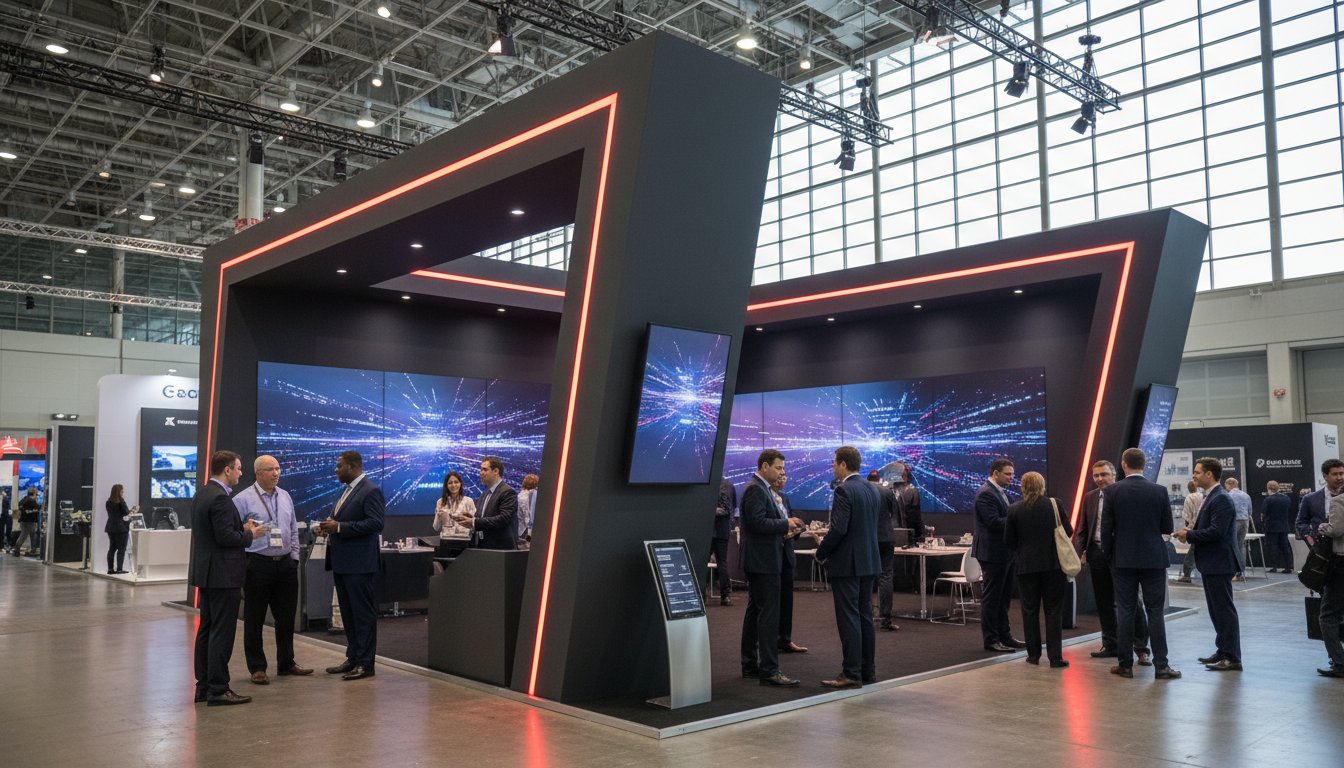
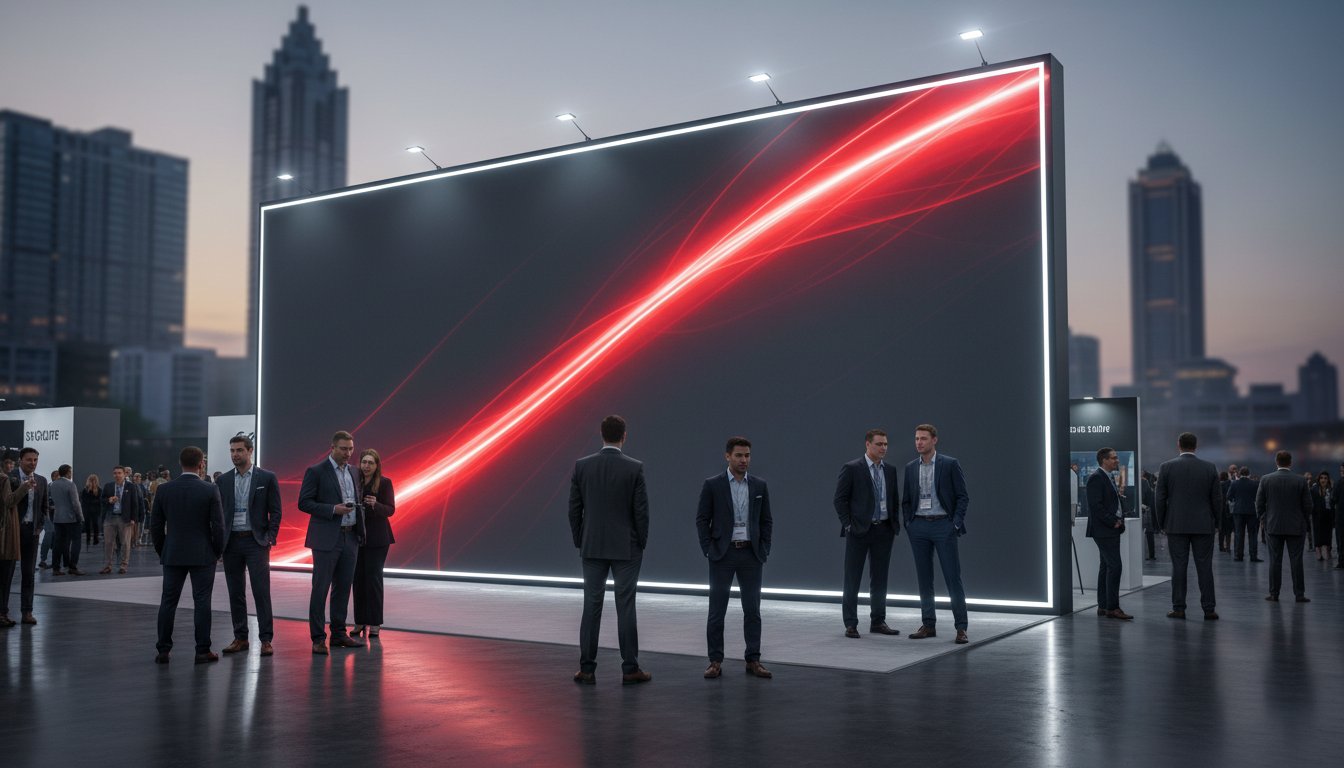
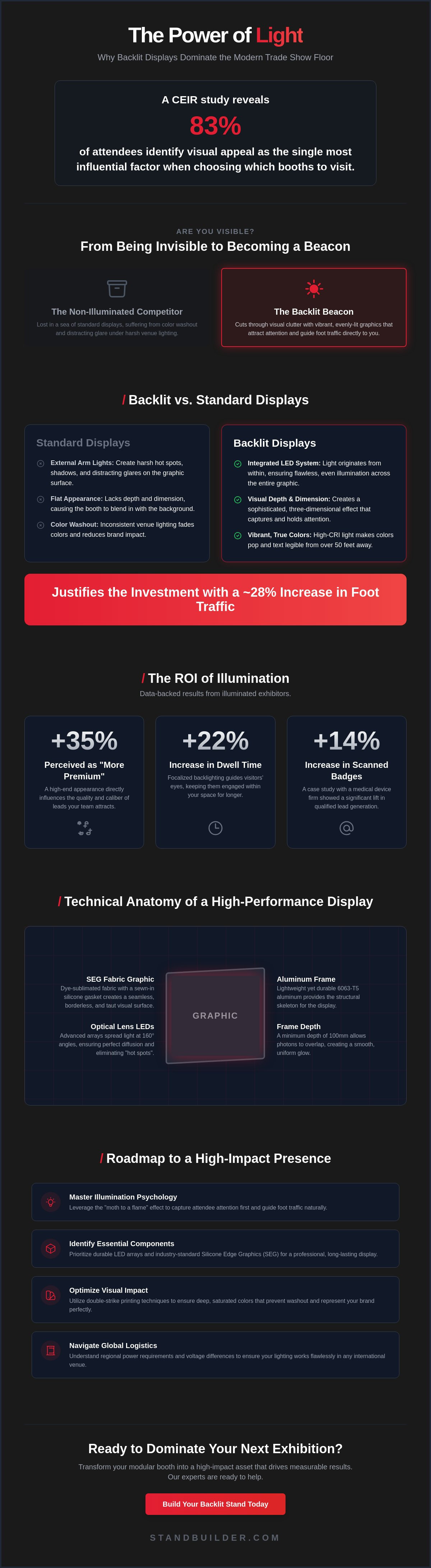
A 2024 Center for Exhibition Industry Research study reveals that 83% of attendees identify visual appeal as the single most influential factor when choosing which booths to visit. If you feel your brand is currently invisible among hundreds of non-illuminated competitors, you aren't alone. It's a common challenge for exhibitors trying to maintain a premium presence on a crowded floor. Investing in a backlit trade show display is no longer just a design choice; it's a strategic necessity to act as a beacon for foot traffic in any international venue.
You'll learn how to leverage the latest 2026 LED technology to double your visitor engagement and eliminate the fear of on-site technical failures. We provide a clear roadmap for selecting durable fabrics and navigating complex international shipping regulations. From understanding global safety compliance to finding the right bespoke stands through our contractor network, this guide prepares you to dominate your next exhibition with confidence and efficiency. Follow these steps to transform your modular booths into high-impact assets that drive measurable results.
Key Takeaways
- Master the psychology of illumination to capture attendee attention and naturally increase your booth's foot traffic in crowded exhibition halls.
- Identify the essential components of a high-performance backlit trade show display, from durable LED arrays to industry-standard Silicone Edge Graphics (SEG).
- Optimize your visual impact by utilizing double-strike printing techniques that prevent color washout and ensure premium brand representation.
- Simplify global logistics by understanding regional power requirements and voltage differences to ensure your lighting works flawlessly in any international venue.
- Learn how to integrate architectural lighting into bespoke stand designs to create a sophisticated, high-end presence that outshines standard modular booths.
The Psychology of Illumination: Why Backlit Displays Dominate the Trade Show Floor
A backlit trade show display is a sophisticated architectural element that uses integrated LED systems to transform static graphics into vibrant brand experiences. It functions on the principle of human phototaxis, often called the "moth to a flame" effect. Human eyes are biologically programmed to prioritize the brightest light source in their field of vision. On a crowded exhibition floor, this means your booth captures attention before the attendee even processes your marketing copy. By leveraging advanced backlighting technology, exhibitors create a focal point that cuts through the visual clutter of a high-traffic hall.
The perceived value of your brand shifts when you move from front-lit to illuminated graphics. Standard fabric displays often suffer from color washout under the inconsistent, high-intensity discharge lamps found in major venues like the Las Vegas Convention Center. Backlighting provides a consistent, high-CRI (Color Rendering Index) light source that makes colors pop and text legible from 50 feet away. A 2023 industry report found that booths utilizing light-box technology were perceived as 35% more "premium" by attendees compared to booths using traditional pop-up displays. This perception of quality directly influences the caliber of leads your team attracts during the event.
Backlit vs. Standard Trade Show Displays
Standard displays rely on external arm lights that create hot spots and distracting glares on the fabric surface. This often results in a flat, two-dimensional appearance that fails to grab attention. In contrast, a backlit trade show display provides depth. The light originates from within the frame, which eliminates shadows and ensures every inch of the graphic is evenly saturated. This professional finish is essential for brand awareness. While the hardware requires a specific budget, the 28% increase in foot traffic typically reported by illuminated exhibitors justifies the initial procurement costs. It’s an investment in visibility that pays dividends in booth engagement.
The ROI of Visual Focalization
Illumination is a tool for directional flow. You can use light to guide a visitor’s eye directly toward your primary call to action or a new product launch. This strategy increases "dwell time," the duration an attendee stays within your booth space. Data from 2024 exhibitions shows that focalized backlighting can boost dwell time by 22%. This extended engagement window is critical for lead generation. A recent case study involving a medical device manufacturer demonstrated that switching to high-output backlit walls led to a 14% increase in scanned badges over a three-day event. Use light to simplify the visitor’s decision-making process and move them toward a conversion.
Technical Anatomy: LEDs, SEG Graphics, and the Mechanics of Light
A high-performance backlit trade show display relies on the precise integration of three components: the aluminum frame, the LED light source, and the graphic skin. Engineering these elements to work in harmony ensures your booth remains visible across a crowded exhibition hall. The frame provides the structural skeleton, usually constructed from lightweight 6063-T5 aluminum, which supports both the lighting array and the tensioned fabric.
Silicone Edge Graphics (SEG) represent the current pinnacle of display technology. SEG is the tension-fit fabric solution for 2026. By sewing a thin silicone gasket into the edge of a dye-sublimated fabric print, installers can press the graphic into a recessed groove on the frame. This creates a borderless appearance that eliminates the sagging often seen in traditional Velcro-attached banners. The result is a professional, high-end finish that withstands the rigors of multi-day events.
Proper light diffusion is the difference between a premium display and a budget alternative. Cheap systems often suffer from "hot spotting," where individual LED diodes create bright circles behind the graphic. To solve this, 2026 designs utilize optical lenses that spread light at 160-degree angles. Maintaining a frame depth of at least 100mm provides the necessary space for photons to overlap, creating a smooth, uniform glow across the entire surface.
LED Technology: Edge-Lit vs. Back-Lit
Choosing the right lighting architecture depends on your booth's scale. Edge-lit displays house LEDs within the frame's perimeter, firing light inward toward the center. This design is highly portable and allows for ultra-slim profiles. For larger installations, back-lit ladder lights are the superior choice. These rows of LEDs hang directly behind the fabric, providing maximum brightness and consistent illumination for graphics exceeding 3 meters in width. Modern 24V LED systems now reduce heat output by 18% compared to 2022 standards, extending the life of your printed graphics and reducing energy consumption.
Kelvin and Color Fidelity: Getting the Brand Right
Color accuracy is non-negotiable for corporate branding. Most backlit trade show display units use 6500K (Daylight) LEDs because they provide a neutral white light that doesn't distort printed hues. Using a lower Kelvin rating, such as 3000K, will make your brand's blues look green and your whites look yellow. Look for LEDs with a Color Rendering Index (CRI) of 90 or higher to ensure your products look as vibrant in the booth as they do in person. You can request quotes from expert contractors who provide detailed lighting specifications to guarantee your brand colors remain consistent across international venues.
Strategic Design: How to Optimize Graphics for Backlighting
A standard graphic panel relies on ambient light reflecting off its surface. This logic fails for a backlit trade show display because the light source originates from behind the fabric. Without specific optimization, your brand colors will appear desaturated and your imagery will lose its punch. Professional exhibitors in 2026 prioritize "double-strike" printing. This process applies two layers of ink to the substrate, ensuring that colors remain vivid and blacks stay deep even when high-intensity LEDs shine through them. Without this density, dark areas often look "milky" or grey under illumination.
Success requires high-contrast imagery and bold, legible typography. Don't use thin serif fonts; they tend to "bleed" or disappear when the light is too bright. Opt for heavy sans-serif typefaces that maintain their edge against the glow. If you're transitioning from traditional panels to illuminated ones, explore custom trade show displays to understand how different structures support these specialized graphics. High-impact designs utilize the light to guide the visitor's eye directly to the call to action.
Designing for Translucency
Large dark gradients often create muddy visual zones in a backlit environment. Designers should focus on negative space to maximize the "glow" effect. Keep your resolution at a minimum of 100 to 125 DPI at full print size. Lower resolutions result in visible pixels that are magnified by the internal light source. Use vector files for logos to ensure crisp edges that stand out against the luminous background. This technical precision prevents the "soft" look that ruins professional branding.
Layering Light and Texture
Premium exhibits now combine a backlit trade show display with 3D elements for added depth. Adding raised acrylic lettering over a backlit fabric creates a sophisticated shadow effect that catches the eye from across the hall. Technical flexibility is also vital. Use dimmable LEDs to adapt to varying hall brightness levels. A 2025 industry survey showed that 68 percent of exhibitors now prefer adjustable lighting to compensate for different venue Lux levels. For high-tech brands, dynamic LED backlighting allows for subtle motion. You can program a pulsing glow or a slow color shift to draw attention without the high cost of a full-scale video wall.
Global Logistics and Safety: Navigating International Requirements
Shipping a backlit trade show display across borders shouldn't be a source of stress. The primary objection exhibitors face involves the perceived complexity of moving electronics and matching local power grids. We eliminate these hurdles through standardized components and local expertise in key markets. With strategic hubs in Atlanta and Ratingen, we provide the local support necessary to bridge the gap between North American and European logistics.
Power requirements differ significantly between regions. While the US operates on a 110V standard, European venues utilize 230V. To avoid equipment failure or hazardous shorts, ensure your LED power supplies are universal or auto-switching, covering the 100V to 240V range. Modularity is equally critical for international air freight. By utilizing compact frame sections that break down into units under 1.2 meters, you reduce shipping volume and avoid the steep surcharges associated with oversized crates. It's a simple way to keep your budget focused on design rather than logistics.
Fire Safety and Certification (B1, M1, NFPA 701)
Compliance is non-negotiable in 2026. European venues are particularly strict; German halls require DIN 4102-1 (B1) certification, while French organizers look for M1 ratings. In the US, the NFPA 701 standard remains the benchmark for textile safety. If your backlit fabric lacks these specific certificates, fire marshals have the authority to prevent you from powering your booth. Don't risk a dark stand. Always request official testing documentation from your supplier before finalizing your order. Using non-certified fabrics in strict European venues can lead to immediate booth closure or expensive on-site fireproofing treatments.
Logistics: Packing for Protection
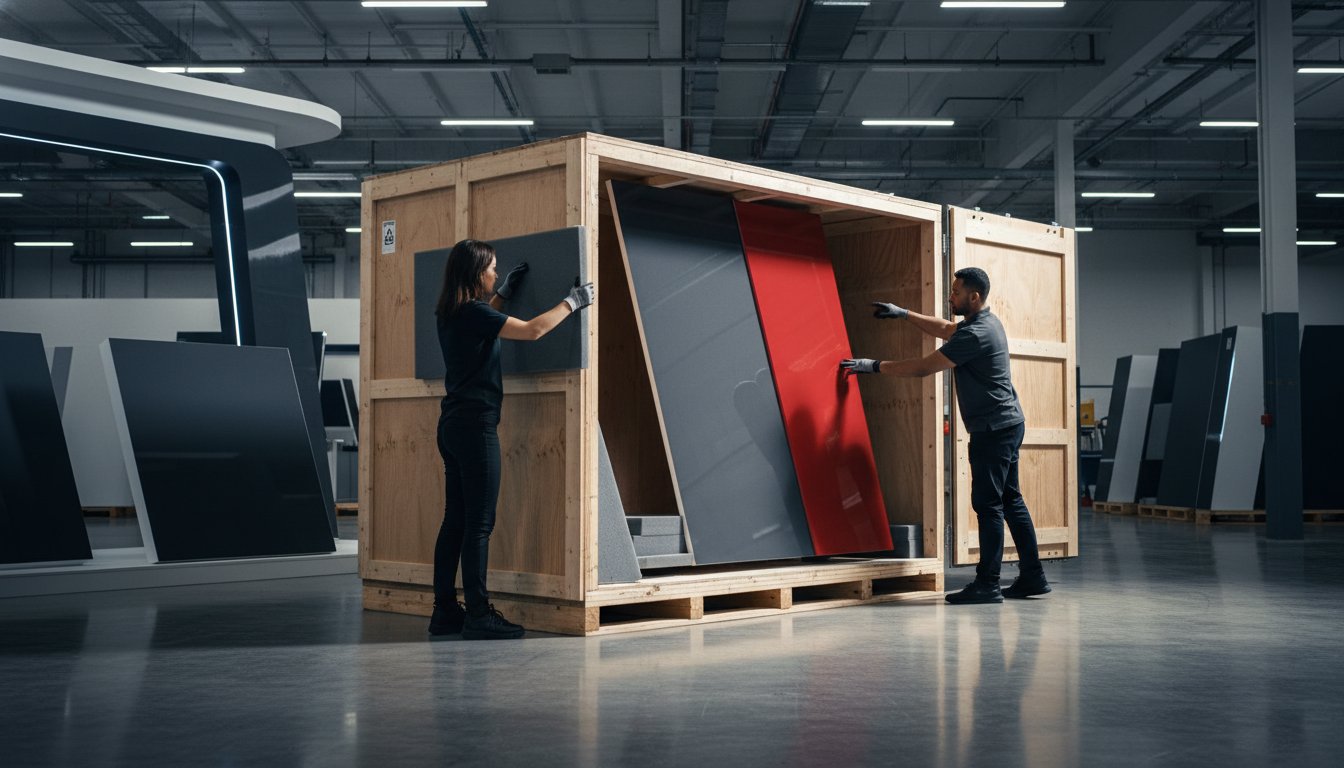
The delicate nature of LED ladders and SEG frames requires specialized handling to ensure they arrive functional. Use custom foam inserts to secure LED components and prevent vibration damage during transit. For maximum efficiency, invest in hard-shell shipping cases that convert into functional reception counters on the show floor. This strategy reduces waste and saves on drayage and storage fees. For more details on integrating these elements into a cohesive plan, read our guide on the trade show backdrop and its role in global logistics.
Our network simplifies the procurement process by connecting you with vetted local experts who understand these regional nuances. Stop guessing and start planning with confidence by leveraging our global reach.
Beyond the Kit: Integrating Backlighting into Bespoke Stands
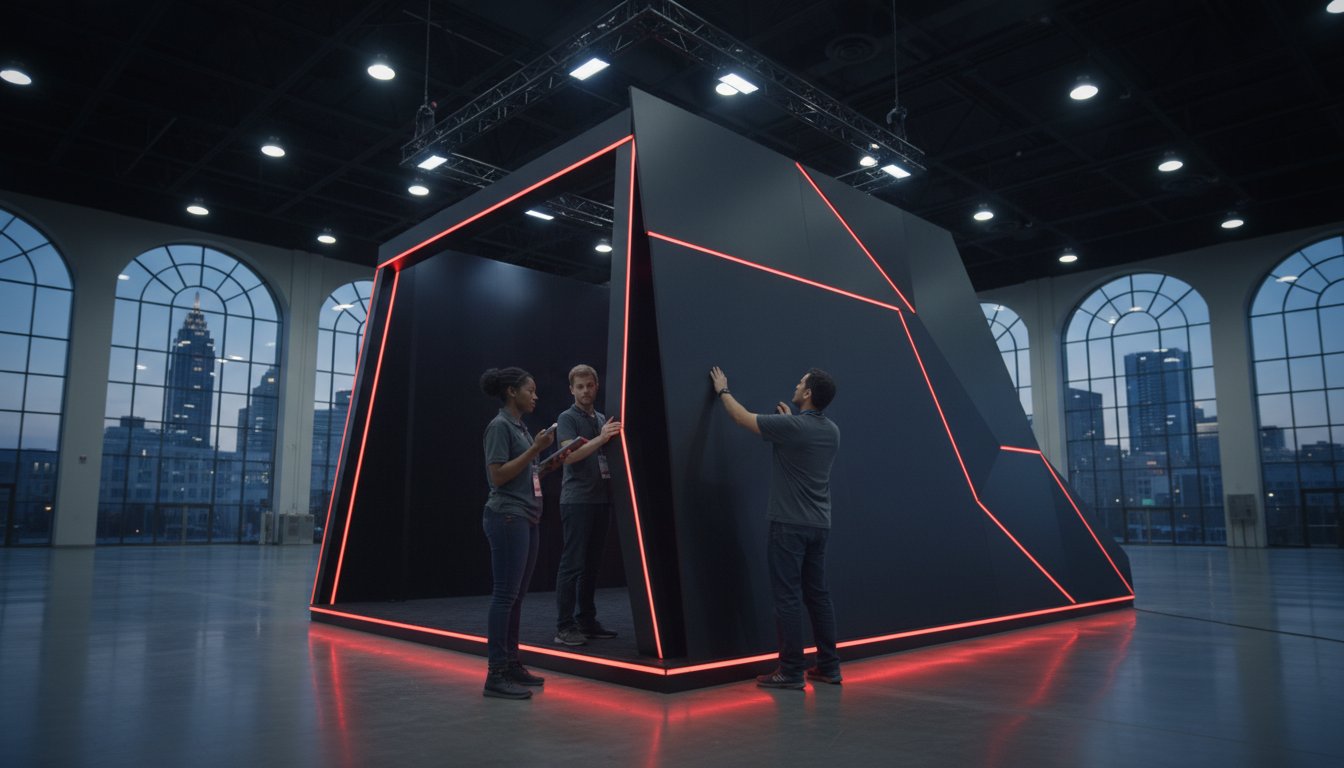
While portable light boxes offer convenience for smaller footprints, high-tier exhibitors in 2026 are moving toward fully integrated architectural lighting. A backlit trade show display shouldn't look like an afterthought; it must be part of the stand's structural DNA. This transition involves embedding high-output LED sources directly into the framework of custom exhibition stand design to create seamless, glowing surfaces. These bespoke solutions move beyond standard rectangular frames, allowing for massive, uninterrupted visual statements that command attention from across the hall.
Architectural Backlighting
Designers use light to define specific zones within a large custom booth without using physical walls. Recessed backlit ceiling elements signal VIP lounges, while backlit flooring guides traffic toward product demos. In 2026, custom fabrications allow for curved light boxes and organic shapes that break the traditional box aesthetic. These structures use tensioned fabric and advanced LED arrays to achieve uniform illumination across complex surfaces. Double-decker stands utilize this by illuminating the second-story underside, keeping the ground floor bright and inviting. For country pavilions, large-scale backlit murals create a cohesive identity that remains visible from 50 feet away.
The Standbuilder Advantage
Standbuilder simplifies the complex logistics of global exhibiting. We manage the entire lifecycle of your backlit trade show display from our headquarters in Atlanta to any international venue. Our team ensures precision fabrication of custom structures that meet specific local electrical codes and safety standards. Through our strategic partnership with CBS Neospace, we provide seamless European execution in major markets like Germany, France, and the UK. This network allows us to deliver bespoke stands that maintain brand consistency while navigating regional technical requirements effortlessly. We act as your expert facilitator, ensuring that complex lighting rigs are installed correctly and on time.
Successful exhibiting requires a balance of high-impact design and logistical precision. By integrating light into the very fabric of your booth, you create an immersive environment that attracts more leads and reinforces your market authority. Standbuilder provides the tools and the network to make this process predictable and efficient.
Find the right partner for your next international show. Request five free quotes and a custom 3D design to see how integrated lighting transforms your space. Standbuilder makes the procurement process hassle-free, moving you from uncertainty to a final decision quickly.
Dominate the 2026 Trade Show Floor
The 2026 exhibition landscape requires strategic visual impact. Integrating a backlit trade show display ensures your brand captures attention in crowded halls. Research from the Center for Exhibition Industry Research (CEIR) identifies high-quality visuals as the primary driver for booth traffic. By combining LED technology with SEG graphics, you'll reduce setup times and maximize visibility. Navigating global logistics becomes effortless when you partner with experts who understand international safety standards.
Standbuilder brings 25 years of international expertise to your project. With strategic hubs in Atlanta and Germany, we manage everything from initial concept to final logistics. Our team handles the technical anatomy of bespoke stands, ensuring your exhibit meets local requirements without friction. You don't have to manage these details alone. We provide the end-to-end fabrication and support needed to transform your brand into a beacon.
Take the first step toward a high-impact presence today. Request a Free 3D Design Quote for Your Backlit Exhibit and see how our global reach simplifies your next event. We're ready to help you shine.
Frequently Asked Questions
What is a backlit trade show display and how does it work?
A backlit trade show display uses internal LED modules to illuminate a fabric graphic from behind, creating high-contrast visuals. Most modern systems utilize Silicone Edge Graphics (SEG) that tuck into a perimeter groove on an aluminum frame. This setup ensures even light distribution across the entire surface, which helps increase booth foot traffic by up to 40 percent according to industry visibility studies.
Are backlit displays difficult to set up compared to standard booths?
Most backlit trade show display systems feature tool-free assembly and take less than 20 minutes to install. You simply click the aluminum frame sections together and plug in the pre-installed LED strips. This efficiency reduces labor costs and allows a single person to manage the entire setup process without professional assistance at venues like Messe Frankfurt or Paris Expo Porte de Versailles.
Can I change the graphics on my backlit display for different shows?
You can swap graphics in minutes by replacing the SEG fabric skins without purchasing new hardware. These tension fabric prints are designed for easy removal and installation while the frame remains standing. This modularity allows you to update your marketing message for specific events or different target audiences while keeping your core infrastructure investment intact for multiple years.
What fire safety certifications do I need for a backlit display in Europe?
Exhibitors must ensure their fabric graphics meet the B1 fire retardant certification under the DIN 4102-1 standard or the European EN 13501-1 standard. These certifications are mandatory for major European venues and are checked by fire marshals during move-in. Always request a valid certificate from your supplier to ensure your stand complies with safety regulations at international exhibitions.
How long do the LED lights in a backlit display typically last?
High-quality LED modules used in these displays typically have a rated lifespan of 50,000 hours. If you use your display for 10 hours a day at 15 shows annually, the lights will remain functional for over 30 years. This longevity makes them a more sustainable choice compared to traditional halogen lighting systems that were common in the industry before 2015.
Do backlit trade show displays require special power requirements?
Most systems run on standard 110V or 220V power outlets and include low-voltage transformers to ensure safety. A standard 3 meter backlit wall typically draws less than 5 amps of power during operation. This low energy consumption means you don't need to order expensive high-voltage power drops from the exhibition organizer in 95 percent of standard booth configurations.
Is backlighting worth the extra cost for a 10x10 booth?
Backlighting is a high-impact investment that increases attendee engagement by 30 percent compared to non-illuminated displays. In a crowded 10x10 environment, the added luminosity helps your brand stand out from neighbors who rely on ambient hall lighting. It's a strategic choice to maximize your ROI in small spaces where capturing attention quickly is the primary goal.
Can I use a backlit display for outdoor events?
You shouldn't use standard indoor backlit units for outdoor events unless they carry an IP65 weather-resistance rating. Standard units are susceptible to wind damage and electrical shorts from moisture or rain. For outdoor use, you must select specialized frames with weighted bases and waterproof LED components to ensure safety and durability in variable weather conditions.