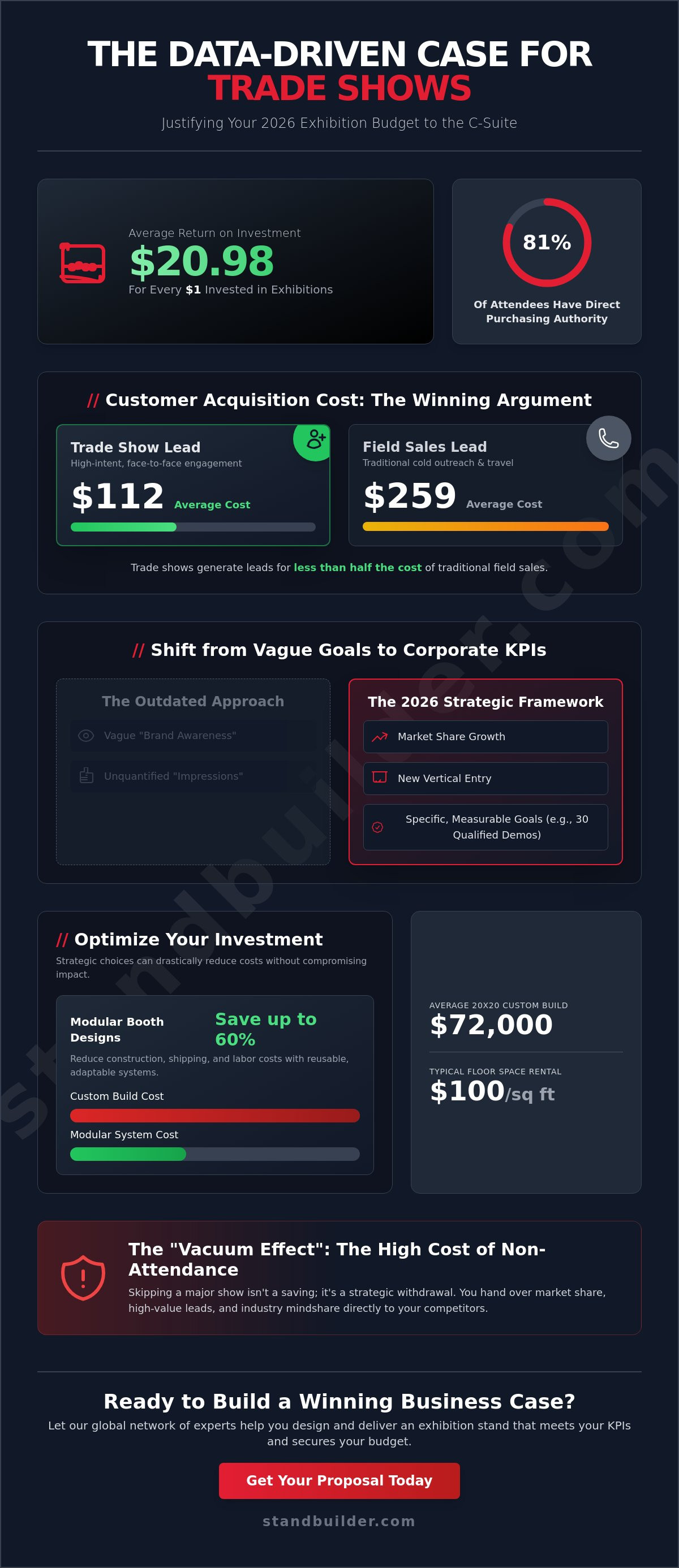
Did you know that for every $1 your company invests in a trade show, the average return is now $20.98? It's frustrating when the C-suite views your 2026 exhibition calendar as a series of expensive vacations rather than a high-speed pipeline accelerator. You know the value is there, but with the average cost of a 20x20 custom build reaching $72,000, the pressure to prove performance is higher than ever. This guide provides the exact data-driven framework you need for justifying trade show expenses to management and securing your next signed-off budget.
We'll break down the latest 2026 cost benchmarks, from $100 per square foot rental fees to the 50% tax deduction rules for business meals. You'll learn how to present exhibitions as a strategic investment that generates leads at a cost of $112 each, which is less than half the $259 required for traditional field sales calls. We'll explore how to use modular booth designs to save up to 60% on construction and provide a clear reporting structure that transforms raw data into a compelling business case for the board. It's time to move from budget uncertainty to a state of confident, data-backed decision-making.
Key Takeaways
- Shift your strategy from vague brand awareness to specific 2026 corporate KPIs like market share growth and new vertical entry.
- Calculate your Return on Objective (ROO) to prove that trade show Customer Acquisition Costs (CAC) are often lower than digital or cold outreach.
- Build a stronger business case for justifying trade show expenses to management by highlighting the "Vacuum Effect" and the high risk of non-attendance.
- Follow a structured five-step pitch framework that aligns your event goals with executive priorities and pipeline acceleration data.
- Reduce hidden logistics costs by utilizing a global network for bespoke stands and modular systems across international markets.
Aligning Trade Show Objectives with 2026 Corporate KPIs
Management often views trade show proposals as discretionary spending because the justification focuses on brand presence. In 2026, this vague terminology is the quickest way to get a budget rejected. Decision-makers don't buy presence; they buy market share, pipeline acceleration, and high-value customer acquisition. With the global trade show market projected to reach $51.3 billion in revenue this year, your strategy must move from simple event planning to strategic market intervention. You aren't just booking a booth. You're securing a platform for growth.
Start by understanding the role of trade shows as a high-density sales environment. In 2026, 81% of attendees have direct purchasing authority. This isn't a networking event. It's a concentrated marketplace where you can compress a six-month sales cycle into three days. When justifying trade show expenses to management, you must map every dollar to 2026 corporate KPIs. If the company's goal is to enter a new vertical, your booth isn't just a stand; it's a beachhead in a new territory. Every activity on the floor should serve a specific, measurable business outcome.
Identifying Your Management's 'Primary Value Driver'
You must speak the language of your specific executive. A CEO focuses on market dominance and competitive displacement. A CFO looks at the $112 average cost per lead at a show versus the $259 cost for a traditional field sales call. Tailor your pitch to show how the event solves their specific pain points. Set SMART goals that mirror your quarterly business reviews. Instead of "getting leads," aim for "30 qualified demos with Tier-1 accounts in the renewable energy sector." This level of specificity makes the budget feel like a calculated investment rather than a gamble.
The Role of Bespoke Environments in Goal Achievement
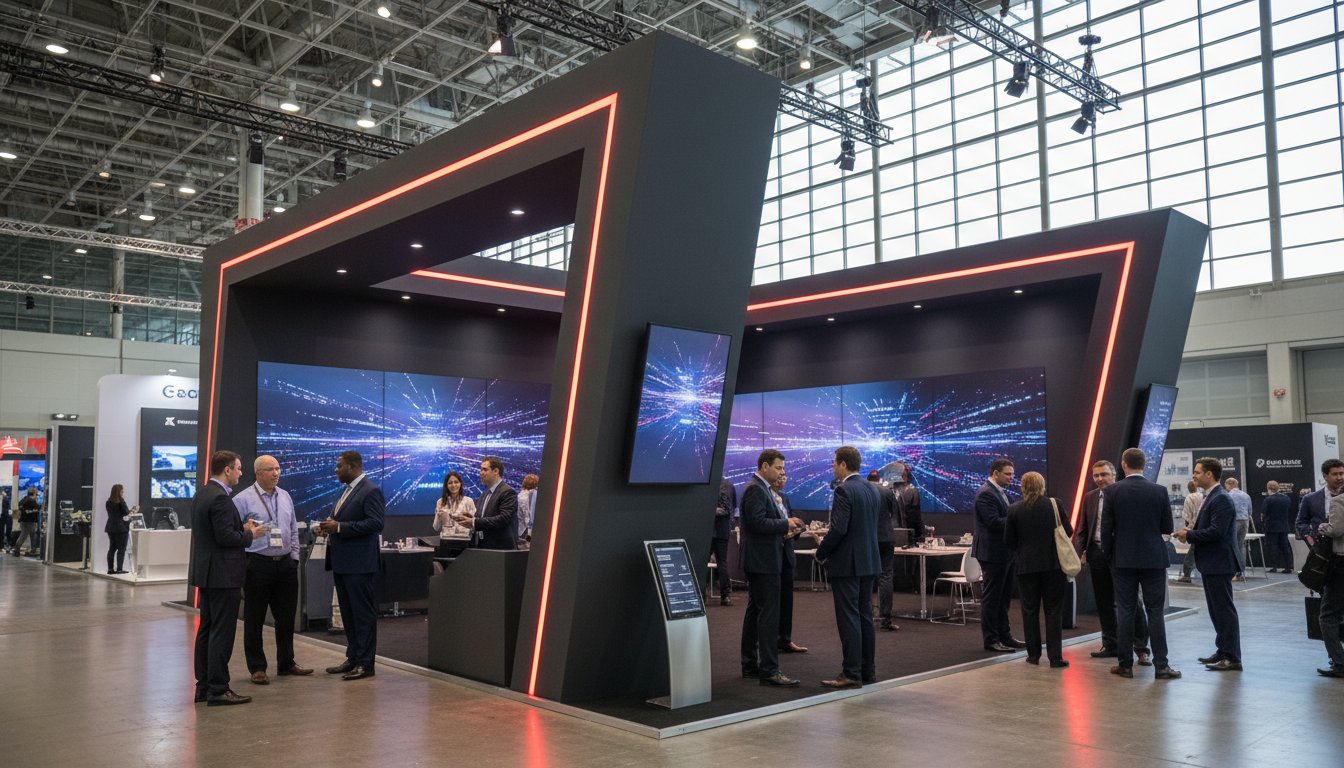
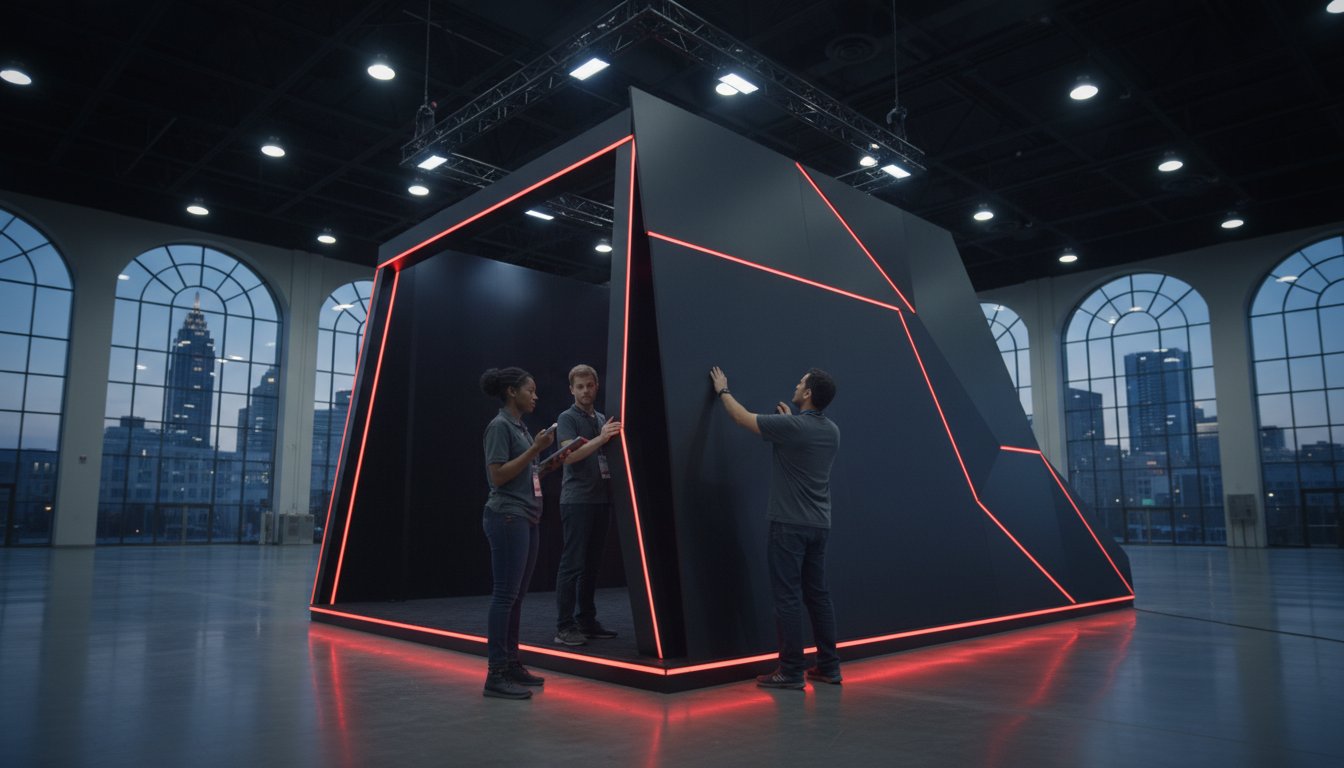
A physical structure is merely a tool for conversion. High-standard custom exhibition stand design creates a controlled environment where you can manage the prospect's journey from the first glance to a signed Letter of Intent. It provides the "Golden Thread" of brand consistency that 77% of executive attendees use to identify new, reliable suppliers. Whether you use modular systems for regional agility or double-decker stands for high-stakes hospitality, your design must serve the KPI. A bespoke environment isn't about aesthetics; it's about engineering the trust necessary to close enterprise-level deals. This strategic approach is the foundation for justifying trade show expenses to management successfully.
Calculating the Real ROI: Metrics That Win Budget Approval
Stop presenting trade show success through the lens of booth traffic or "brand impressions." Management doesn't want a highlight reel; they want a spreadsheet that correlates with the bottom line. While companies report an average ROI of $20.98 for every $1 spent, the real power lies in Return on Objective (ROO). This metric shifts the focus from raw sales to how effectively the event met specific strategic goals. Whether your aim is customer retention or market penetration, quantifying these outcomes is the only way to succeed in justifying trade show expenses to management for the 2026 fiscal year.
The most compelling data point for any CFO is the Customer Acquisition Cost (CAC) comparison. Current industry data shows the average cost per qualified lead at a trade show ranges between $150 and $500, depending on the sector. This is significantly lower than the resources required for cold outreach or digital performance marketing, which often involve long lead-nurturing cycles. The International Trade Administration highlights the strategic benefits of trade shows for expanding market reach, noting that face-to-face interactions build trust faster than any digital touchpoint. By shortening the sales cycle by an average of 2 to 3 months, events act as a pipeline accelerator that digital channels simply can't match.
The Direct Cost Comparison Framework
To win budget approval, present a direct comparison of meeting costs. Calculate the expense of securing 50 in-person meetings at a single event versus the cost of 50 individual sales trips. When you factor in airfare, lodging, and the lost productivity of 50 separate travel days, the trade show becomes the more efficient choice. It's a high-density environment where your team can conduct a quarter's worth of business in 72 hours. To keep these operational costs predictable, you can request and compare quotes from local contractors to avoid the high markup of international shipping and logistics.
Quantifying Intangible Asset Growth
Don't overlook the value of competitive intelligence and R&D feedback. A trade show floor is a live laboratory where you can measure your "Share of Voice" against every major competitor simultaneously. Assign a dollar value to the insights gathered from hundreds of prospect conversations. This real-time feedback for product development can save thousands in future market research costs. When justifying trade show expenses to management, frame these "intangibles" as a strategic data harvest that informs your entire 2026 marketing roadmap.
The 'Alternative Cost' Argument: The Risk of Non-Attendance
Management often asks if LinkedIn or Zoom can replace the physical trade show floor. They can't. Digital outreach is a supplement, not a substitute. When you skip a major event, you create a "Vacuum Effect." Your absence doesn't just save money; it hands over your market share to the competitor who took your floor space. According to Trade Show ROI Statistics, 77% of executive attendees discover at least one new supplier at these events. If you aren't there to be discovered, you aren't in the conversation. When justifying trade show expenses to management, frame the 'alternative cost' of non-attendance as a deliberate choice to cede market share.
Missing a major industry show also means missing the "unscripted" opportunities that drive innovation. You lose the chance to see a competitor's new product launch firsthand or hear a key client's frustration with a current vendor. These insights are rarely shared over a scheduled video call. By the time this information reaches your CRM through digital channels, the opportunity has likely passed. The risk of being out of the loop in a fast-moving 2026 market is a financial liability that far outweighs the cost of a booth.
Competitive Presence and Market Perception
Your presence sends a signal. Being absent from a key industry event suggests a lack of stability or a shift in focus. It's about more than just a booth. High-quality trade show backdrops and cohesive visual design define your position as a market leader. When existing customers walk the floor and see your rivals showcasing innovation while you're invisible, it triggers doubt. This psychological impact is a hidden cost that's difficult to quantify until renewal rates drop. Justifying trade show expenses to management requires highlighting these risks. You aren't just paying for space; you're paying for the right to remain a relevant choice in the buyer's mind.
The Efficiency of Aggregated Networking
Think of a trade show as time-compressed sales. You can achieve six months of networking in just three days. Closing complex, multi-stakeholder deals is significantly easier when all decision-makers are in one booth. Digital meetings often stall because of scheduling friction or video call fatigue. On the floor, you have their undivided attention. This reduces the friction of distance, especially in international business where building trust face-to-face is culturally essential. In 2026, 81% of attendees have purchasing authority. Missing a show means missing the most efficient window to move these high-value prospects through the funnel.
Structuring Your Pitch: A 5-Step Presentation Framework
Winning approval for your 2026 exhibition calendar requires more than a casual conversation. You need a formal, high-impact pitch that mirrors an investment proposal. Use this five-step framework to streamline the process of justifying trade show expenses to management and securing the necessary signatures. By presenting your plan as a data-backed strategy rather than a marketing request, you align yourself with the C-suite's focus on efficiency and growth.
Step 1: The Executive Summary. Open by defining the specific corporate KPI this event supports. Whether it's increasing market share in a specific region or launching a new product line, lead with the "Why." Step 2: The Data Dump. Use the metrics established earlier. Compare the $112 trade show lead cost to the $259 traditional sales call cost. Highlight how the event compresses the sales cycle. Step 3: Strategic Design. Explain how the physical environment, such as a double-decker stand or a modular booth, is engineered to facilitate these numbers. Step 4: Risk Assessment. Reiterate the "Vacuum Effect." Clearly state what the company loses by allowing a competitor to dominate the floor space. Step 5: The Partnership Advantage. Demonstrate how you'll control costs and maintain quality by using an expert facilitator to manage the procurement process. You can find and compare quotes from a vetted network of contractors to ensure the best value for the budget.
Visualizing the Impact
Management needs to see the investment to believe in it. Use 3D design renders to provide a realistic preview of the brand's physical presence. Don't just show a pretty picture. Present a floor plan that clearly differentiates between "Display Zones" for attracting traffic and "Meeting Zones" for closing deals. When you show exactly where the high-value conversations will happen, the budget shifts from an abstract cost to a tangible asset. This visual clarity is a powerful tool when justifying trade show expenses to management.
Handling Common Executive Objections
Be prepared for pushback. When the CFO says, "It's too expensive," reframe the cost-per-touchpoint. Remind them that one trade show can replace 50 individual sales trips, significantly reducing total travel and lodging expenses. If they mention poor ROI from previous years, identify the specific gaps, such as a lack of pre-scheduled meetings or a generic booth design, and explain how the 2026 strategy fixes them. By addressing these objections with data and logic, you demonstrate a business-like dependability that inspires confidence in your leadership.
Optimizing Your Investment with Global Stand Partners
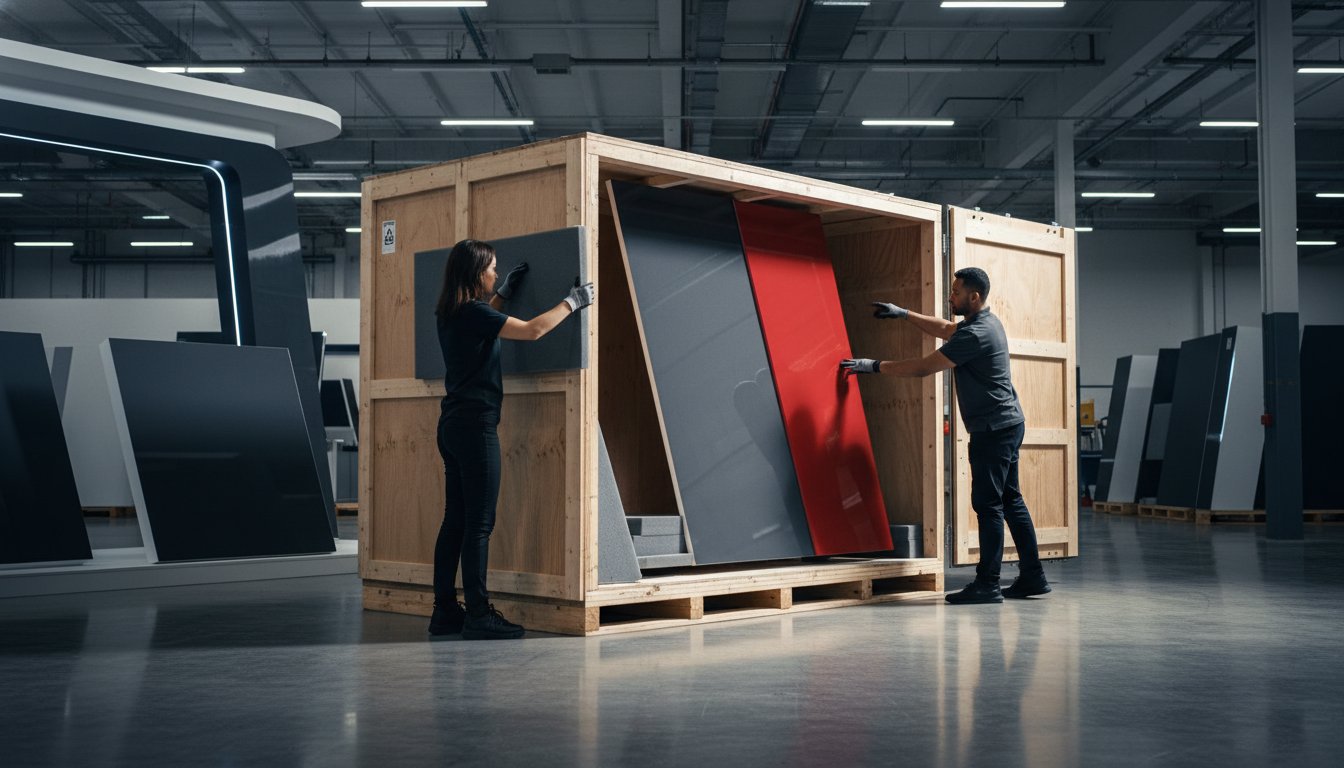
Execution is the final frontier in justifying trade show expenses to management. Once you've secured the initial buy-in using the framework discussed earlier, you must protect that budget from the erosion of hidden logistics costs. Partnering with a global facilitator like Standbuilder International transforms these variables into fixed, predictable expenses. Our strategic bridge between Atlanta and Ratingen provides a specialized advantage for US and European exhibitors. By utilizing local fabrication and project management on both continents, you eliminate the massive overhead of international freight and the unpredictability of customs delays. This ensures your capital stays focused on the visitor experience rather than the container ship.
One of the most effective ways to lower your long-term Customer Acquisition Cost (CAC) is through "Bespoke but Modular" stand systems. While a custom build offers high visibility, high-standard modular systems allow for significant cost amortization across a multi-show calendar. You can save between 40% and 60% on construction over a three-event cycle by reusing structural components while refreshing graphics and AV rentals. This approach allows you to present a high-impact presence at every show while demonstrating a declining cost-per-event to your CFO. You aren't just buying a temporary structure; you're investing in a reusable marketing asset.
Cost-Saving Through Strategic Logistics
Precision planning prevents the emergency on-site fees that frequently blow exhibition budgets. In high-cost hubs like Las Vegas, where union labor and drayage fees can start at $10,000 for a 10x10 rental, every minute of labor must be optimized. Local storage in Europe and the US ensures your assets are always close to the venue, reducing the risk of transit damage and expensive last-minute replacements. A single point of contact manages the entire global calendar, ensuring that your brand consistency remains intact while logistics remain invisible and efficient.
Finalizing the Business Case
Your final proposal should be a summary of efficiency, revenue potential, and risk mitigation. Demonstrating due diligence in the procurement phase is critical for winning executive approval. Our platform facilitates this by providing five free quotes from a vetted contractor network, proving to your board that you've compared the market to find the best value. This transparent approach is the final piece of the puzzle when justifying trade show expenses to management. It shows that you've done the work to protect the company's capital while positioning the brand for maximum growth in 2026.
Request a consultation to build your 2026 business case and start the process today.
Securing Your Competitive Edge for 2026
The transition from viewing exhibitions as a cost center to a strategic revenue driver is essential for any forward-thinking organization. You've seen how aligning your floor presence with specific 2026 corporate KPIs and quantifying the "Vacuum Effect" of non-attendance creates a bulletproof argument. By focusing on Return on Objective (ROO) and pipeline acceleration, justifying trade show expenses to management becomes a logical conversation about market dominance rather than a debate over travel budgets.
Success now depends on flawless execution and cost control. Our project management teams in Atlanta and Germany specialize in reducing international logistics risk while delivering bespoke 3D designs tailored to your specific conversion goals. Whether you're planning a double-decker stand for a flagship event or a modular system for a regional tour, the right partner ensures your data-backed plan translates into measurable results. It's time to stop just showing up and start winning.
Secure your 2026 exhibition success with a professional stand quote from Standbuilder International.
Frequently Asked Questions
How do I calculate the ROI of a trade show if our sales cycle is 12 months long?
Focus on pipeline acceleration and weighted lead value rather than final sale numbers. If your sales cycle is 12 months, track how many prospects moved from "discovery" to "proposal" during the event. This compression of the early funnel stages is a measurable financial gain. Assigning a dollar value to these stage-movements allows you to report progress in quarterly business reviews long before the final contract is signed.
What is a 'good' cost-per-lead for a major industry exhibition in 2026?
A competitive cost-per-lead (CPL) in 2026 generally falls between $150 and $500 for qualified B2B prospects. While raw leads might be cheaper, focusing on high-intent meetings ensures a higher quality score. Compare this to your digital acquisition costs, which often exceed $259 for traditional field sales calls. Keeping your CPL within this range demonstrates efficiency when justifying trade show expenses to management.
Is it better to rent or buy a trade show booth to save money?
Renting a modular or custom exhibit typically saves 40% to 60% compared to a full custom purchase. This is the ideal choice for companies attending fewer than three shows annually or those testing new markets. Buying becomes more cost-effective if you plan to use the same structure for at least three events. This amortizes the fabrication costs and reduces long-term capital expenditure for the business.
How can I prove brand awareness value to a CFO who only cares about sales?
Reframe "brand awareness" as "competitive displacement" or "market share protection." Use data to show that being absent allows rivals to capture 77% of executive attendees who are actively looking for new suppliers. A CFO cares about the "Vacuum Effect," where your lack of presence creates a direct revenue opportunity for your competitors. Quantify the risk of losing existing client trust to prove the financial necessity of the event.
What are the most common hidden costs that blow trade show budgets?
Drayage fees and mandatory union labor are the most frequent budget killers, especially in exhibition hubs like Las Vegas. These "hidden" logistics costs can easily add $10,000 to a 10x10 booth budget if not planned for in advance. Other common overruns include last-minute graphic changes, on-site electrical additions, and international shipping storage fees. Planning with a global partner helps fix these costs through local fabrication and precision project management.
How much should I spend on a custom booth relative to my total event budget?
Allocate approximately 30% of your total budget to floor space rental and another 30% to the exhibit design and construction. The remaining 40% should cover travel, lodging, marketing, and lead follow-up. Maintaining this ratio prevents overspending on the physical structure at the expense of the staff and promotion needed to drive ROI. This balanced approach is a critical part of justifying trade show expenses to management.
Can I justify a trade show expense if we don't have a new product to launch?
Use the event for customer retention and deep-dive competitive intelligence if you don't have a new launch. Trade shows are high-density environments where 81% of attendees have purchasing authority. You can conduct a year's worth of face-to-face account reviews in just three days. This prevents "churn" and allows your R&D team to gather feedback that saves thousands in future market research costs.
What data should I collect during the show to justify next year's budget?
Collect specific data points like "Cost per Quality Meeting" and "Pipeline Value Added" during the show. Track how many Tier-1 accounts visited your booth versus your top three competitors to measure "Share of Voice." Use digital lead retrieval systems to score prospects immediately by their purchasing authority and timeline. This raw data is the foundation for your post-show report, turning anecdotal success into the hard numbers management requires.