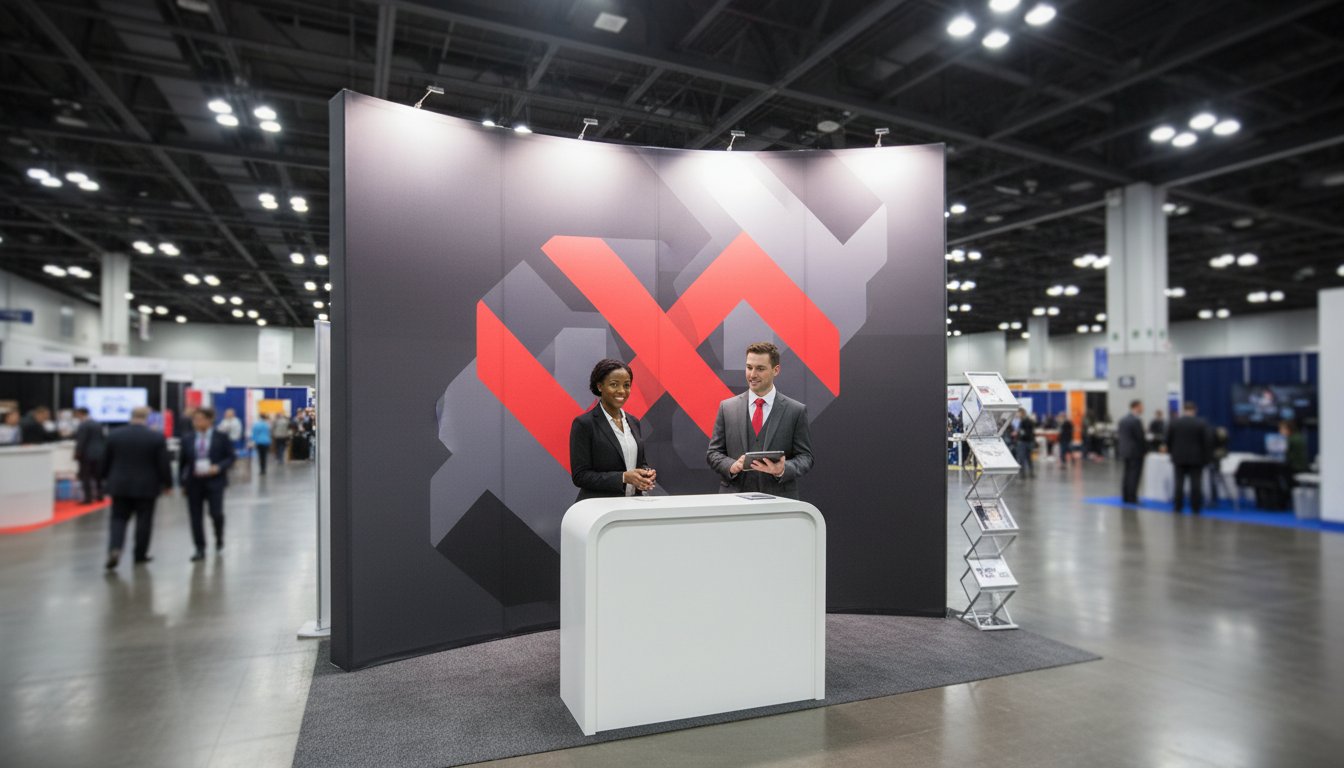
The most expensive bespoke booth on the floor often delivers a lower ROI than a kit that fits into a single shipping crate. You already know that shipping heavy materials for a three-day event in Dubai or London can consume up to 35% of your exhibition budget based on 2024 logistics benchmarks. It is frustrating to watch shipping fees climb while you search for portable trade show displays that don't look "cheap" next to massive custom stands. You want the presence of a bespoke build without the logistical nightmare of international freight.
You don't have to sacrifice brand authority to save on overhead. This guide shows you how to balance logistics and high-end aesthetics by choosing the right equipment for your 2026 global event calendar. We will explore modular configurations that mimic custom designs, reduce on-site labor hours, and accelerate your ROI at smaller regional shows. From fabric frames to tool-free assemblies, we provide the blueprint for a smarter, more efficient way to exhibit worldwide.
Key Takeaways
- Learn why modern portable trade show displays have evolved into high-precision, tool-less systems that prioritize both rapid deployment and long-term durability.
- Compare tension fabric, SEG, and pop-up technologies to identify which frame materials and aesthetics best align with your brand’s visual standards.
- Master the three-pillar framework of visual impact, logistical ease, and scalability to ensure your exhibit remains effective across various booth sizes.
- Navigate the complexities of international exhibiting by understanding regional shipping differences and the essential role of the ATA Carnet for global logistics.
- Discover the hybrid strategy that integrates lightweight backdrops with custom-fabricated counters and AV to achieve a high-end presence with minimal friction.
The Evolution of Portable Trade Show Displays in 2026
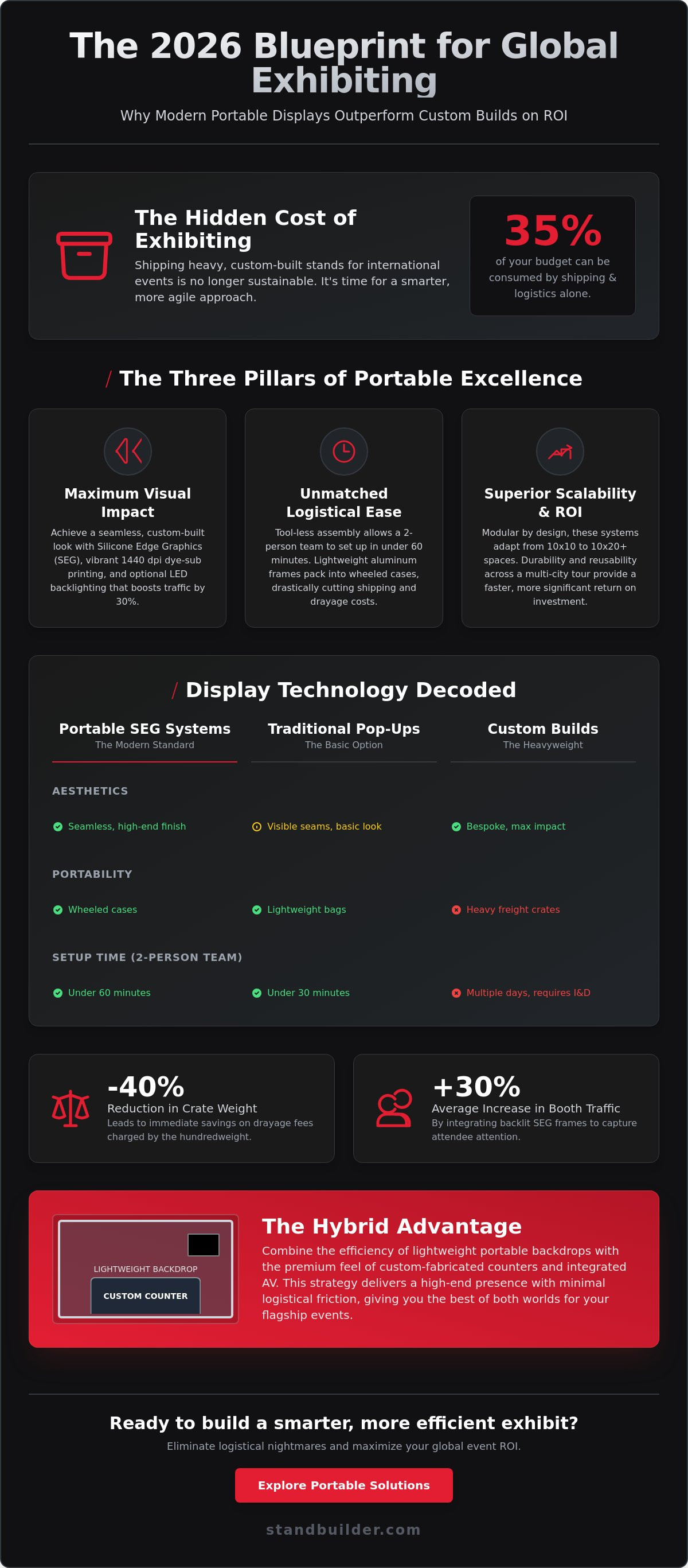
Modern portable trade show displays have transitioned from basic backdrops into high-precision, tool-less engineering systems. In 2026, the industry standard focuses on rapid deployment. Exhibitors no longer settle for "throwaway" vinyl banners that end up in landfills after three events. Instead, they invest in durable, modular assets that function as long-term hardware investments. This shift is driven by a 15% annual increase in the cost of raw materials, making reusable frames more economically viable than single-use alternatives. Agility defines the 2026 event strategy. Marketing teams now prioritize logistics as much as aesthetics. By utilizing lighter materials like recycled aluminum and high-tension fabrics, brands significantly reduce their carbon footprints. This isn't just a PR move. It's a response to the 20% rise in fuel surcharges seen over the last 24 months. The primary financial benefit remains the drastic reduction in drayage and storage fees. When your entire booth fits into a few wheeled cases, you bypass the need for heavy machinery and expensive warehouse space.Portable vs. Custom: When to Choose Portability
Evaluate your show frequency before signing a contract. If you're executing a multi-city tour with eight or more stops, portability is your best asset. These systems excel in 10x10 and 10x20 inline spaces because they maximize every square inch without the bulk of traditional timber builds. Analyze the "DIY" factor of your staff. If your sales team can handle the setup, you eliminate the need for a third-party labor crew. This autonomy is vital for smaller regional events where every hour of billable labor impacts your bottom line. Successful exhibitors often use these kits for smaller engagements while reserving bespoke builds for a single trade show flagship event each year.The ROI of Lightweight Exhibiting
Efficiency directly correlates with your return on investment. Lightweight exhibiting slashes expenses in shipping and material handling. Drayage is the cost of moving freight from the loading dock to your booth space. Because many venues charge by the hundredweight, cutting your crate weight by 40% leads to immediate savings. Faster installation and dismantling (I&D) further lower professional labor fees. A tool-less system allows a two-person team to finish a setup in under 60 minutes. This speed lets you focus on lead generation rather than managing crates and wrenches. Compare these operational savings against the initial purchase price to see the true value of modern portable trade show displays.Decoding Display Technology: Tension Fabric, SEG, and Pop-Ups
The structural integrity of portable trade show displays depends heavily on frame material selection. Most industry leaders utilize 6063-T5 aluminum alloy because it provides a superior strength-to-weight ratio compared to composite plastics. While composite frames offer a 15% weight reduction, they often lack the rigidity required to support integrated tech like 24-inch monitors or heavy product shelving. Aluminum remains the standard for durability; it resists warping under the high-intensity heat of hall lighting and withstands the rigors of frequent international shipping.
Aesthetic standards have shifted significantly from the magnetic PVC panels common in the early 2000s. Those traditional systems frequently suffered from visible seams and panel misalignment. Modern fabric alternatives eliminate these issues entirely. Using dye-sublimation printing at 1440 dpi, ink is heat-transferred directly into the polyester fibers. This process ensures colors remain vibrant and prevents the graphic from cracking when folded. For exhibitors targeting international venues, ensuring these fabrics carry B1 or M1 fire-safety certifications is vital. These ratings are mandatory at 90% of major European exhibition centers to comply with local safety ordinances.
Tension Fabric and SEG Systems
Silicone Edge Graphics (SEG) represent the current gold standard for a "custom-built" look within a modular framework. This technology uses a thin silicone strip sewn directly to the edge of the fabric, which then tucks into a recessed groove on the aluminum frame. The result is a drum-tight surface with no visible hardware. These 100% polyester fabrics are wrinkle-resistant and machine-washable, making them ideal for long-term use across multiple show cycles. To increase visual impact, many brands now integrate LED lightboxes into these frames, creating a backlit effect that increases booth traffic by an average of 30% compared to non-illuminated stands.
The Modern Pop-Up: Beyond the Accordion Frame
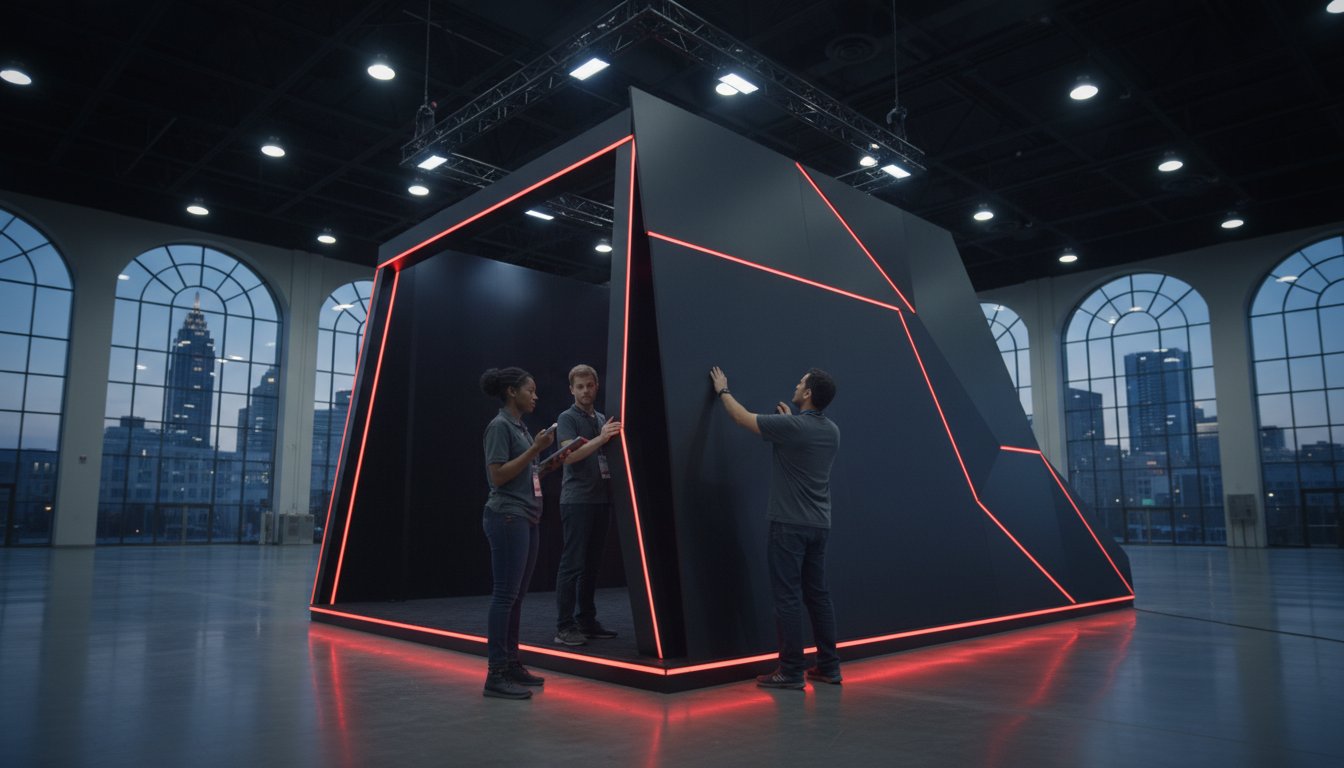
The new generation of portable trade show displays has moved away from complex accordion structures in favor of "zip-up" pillowcase designs and "click-together" tubular frames. These systems allow for a faster assembly, often requiring less than 15 minutes for a standard 10-foot backwall. Straight configurations maximize floor space, while curved frames improve spatial flow in corner allotments. Modern frames are engineered for versatility; you can now easily compare local contractors who provide specialized clamps for mounting tablets or heavy-duty shelving directly onto the lightweight skeleton without compromising stability. This modularity allows a single frame to adapt to various booth sizes and functional requirements throughout the year.
Portable vs. Modular vs. Custom: A Comparison Framework
To choose the right booth, you need a framework built on three pillars: Visual Impact, Logistical Ease, and Scalability. Many exhibitors mistakenly believe that portable trade show displays are restricted to small 10x10 footprints. This is an outdated view. Modern "Modular Portability" allows systems to expand or contract based on your floor plan. You aren't buying a single-use asset; you're investing in a system that grows with your brand. While 15% of exhibitors stick to one booth size for the entire year, the majority require flexibility to handle different venues and audience sizes.
The Visual Impact Hierarchy
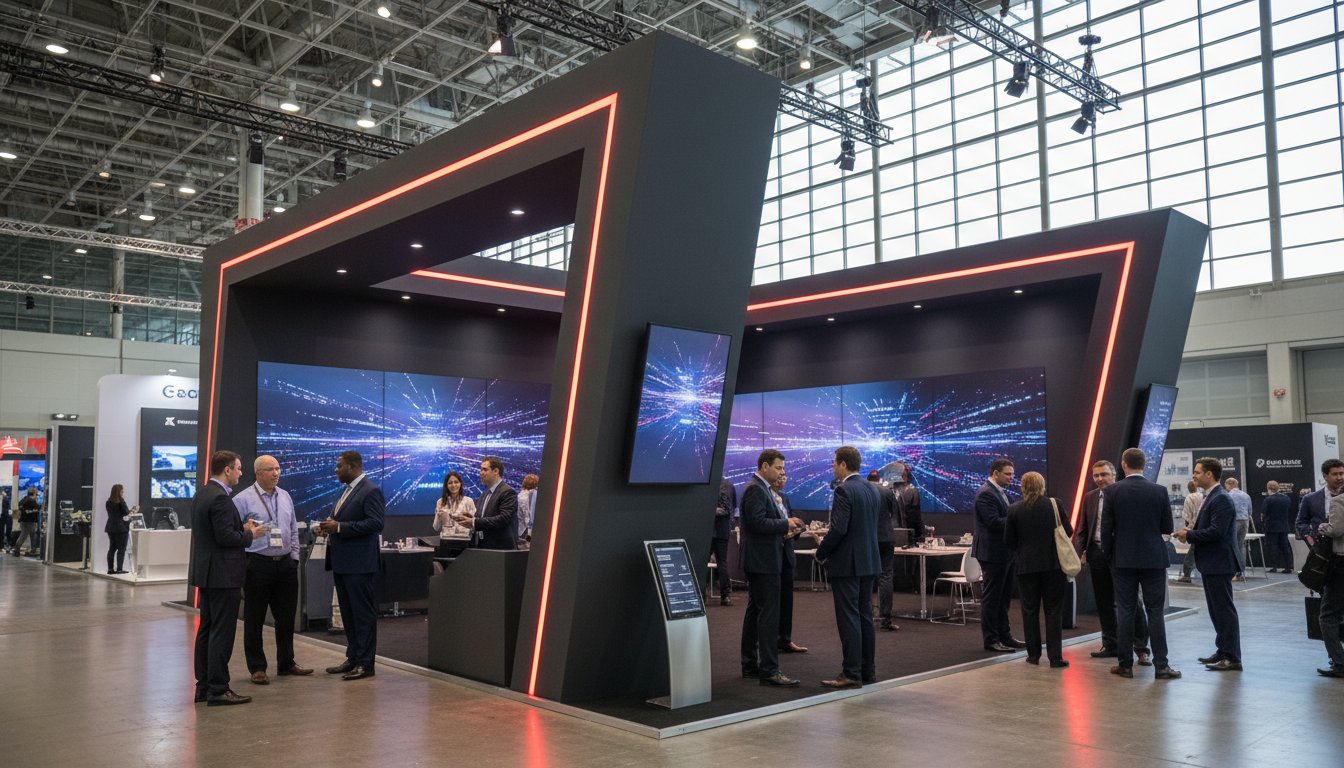
Visual impact follows a clear hierarchy. At the base, you have basic pull-up banners. These offer convenience but lack authority. Tension fabric walls represent the mid-tier, providing a smooth, professional backdrop. The "sweet spot" exists within modular aluminum systems. These frames mimic the look of bespoke builds while maintaining the weight and shipping benefits of portable kits. For your most critical, high-traffic events, a custom exhibition stand design remains the gold standard for brand dominance.
To maintain brand consistency across these tiers, follow this checklist:
- Color Matching: Use specific Pantone codes to ensure fabric prints match hard-panel custom finishes.
- Resolution: Ensure all graphics are at least 300 DPI at 25% scale to prevent pixelation on larger modular walls.
- Typography: Keep primary messaging at eye level, roughly 60 inches from the floor, regardless of the stand type.
Scalability: From 10x10 to 20x20
The true power of modular portable trade show displays lies in reconfiguration. A standard 10x10 kit often acts as the "starter block." By adding "bridge" components or extra frame sections, you can expand that same kit into a 20x20 island or a 10x20 inline booth. This eliminates the need to rent entirely different structures for every show on your calendar.
Success in scalability depends on your graphic strategy. Don't design a single massive image that only works when the booth is at full width. Instead, use a paneled approach where individual sections contain standalone messaging. This allows you to remove or rearrange panels without breaking the visual flow. It's a logical, cost-effective way to manage a diverse event schedule without sacrificing professional aesthetics.
International Logistics: Shipping Your Display Globally
Shipping portable trade show displays across borders requires more than just a courier. North American exhibitors often face a steep learning curve when entering the European market. In the US, drayage fees cover the movement of freight from the loading dock to the booth space. European venues, or Messe, operate differently. They often allow direct access for contractors but enforce strict time slots and environmental standards. You must coordinate these logistics weeks in advance to avoid costly penalties.
Avoid customs delays by using an ATA Carnet. This international customs document acts as a merchandise passport. It allows the temporary admission of goods into over 80 countries without paying duties or value-added taxes. It simplifies the transit process and ensures your equipment returns home without legal friction. Without this document, your shipment could be held at a border for days, potentially missing the show opening entirely.
Standbuilder streamlines the connection between major hubs like Atlanta and Ratingen. By managing the logistics pipeline between the US and Germany, we ensure your assets move efficiently between continents. This specialized oversight reduces the risk of shipments getting stuck in customs or arriving late. Secure warehousing between show dates is also vital. Storing your stand in a central European facility instead of shipping it back to the US can reduce shipping costs by 40% for multi-show calendars. It keeps your hardware ready for the next event without the carbon footprint of trans-Atlantic flights.
Navigating European Venues (Messebau)
European Messe regulations demand precision. Unlike the flexible setups often seen in North America, European venues require strict adherence to fire safety and electrical codes. All AV rentals and electronic components must carry the CE mark to meet European Union safety standards. Localization is another critical factor. Always translate your graphics into the local language and convert all measurements to the metric system. A 10x10 foot display might not fit perfectly in a 3x3 meter European plot, so plan for these discrepancies early.
Packaging and Protection
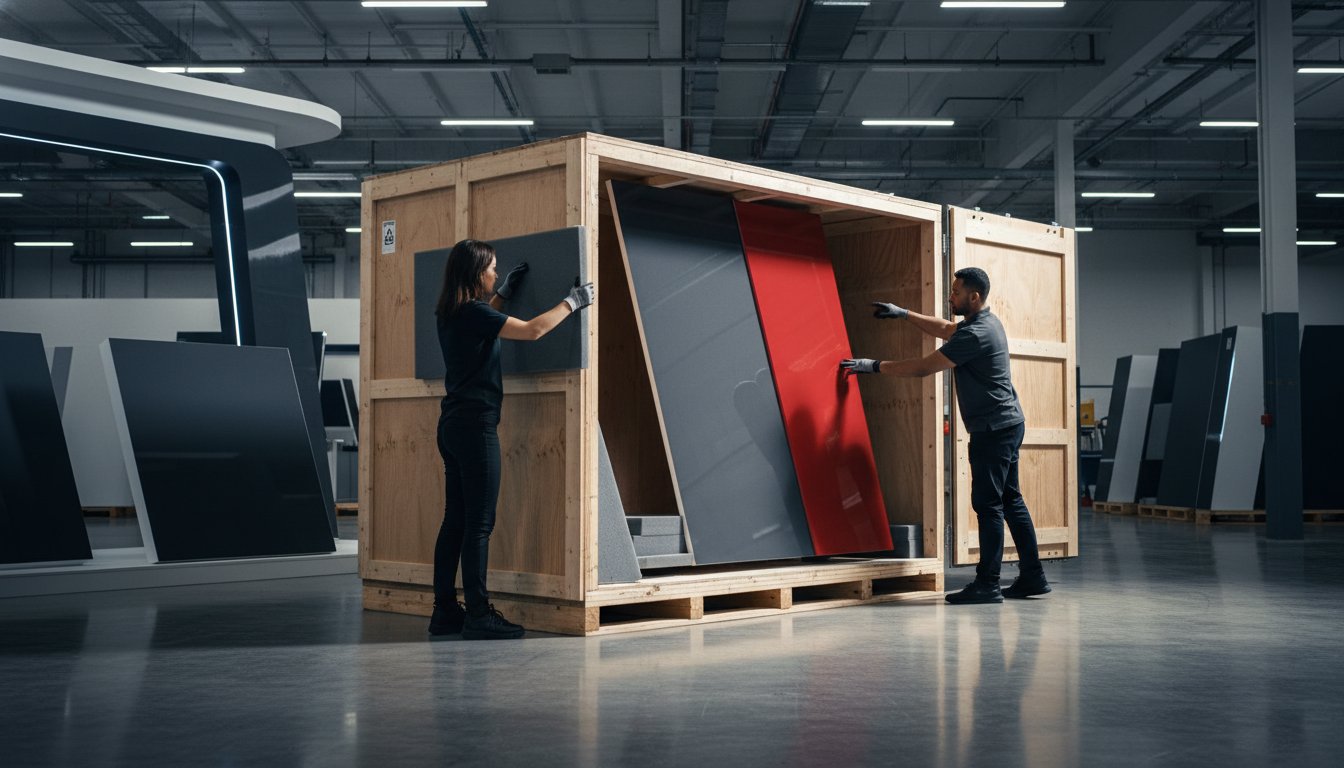
Protect your investment with high-quality transit solutions. We recommend hard-shell shipping cases that serve a dual purpose. These durable containers often convert into functional booth counters, saving space and reducing the number of items you need to track. For small, rapid-response events, airline-friendly kits allow your team to transport portable trade show displays as checked luggage. Custom-molded foam inserts provide the best defense against transit damage. These inserts cradle delicate components like LED screens and aluminum extrusions to prevent movement inside the case during rough handling.
Request five free quotes from our network to find international logistics partners for your next global event.
The Hybrid Strategy: Standbuilder’s Approach to Portable Excellence
Choosing between modular and custom stands doesn't require a compromise on quality. Standbuilder International defines a new category of "High-End Portability" by merging the agility of lightweight systems with the visual impact of bespoke design. This hybrid approach ensures your portable trade show displays look like permanent installations while remaining easy to ship and assemble. We specialize in integrating high-quality trade show backdrops with custom-fabricated elements like integrated AV racks, LED lighting, and lockable counters.
Efficiency is the core of our procurement model. Most exhibitors waste 15 to 20 hours searching for reliable contractors across different regions. Standbuilder International eliminates this friction through our "Five Free Quotes" system. You submit one RFP and receive five competitive, high-quality proposals from vetted builders. This model provides the data you need to balance price and quality without the administrative burden of traditional sourcing. You get transparency, local expertise, and a design that fits your specific marketing goals.
Custom Fabrication Meets Modular Systems
We use precision fabrication to create custom skins and architectural accents that fit perfectly over modular frames. This method provides a seamless, high-end finish that masks the underlying structure. Our project managers coordinate these deployments globally, ensuring that a booth designed in London looks identical when executed in Las Vegas or Dubai. Request a 3D design from our team to see your vision in a virtual space before any hardware is manufactured. This step reduces errors by 95% and confirms your branding is perfectly aligned across all portable trade show displays.
Your Global Exhibition Partner
The partnership between Standbuilder International and CBS Neospace provides a unique advantage for transatlantic brands. We combine local manufacturing capabilities with international design standards to deliver hassle-free, professional execution every time. Whether you need a single portable unit for a regional seminar or a fleet of modular stands for a global tour, our network handles the logistics, storage, and installation. We act as your expert facilitator, moving you from uncertainty to a final decision with speed and clarity. Stop managing multiple vendors and start building your presence. Request your free quotes and 3D design today.
Master Your Global Presence With Smart Exhibiting
Navigating the trade show floor in 2026 requires a shift toward high-efficiency materials and streamlined logistics. Modern portable trade show displays now offer the high-definition aesthetic of custom builds through advanced tension fabric and SEG technology. By utilizing a hybrid strategy, you can maintain a premium brand image while drastically reducing shipping costs and setup times. Success depends on choosing a partner who understands the nuances of international regulations and local venue requirements.
Standbuilder brings 25 years of global logistics management to your next project. With operational hubs located in Atlanta and Germany, we provide the local expertise needed to navigate complex international venues. Our process includes expert 3D design, ensuring your vision translates perfectly to the physical space. We've simplified the procurement process so you can focus on lead generation rather than shipping manifests. It's the most efficient way to scale your brand's reach without the typical logistical headaches.
Don't leave your international debut to chance. Request 5 Free Quotes for Your Portable Display and partner with a team that delivers results on every continent. Your next high-impact exhibit is just a few clicks away.
Frequently Asked Questions
What is the difference between a portable and a modular trade show display?
Portable displays prioritize weight and ease of transport, while modular systems focus on scalability and reconfiguration. A portable trade show display usually fits into a single wheeled case and has a fixed size. Modular stands utilize standardized aluminum frames, such as 62mm profiles, that you can expand or shrink. Portables are roughly 40% faster to deploy than modular systems.
Can I set up a 10x10 portable display by myself, or do I need a labor crew?
You can absolutely set up a 10x10 portable display alone without hiring a professional labor crew. Most modern kits use numbered tube frames or accordion-style pop-up lattices that a single person can assemble in 30 minutes. This independence eliminates the need for professional installation services. You'll save approximately $150 to $300 per hour in labor costs at major convention centers.
How do I ship a portable trade show display internationally without high customs fees?
Use an ATA Carnet to ship your display internationally without paying high customs duties or value-added tax. This document acts as a merchandise passport and is accepted in 87 countries. It guarantees that your equipment will leave the host country after the event. This process saves you from paying 20% import taxes in regions like the UK or the European Union.
Are tension fabric displays better than traditional pop-up booths?
Tension fabric displays are generally superior to traditional pop-up booths because they're more durable and significantly lighter. Fabric graphics won't dent or delaminate like old-fashioned PVC panels. A 10ft fabric wall weighs about 25 pounds, which is 50% less than a magnetic panel system. You'll save money on drayage and shipping fees every time you exhibit at a new venue.
How long do the graphics on a portable display typically last?
Graphics on a high-quality display typically last 3 to 5 years under normal exhibition conditions. Dye-sublimation printing embeds the ink directly into the polyester fibers so the image won't peel or crack. These fabrics are machine washable and maintain 95% of their color saturation after 20 cleaning cycles. Always store them in a cool, dry place to prevent UV fading during storage.
Can I add a TV monitor or shelving to a portable fabric display?
You can add a TV monitor or shelving to a portable fabric display by using an internal hardware support kit. Standard fabric frames aren't load-bearing on their own, so you'll need a monitor stand that clips to the aluminum frame. These internal kits safely support screens up to 32 inches or 25 pounds. Always check the manufacturer's specific weight limit before mounting any heavy accessories.
What are the fire safety requirements for portable displays in European exhibition halls?
Portable displays in European exhibition halls must comply with the EN 13501-1 fire safety standard. Most venues in cities like Frankfurt or Paris require a B1 or M1 flame retardancy certification for all fabric materials. You'll need to keep a physical copy of the fire certificate in your booth folder. Venue inspectors check these documents during move-in to ensure 100% compliance with local laws.
How much should I budget for a high-quality 10ft portable display in 2026?
Budget between $2,500 and $4,500 for high-quality 10ft portable trade show displays in 2026. This range accounts for a 3% annual inflation rate based on 2024 industry pricing benchmarks from the Exhibit Designers and Producers Association. This investment covers premium aluminum hardware and high-resolution dye-sublimated graphics. It's best to request five free quotes to compare the latest hardware innovations and current market rates.