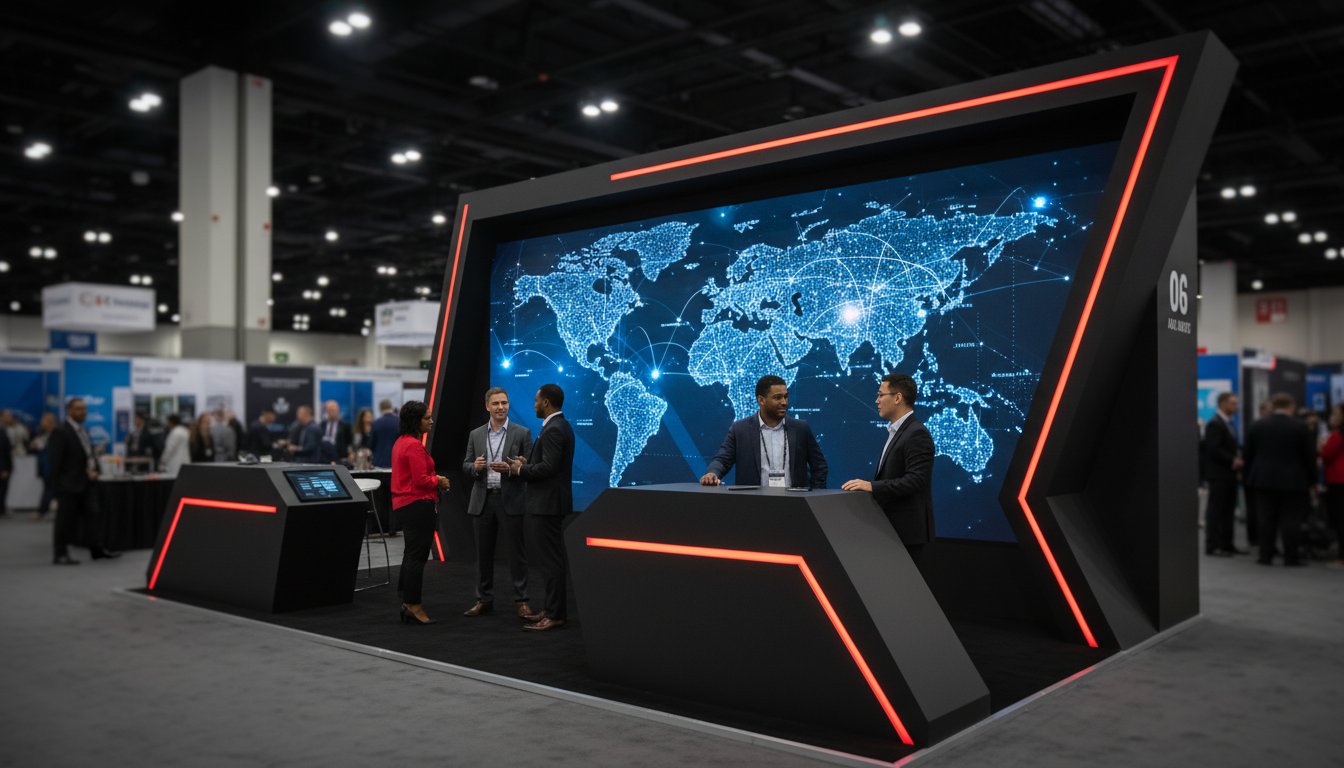
According to 2024 data from the Center for Exhibition Industry Research, 46% of trade show attendees decide whether to engage with a brand based solely on its visual appeal. If your current strategy relies on heavy, outdated hardware that drains your budget through excessive drayage fees, you're likely losing ground to more agile competitors. It’s time to rethink how you design trade show display environments for a global stage to ensure your 2026 calendar delivers actual results.
You already know that standing out in a crowded hall requires more than just a logo; it requires a strategic presence that justifies every dollar of your marketing spend. This guide will show you how to move beyond basic kits to create custom, 3D environments that meet strict B1 fire ratings in Europe while remaining light enough to slash US shipping costs. We'll explore the transition to sustainable, modular builds that ensure your brand looks like an industry leader in any city, from Paris to Dubai, while keeping your global logistics hassle-free.
Key Takeaways
- Learn how to effectively design trade show display environments by merging brand architecture with visitor psychology to maximize global ROI.
- Master the 5-step technical workflow from discovery to pre-build to ensure your booth aligns perfectly with specific exhibition goals.
- Identify the ideal balance between bespoke custom stands and high-end modular systems based on your international show frequency.
- Navigate the critical differences between US general contractors and European "Messebauer" standards to avoid costly logistical errors.
- Streamline your procurement process by mastering the RFP phase to secure five competitive quotes from a vetted network of international contractors.
What Defines a High-Impact Design for Trade Show Displays?
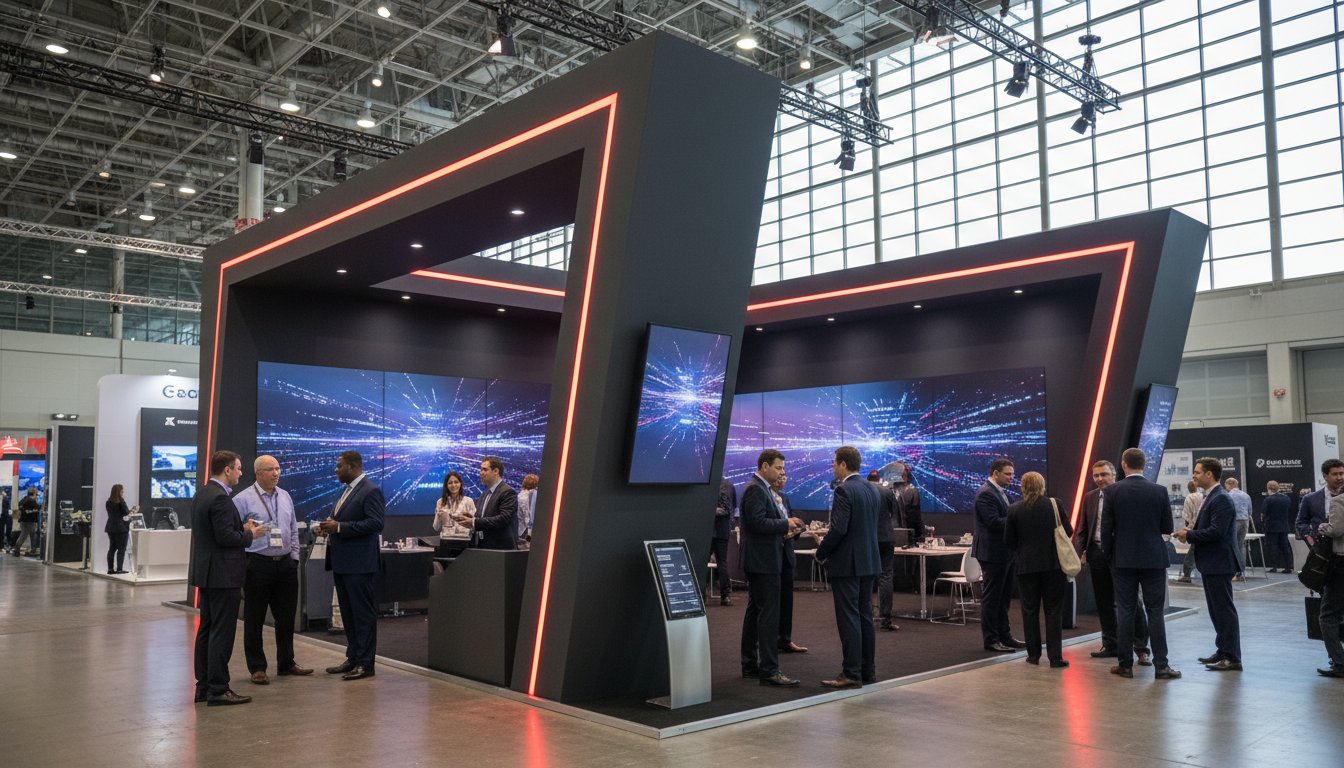
A high-impact design trade show display is the sophisticated intersection of brand architecture, visitor psychology, and structural engineering. It isn't a mere backdrop; it's a high-performance sales tool designed to convert foot traffic into qualified leads. While portable gear offers basic utility, bespoke environments allow you to control the narrative of your brand. Understanding What is a Trade Show? reveals that these events are dense competitive ecosystems where visual dominance is the first step toward measurable ROI.
By 2026, trends are moving sharply away from static imagery toward multi-sensory experiences. Exhibitors now use haptic interfaces, spatial audio, and even curated scent marketing to create memorable touchpoints. This level of sophistication requires professional planning and a departure from generic solutions. For those ready to scale their presence, our custom exhibition stand design guide provides the strategic framework needed for global success.
The Shift from Passive to Active Environments
Modern displays use spatial design to dictate visitor flow rather than just providing a place to stand. Every square meter must serve a specific purpose. Dwell time is a vital metric; keeping a prospect engaged for over five minutes can increase lead quality by 35% compared to brief interactions. Integrating AV and interactive tech as core design elements ensures your booth feels like an immersive destination. It's about moving from a "look at us" approach to a "participate with us" experience that captures data in real-time.
Why Custom Fabrication Beats Off-the-Shelf Kits
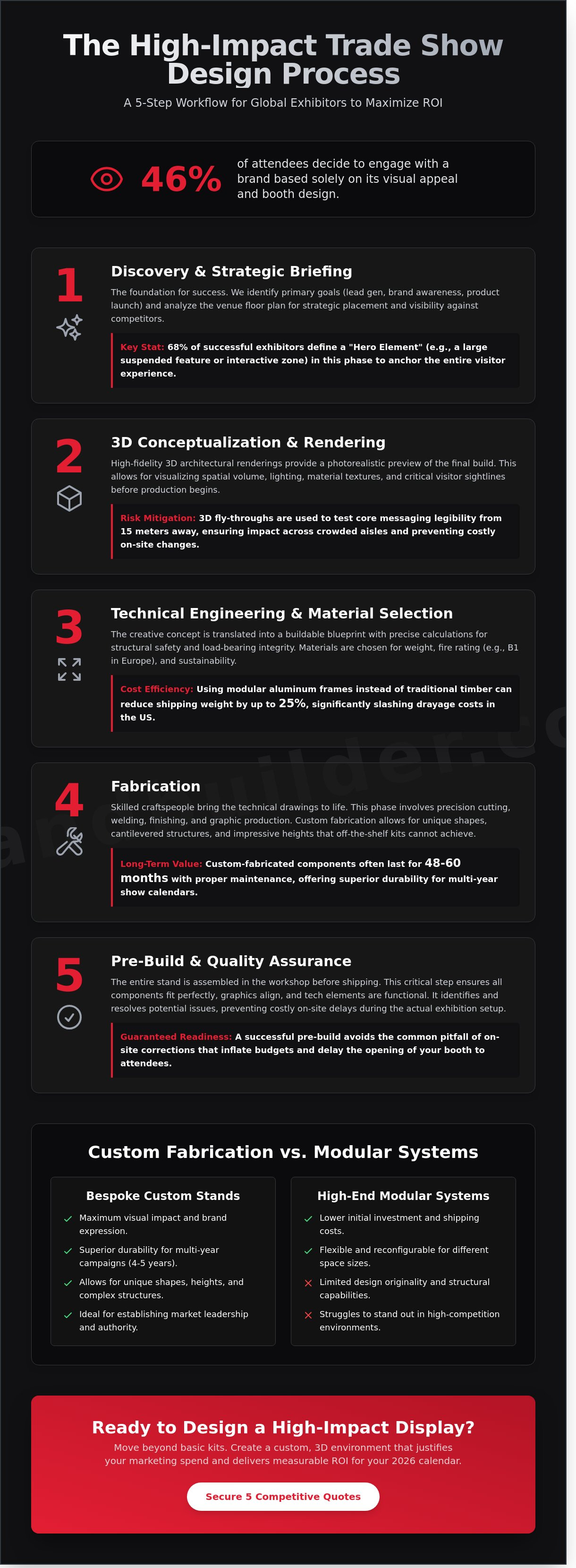
Modular systems often struggle in high-competition "Messe" environments where every brand is fighting for visual authority. Your design trade show display must be a physical manifestation of your digital identity to maintain brand consistency. Custom-built stands offer superior durability for multi-year show calendars. While off-the-shelf kits might seem cheaper initially, custom components often last for 48 to 60 months with proper maintenance, offering better long-term value. Custom fabrication allows for unique shapes, cantilevered structures, and heights that modular kits simply can't achieve.
The 3D Design Process: From Concept to Technical Reality
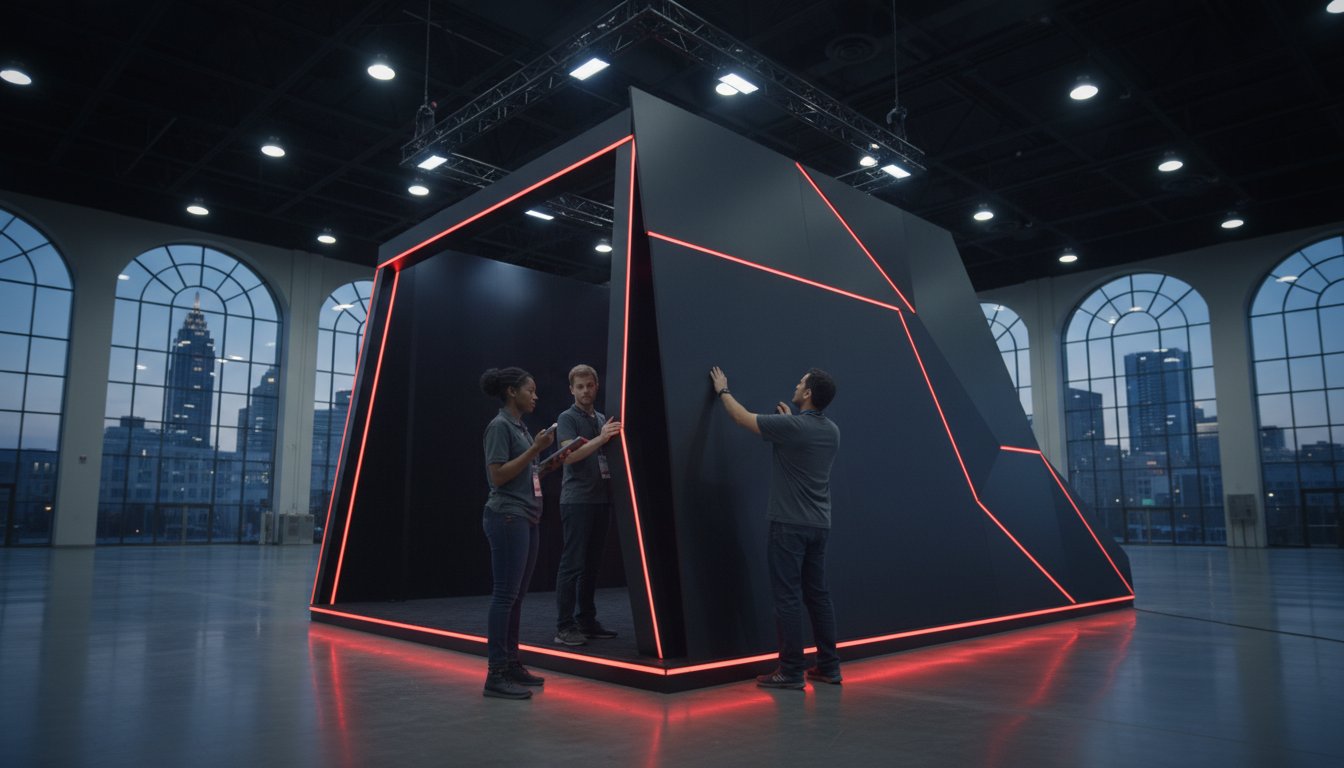
Creating a high-impact design trade show display requires a disciplined 5-step workflow: Discovery, 3D Conceptualization, Technical Engineering, Fabrication, and Pre-build. This sequence ensures that the final structure isn't just visually striking but also structurally sound and logistically viable. By following this professional roadmap, exhibitors avoid the common pitfalls of onsite mid-build corrections that inflate budgets and delay openings.
Discovery and Strategic Briefing
Success begins with a clear objective. We identify whether your primary goal is lead generation, brand awareness, or a specific product launch. Data from 2023 industry reports shows that 68% of successful exhibitors define their "Hero" element during this initial phase. This focal point, such as a 5-meter suspended light box or a central interactive demo zone, anchors the entire layout. We also analyze the exhibition hall's floor plan to find visual "white space," ensuring your booth stands out against the specific color palettes and heights of adjacent competitors.
3D Rendering and Visual Approval
We move beyond basic sketches to high-fidelity 3D architectural renderings. These digital models allow stakeholders to visualize spatial volume, lighting shadows, and material textures with photorealistic accuracy. Using 3D fly-throughs, we test visitor sightlines from 15 meters away to confirm that your core messaging remains legible across the crowded aisle. This 3D rendering phase serves as a vital tool for risk mitigation and budget alignment by identifying potential design flaws before physical production begins. It's the most efficient way to request and compare layout options before committing to a final build.
Technical Engineering and Material Selection
The transition from a creative concept to a buildable blueprint involves precise mathematical calculations. For double-decker stands, technical engineering is mandatory to ensure structural safety and load-bearing integrity. We select materials based on weight, fire rating, and sustainability. For example, choosing modular aluminum frames can reduce shipping weight by 25% compared to traditional timber, significantly lowering drayage costs.
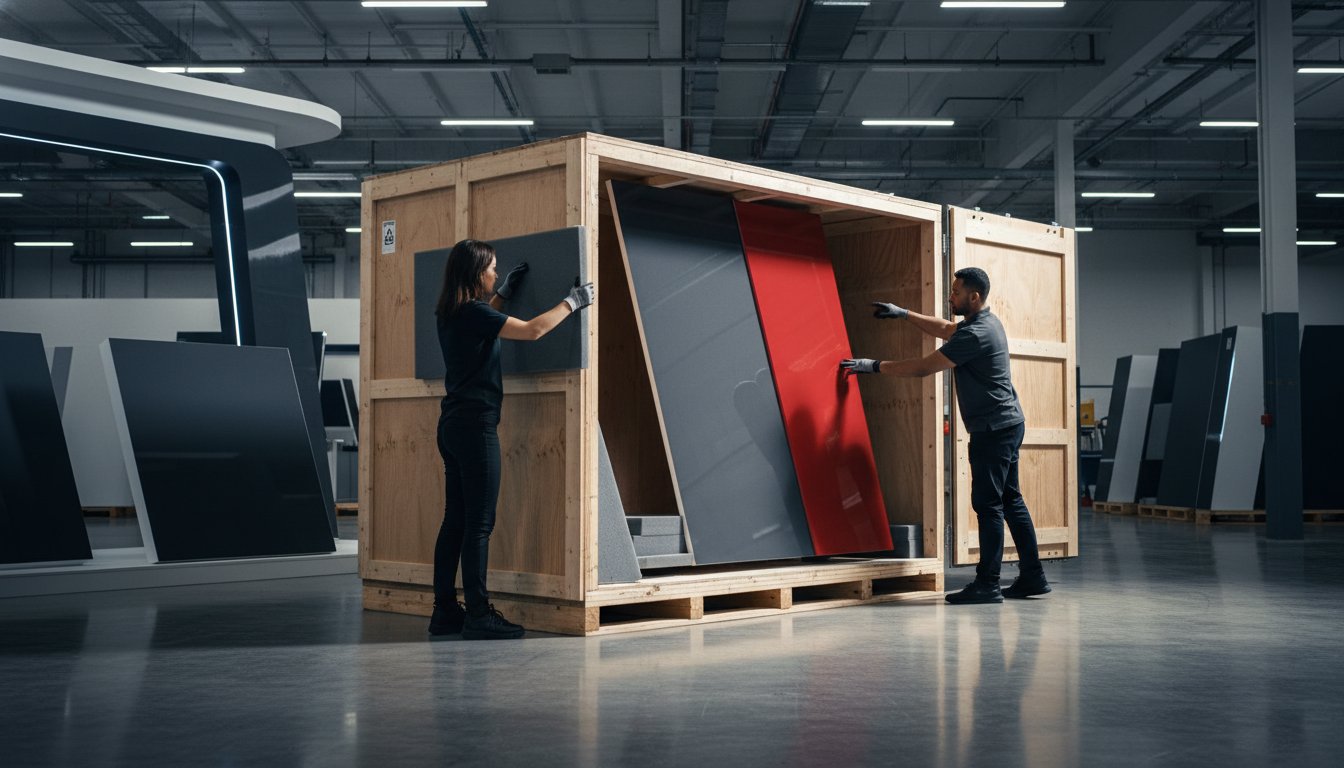
Logistics are integrated into the design from day one. We ensure every component fits into standard shipping crates and complies with international standards, such as the U.S. Trade Fair Regulations, which govern how goods are handled at ports of entry. This attention to detail ensures that your design trade show display passes local fire marshal inspections and arrives at the venue ready for a rapid, hassle-free installation.
Custom vs. Modular: Choosing Your Display Medium
Selecting the right structure for your design trade show display is a strategic decision that impacts your budget, logistics, and brand perception. The choice isn't merely about aesthetics; it's about matching your hardware to your exhibition frequency and floor space. While many exhibitors worry that moving away from bespoke builds means sacrificing quality, modern engineering has closed the gap between custom and modular systems.
When to Invest in Bespoke Custom Stands
Bespoke stands are the primary choice for flagship events where brand dominance is the central objective. These structures offer total creative freedom, allowing for non-linear shapes, curved walls, and unique textures that standard frames cannot achieve. You can integrate heavy architectural lighting and custom-built furniture that reinforces a specific brand narrative. If you're planning a large island presence at a major international event, a custom build ensures a 100% unique footprint. To better understand the logistics of high-stakes exhibiting, the International Trade Administration offers vital resources for companies looking to maintain brand standards while navigating foreign regulations.
The Power of High-End Modular Systems
Modern modular systems have debunked the myth that reconfigurable stands look "cheap" or limited. High-end aluminum frames now support large-scale Silicone Edge Graphic (SEG) fabric walls, creating a seamless, high-definition finish that rivals traditional carpentry. The real value lies in versatility. A single modular kit designed for a 20x20 space can often be reconfigured into two separate 10x10 booths for smaller regional shows. This flexibility allows you to maximize your design trade show display investment across an entire yearly calendar. Because these components are lightweight and collapsible, you'll see a significant reduction in drayage costs and storage fees compared to bulky custom crates.
To choose the right medium, use this decision framework based on your specific needs:
- Annual Show Volume: If you attend 5 or more shows per year, high-end modular systems provide the best cost-per-use and long-term ROI.
- Booth Size: Modular is highly efficient for 10x10 and 10x20 spaces. For larger island booths exceeding 400 square feet, a custom or hybrid approach is often necessary for structural integrity.
- Brand Consistency: Use bespoke elements for "hero" events and modular systems for secondary markets to balance impact with efficiency.
Effective execution requires a clear understanding of how these mediums perform in different environments. For a detailed breakdown of tactical logistics and global booth management, consult our ultimate guide to trade show exhibits. This resource helps you align your design choices with your broader marketing strategy, ensuring your stand is both beautiful and functional.
Navigating International Design Standards and Logistics
Designing for a show in Las Vegas requires a different technical blueprint than a project in Munich. When you commission a design trade show display for a US venue like the Georgia World Congress Center in Atlanta, you interact with general contractors and specific union labor requirements. In Germany, the Messebauer model prevails. This system utilizes a single full-service firm that manages everything from the initial 3D render to the final bolt. This streamlined approach reduces the need for multiple vendors but demands deep knowledge of local hall regulations to avoid costly on-site adjustments.
The Standbuilder International-CBS Neospace partnership serves as a vital bridge for transatlantic exhibitors. This alliance ensures that local technical supervisors oversee every detail of venue-specific electrical and rigging rules. They act as your eyes and ears on the ground, preventing the friction that often occurs when international teams attempt to navigate unfamiliar hall manuals alone.
US vs. EU: Regulatory and Design Differences
Europe enforces strict B1 fire retardant ratings for all construction materials. In the US, you must meet NFPA 701 standards. If your fabrics lack the correct certification, fire marshals will remove them. Electrical systems also diverge significantly. European halls operate on 230v power, while US venues utilize 110v. This impacts how you integrate AV technology and lighting into your design trade show display. European venues often permit builds up to 6 meters high without the complex rigging fees common in the US, but they enforce "openness" rules. You typically can't block more than 30% of a stand's perimeter with solid walls to maintain hall visibility.
Logistics-First Design: Reducing Global Friction
Shipping costs can easily exceed the price of the booth itself. Smart designers build components to fit precisely into standard 20-foot or 40-foot shipping containers to maximize space. You'll avoid customs delays and high freight fees by prioritizing local fabrication. Building your stand in Ratingen for a show in Dusseldorf, for example, eliminates international shipping risks entirely.
- Utilize modular design elements that can be stored in regional hubs.
- Select lightweight materials like tension fabric to reduce drayage costs in US venues.
- Implement a "hub and spoke" strategy by keeping core frames in a central warehouse and shipping only fresh graphics for each show.
This logistical precision ensures your brand remains consistent whether you're exhibiting in Frankfurt or Orlando. It moves the project from a state of uncertainty to a state of decision-making by removing the technical barriers to entry.
Ready to bridge the gap between continents? Request five free quotes from our vetted network of international contractors and simplify your global logistics today.
Requesting a Design RFP: How to Secure 5 Free Quotes
Securing a high-impact design trade show display requires a structured approach. Standbuilder simplifies this by connecting you with a vetted network of international contractors. You receive five competitive, no-obligation quotes; this eliminates the time-consuming task of searching for individual builders across different regions. This process reduces procurement friction and ensures you compare diverse creative perspectives for your project. Our platform acts as a bridge, moving you from a state of uncertainty to a clear decision-making path within days.
The no-obligation nature of our service means you can explore creative possibilities without financial risk. Use our 3D design tool to kickstart the visualization process. This tool helps you define your spatial requirements before the first contractor even sees your brief. It's an efficient way to test layouts and ensure your brand's vision is technically feasible. Start your request now to see how five different experts interpret your brand's goals.
What to Include in Your Design Brief
A precise design brief is the foundation of a successful stand. Start by defining your footprint. Common sizes like 20x20 feet or 10m x 6m dictate the structural possibilities and traffic flow. List your "must-have" features such as private meeting rooms for lead closing, secure storage for staff belongings, or dedicated demo stations for product launches. Provide high-resolution brand assets and specify a clear timeline. Industry data suggests allowing at least 12 to 16 weeks for fabrication after final design approval to ensure quality control and avoid rush fees. Clearly state your budget range to receive realistic proposals that align with your financial parameters.
Comparing Quotes and Contractor Expertise
Once you receive your five quotes, evaluate the contractors' technical expertise through a critical lens. Look beyond the aesthetic renders and examine their portfolio for experience in specific venues. If you're exhibiting at the Javits Center in New York or Messe Frankfurt, find a builder familiar with those local union regulations and rigging requirements. Local knowledge reduces logistical risks and unexpected costs. Ensure each quote provides a transparent breakdown of expenses. Demand clarity on labor, drayage, and storage fees. This transparency prevents budget overruns during the final stages of your design trade show display project. Select a partner who demonstrates a clear understanding of your regional requirements and booth functionality rather than just visual appeal.
Secure Your 2026 Global Exhibition Success
Winning on the 2026 international circuit requires more than just aesthetics. It demands a technical 3D design process that translates creative concepts into logistical reality while navigating specific regional standards. Whether you select a modular system for flexibility or a bespoke custom build for maximum impact, your choice must align with global shipping and assembly requirements. Successful exhibitors prioritize a design trade show display that balances visual authority with functional efficiency.
Standbuilder streamlines this entire procurement process through our strategic partnership with CBS Neospace in Germany and our vetted network of global contractors. We bring over 25 years of international exhibition expertise to every project. This ensures your brand meets the highest industry benchmarks regardless of the host city. Don't let complex logistics or fragmented vendor searches slow your momentum. Our platform acts as a bridge to the world's most reliable builders, moving you from a state of uncertainty to a firm decision in record time.
Request 5 Free Quotes for Your Custom Trade Show Display Design
Take the first step toward a high-impact presence today. We're ready to help you dominate the floor with precision and professional ease.
Frequently Asked Questions
How much does it cost to design a custom trade show display in 2026?
Professional design fees typically account for 10% to 15% of your total booth budget according to industry benchmarks from the Center for Exhibition Industry Research. However, Standbuilder eliminates this specific upfront expense by offering a free 3D design trade show display concept when you request quotes through our platform. This allows you to compare visual strategies for major venues in cities like Paris or Dubai without any initial financial commitment.
What is the typical timeline for a bespoke exhibition stand design?
You should plan for a 4 to 6 week window to finalize a bespoke design from the initial brief to the technical blueprints. Our contractors usually deliver the first 3D rendering within 5 business days, followed by 2 rounds of revisions to perfect your brand messaging. Starting this process 6 months before your event date helps you avoid the 20% rush surcharges that many production houses apply during peak seasons like March and October.
Can I reuse a custom-designed stand for multiple international shows?
Yes, you can reuse your custom stand by requesting a modular structural design that adapts to different floor space dimensions. Data from the 2024 UFI Global Barometer shows that 35% of international exhibitors now use versatile aluminum frames to lower their long-term capital expenditure. Standbuilder connects you with partners who provide storage and maintenance services, allowing a 20x20 island display to be reconfigured for smaller 10x20 footprints at secondary shows.
What are the most important fire safety regulations for trade show displays?
Your display must use materials that meet B1 or M1 fire retardant certifications as specified by the European EN 13501-1 standard. In the United States, all fabrics and hanging elements must comply with NFPA 701 testing requirements to pass the mandatory Fire Marshal inspection. Your chosen contractor will provide the necessary certificates for every wooden panel and textile used in your design trade show display to ensure your booth isn't closed down during the build-up phase.
How do I choose between a 10x10 and a larger island display design?
Choose a 10x10 booth if you're operating with a team of 2 people, but upgrade to an island display if you expect more than 15 concurrent visitors. Island stands offer 4 open sides, which increases organic foot traffic by 40% compared to standard inline booths according to Exhibit Surveys Inc. research. Larger formats also provide the 100 square feet of private space required for high-level sales meetings and equipment demonstrations.
What is the benefit of working with an international stand builder like Standbuilder?
Working with Standbuilder gives you immediate access to a vetted network of 1,500 local contractors who understand the specific labor laws and rigging rules in cities like Las Vegas or Frankfurt. You'll receive 5 free quotes within 48 hours, which streamlines your procurement process and ensures competitive market pricing. This global reach removes the 30% project management markup often charged by agencies that don't own their own local production facilities.
How does sustainable design impact trade show display costs?
Sustainable design reduces your total cost of ownership by 25% through the use of lightweight, recycled materials that lower shipping and drayage fees. While eco-friendly components like FSC-certified wood or tension fabrics might require a 10% higher initial investment, they're designed for 5 or more show cycles. Utilizing modular systems also eliminates the $500 per ton waste disposal fees commonly charged by major convention centers for single-use "build and burn" stands.
Do I need a separate contractor for AV and furniture rental?
You don't need to hire separate vendors because most full-service builders include AV integration and furniture in their comprehensive RFP response. Bundling these services into a single contract typically saves you 15% compared to sourcing screens, tablets, and seating independently. Your project manager will ensure all 4K displays and custom lounge furniture are installed and tested 2 hours before the show floor opens to the public.