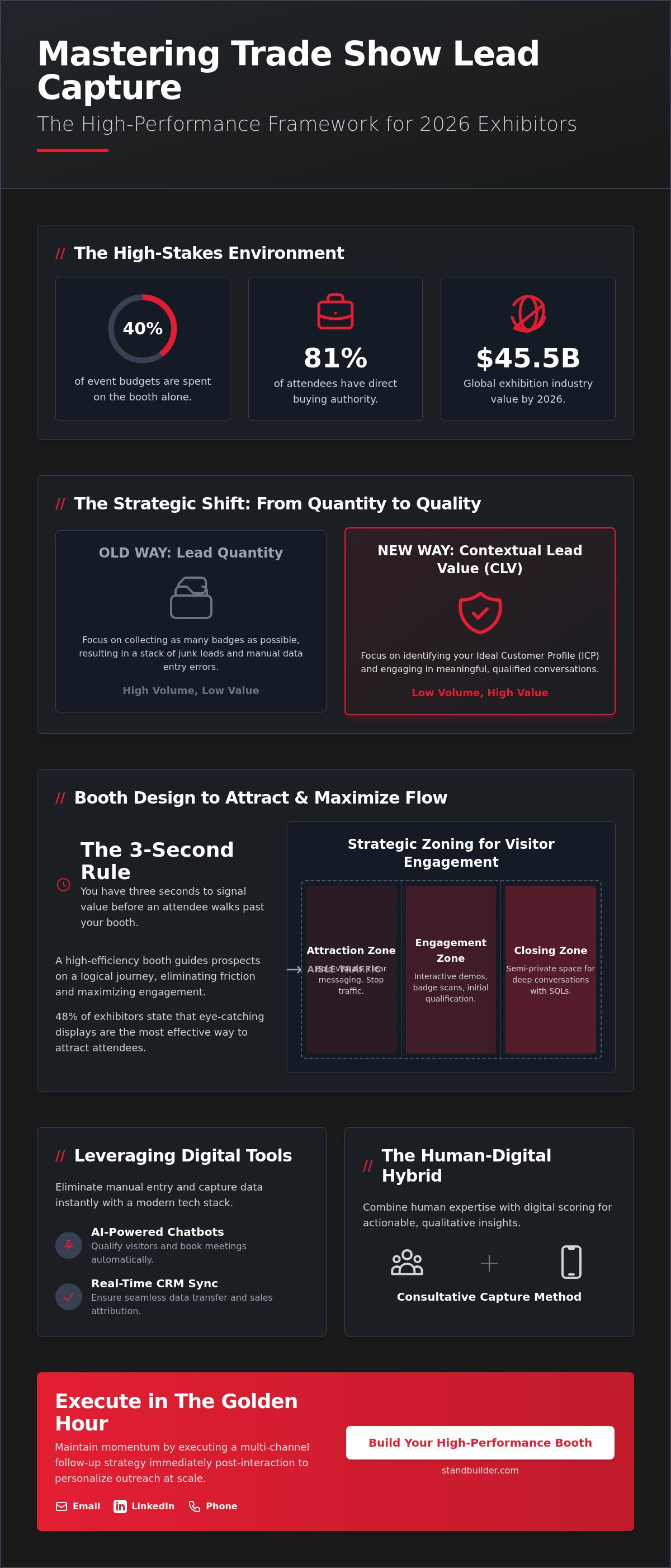
Why would you invest 40% of your total event budget into a display that only delivers manual data entry errors and a stack of junk leads? With the global exhibition industry valued at $45.5 billion in 2026, the stakes for your trade show booth design to attract visitors have never been higher. You know that 81% of attendees possess direct buying authority. However, standing out in a crowded hall like Las Vegas, which expects 1.23 million convention visitors this year, requires more than a simple visual presence. It's frustrating when poor visitor flow and vague ROI metrics make it impossible to justify your marketing spend.
We'll help you master the architectural, digital, and interpersonal strategies needed to convert booth traffic into high-value sales opportunities. This guide covers everything from lead retrieval technology costs to spatial layouts that eliminate friction. You'll learn how to integrate mobile apps with modular booth systems to ensure seamless CRM integration and clear sales attribution. It's time to move from uncertainty to a state of confident decision-making for your next international show.
Key Takeaways
- Define your 2026 success by shifting from lead quantity to Contextual Lead Value (CLV) to ensure your team focuses only on high-priority prospects.
- Optimize your trade show booth design to attract visitors by applying the "Three-Second Rule" and creating dedicated "Capture Zones" that prevent floor congestion.
- Leverage AI-powered chatbots and real-time CRM synchronization to eliminate manual data entry and capture visitor data instantly across global teams.
- Combine human expertise with digital scoring through the Consultative Capture method to provide your sales team with actionable, high-quality qualitative insights.
- Execute a multi-channel follow-up strategy within the "Golden Hour" to maintain momentum and personalize post-show outreach at scale.
Defining Your 2026 Lead Capture Framework
Exhibitors dedicate an average of 40% of their total event spend to their booths, yet many fail to define what a "successful" lead actually looks like. In 2026, your strategy must move beyond passive attendance. You need a framework that identifies your Ideal Customer Profile (ICP) amidst the high-noise environment of major halls. A data-driven trade show booth design to attract visitors shouldn't just act as a visual magnet; it must function as a strategic filter. By aligning your capture goals with your CRM capabilities before the show floor opens, you ensure every interaction has clear sales attribution from the start.
Identifying your ICP requires looking at your 2026 marketing roadmap. Are you targeting C-suite executives or technical end-users? Each requires a different spatial approach to engagement. When your trade show booth design to attract visitors is built with a specific persona in mind, you reduce the volume of junk leads that typically clog post-show follow-up. This shift to Contextual Lead Value (CLV) ensures that your team focuses on prospects with the highest potential for conversion.
Setting Measurable Lead Generation Goals
Stop tracking raw leads and start measuring the Cost Per Quality Conversation. Industry data shows the average cost per lead at a trade show is $112, which is significantly lower than the $259 required for a traditional field sales call. However, this efficiency only exists if the lead is truly qualified. Differentiate between Marketing Qualified Leads (MQLs) and Sales Qualified Leads (SQLs) in your face-to-face context. Use historical data from your 2025 event cycle to set realistic benchmarks. This allows you to justify the investment in higher-end custom exhibition stands or modular systems based on projected high-value conversions rather than just foot traffic.
Pre-Show Outreach: Priming the Pump
Don't wait for the exhibition hall doors to open to begin your capture process. Principles of effective exhibit design suggest that the physical space is only one part of the communication story. Start with a digital handshake 30 days before the event. Use LinkedIn and targeted email sequences to book in-booth demos. This ensures your staff's time is dedicated to high-value prospects rather than casual browsers. Send VIP meeting invites to your top 50 prospects to secure guaranteed time on-site. Creating digital lead magnets, such as exclusive industry reports or software trials, allows you to start the scoring process before the visitor even arrives at your booth.
Trade Show Booth Design to Attract Visitors and Maximize Flow
Three seconds. That's all the time you have to signal value before a prospect walks past your booth. In 2026, 48% of exhibitors report that eye-catching displays remain the most effective way to attract attendees. However, your trade show booth design to attract visitors must do more than just look good. It needs to function as a high-efficiency machine that guides prospects through a logical journey. This requires a spatial strategy where architecture and digital capture points work together to eliminate friction.
Strategic Zoning for Visitor Engagement
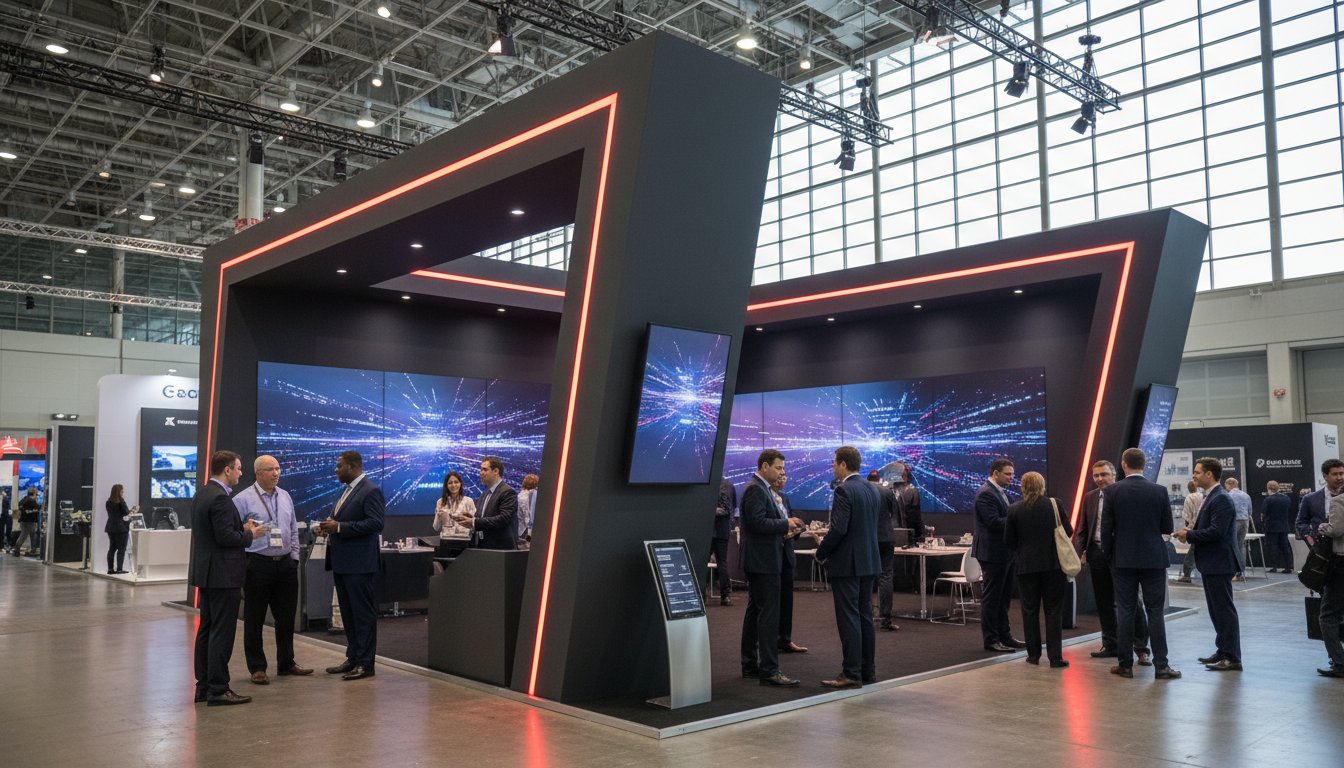
Divide your booth into three distinct functional areas to manage traffic and qualify leads effectively. The Attraction Zone sits at the perimeter. This is where you use bold custom exhibition stand design to stop traffic and provide instant brand recognition. Once a visitor enters, they move into the Engagement Zone. This area is designed for interactive demos and product showcases that naturally lead to a digital badge scan. For high-intent Sales Qualified Leads (SQLs), the Closing Zone provides a semi-private or private space for deeper discussions and contract signing. This tiered approach prevents your booth from feeling like a crowded hallway.
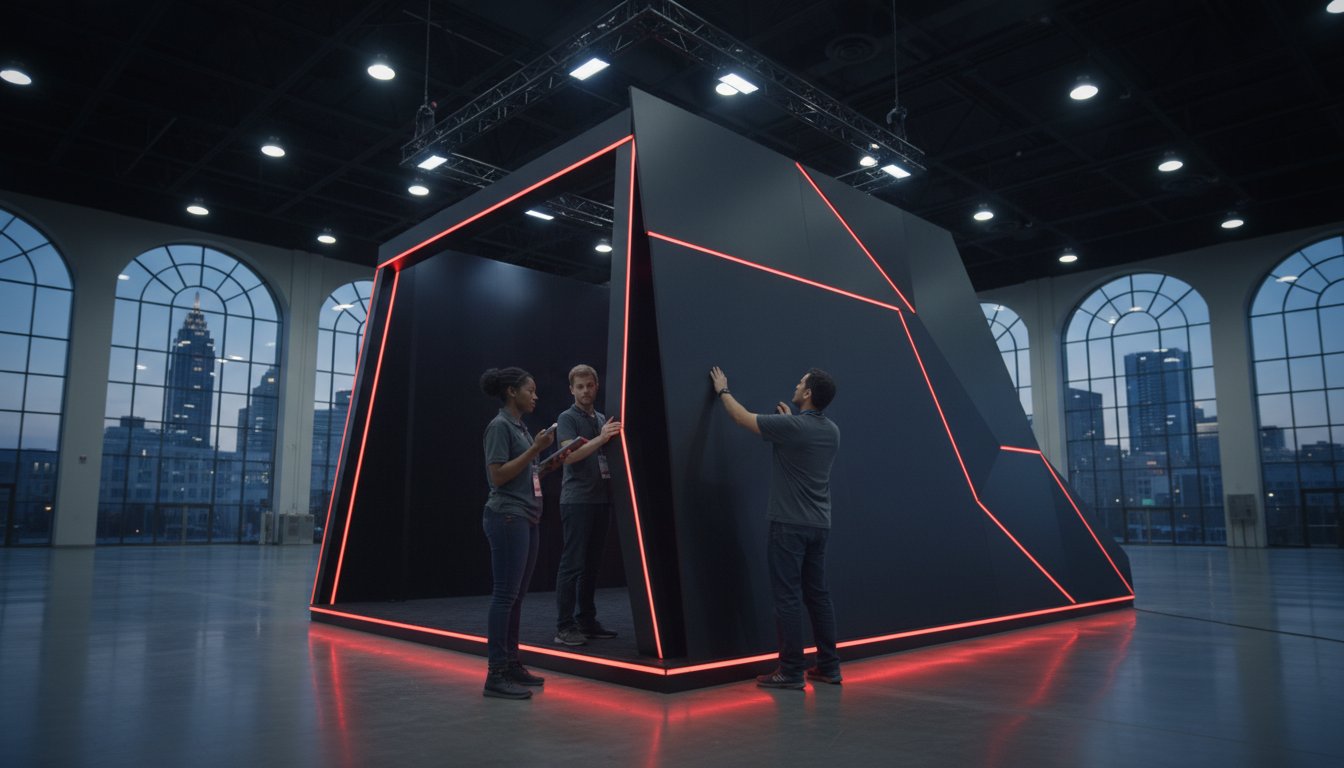
Open-plan stands generally encourage higher foot traffic, but they can feel chaotic during peak hours. Conversely, semi-private custom stands increase dwell time by providing a sanctuary from the noisy exhibition floor. When you're ready to execute this spatial strategy, it's easy to request quotes from local contractors who understand these regional layout requirements and can help you balance openness with privacy.
Removing Physical Friction Points
Booth bottlenecks are the enemy of data capture. If a visitor has to wait in line just to enter your space, they'll likely move to your competitor. Optimize your floor plan by placing lead retrieval kiosks and tablets at least three feet inside the booth perimeter. This prevents "aisle creep" where crowds block the flow of traffic. Lighting plays a critical role here too. Use high-intensity LED spotlights to highlight your key data capture points, while softer ambient lighting in the Closing Zone encourages prospects to linger.
Don't overlook the impact of trade show backdrops on visitor comfort and focus. A well-designed backdrop provides a clean visual anchor that prevents the eye from wandering to the booth next door. Strategic furniture placement is equally vital. Use bar-height tables to encourage quick, standing interactions in the Engagement Zone, but reserve comfortable lounge seating for the Closing Zone. In major hubs like Las Vegas, which expects 1.23 million attendees in 2026, managing this physical flow is the difference between a high-ROI event and a logistical headache.
Leveraging AI and Digital Lead Retrieval Tools
Digital integration is no longer an optional upgrade. A high-performing trade show booth design to attract visitors in 2026 treats hardware as a functional extension of the brand's digital ecosystem. Instead of waiting days to export a CSV file, top exhibitors now demand real-time CRM synchronization. When a badge is scanned in London or Las Vegas, your sales team in another time zone should see that data within seconds. This immediacy allows for rapid qualification and personalized outreach while the prospect is still on the floor.
Immersive experiences like AR and VR serve as powerful interactive lead magnets. These aren't just visual attractions; they're sophisticated data capture points. By requiring a quick registration to start a virtual demo, you ensure that every curious attendee becomes a trackable prospect. 43% of trade shows now utilize AI tools to manage these interactions more efficiently. This technology helps bridge the gap between physical stand architecture and digital data, turning casual interest into measurable engagement.
Reliability is a critical feature when venue Wi-Fi is notoriously spotty. Your tech stack must include robust offline modes and local server backups. If the connection drops at 2:00 PM on the busiest day of the show, your data capture shouldn't stop. Systems that sync automatically once the connection is restored prevent the loss of high-value visitor information during peak traffic hours.
Modern Lead Retrieval Tech Stack
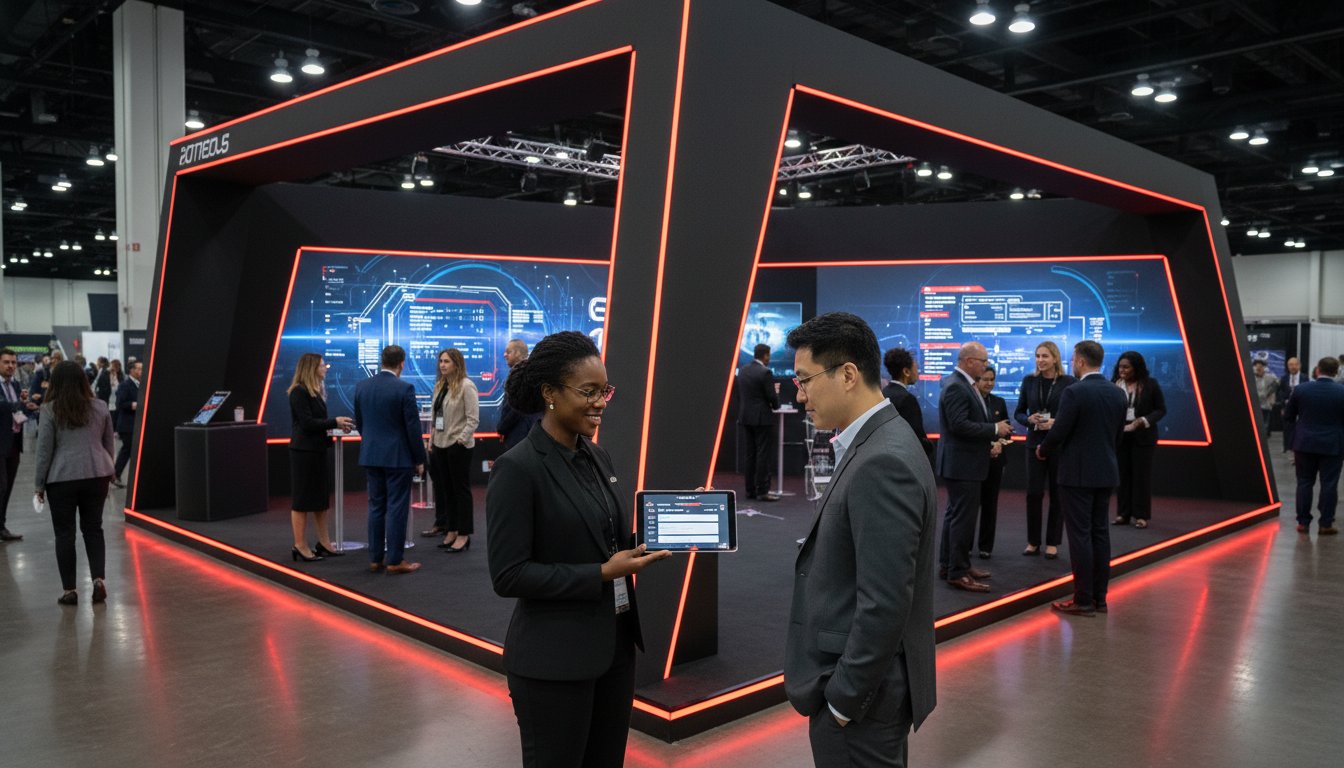
Universal Lead Retrieval apps often outperform show-specific scanners because they offer deeper customization and better integration. For example, eConnect mobile app activations range from $299 to $359, providing a cost-effective alternative to bulky hardware rentals. Other options like Popl offer business plans from $8 to $25 per user per month. Integrate these directly into Salesforce, HubSpot, or Microsoft Dynamics on-site to remove the friction of manual data entry. Use NFC tags and QR codes embedded in your graphic production to allow for passive capture on high-impact displays. This allows visitors to self-serve information while their data is captured automatically.
AI-Driven Qualification on the Floor
AI tools now analyze voice-to-text notes for sentiment and urgency, allowing staff to capture nuance without typing. This technology automates the A/B/C lead scoring process during the live conversation by tagging prospects based on specific verbal cues. These digital tools must be integrated into your trade show booth design to attract visitors to ensure a frictionless transition from conversation to database. AI also suggests the best follow-up content, such as a specific white paper or demo video, based on real-time booth interactions. This ensures your post-show outreach is as relevant as the initial meeting, significantly increasing the likelihood of conversion.
Qualifying Leads: The Human-Digital Hybrid
Your trade show booth design to attract visitors acts as the hook, but your staff is the engine that drives conversion. In 2026, visitors are increasingly wary of digital fatigue, or the feeling of being just another data point in a CRM. To combat this, master the Consultative Capture method. This approach prioritizes authentic human connection while using digital tools in the background to record qualitative context. Instead of just scanning a badge and moving on, your team must use the physical space to facilitate meaningful dialogue that uncovers a prospect's true pain points.
The 2026 Lead Scoring Model goes beyond basic contact info. It requires adding nuance to every record. Was the visitor looking for a specific solution, or just browsing? Do they have a budget allocated for the current fiscal year? Capturing this qualitative data ensures your sales team doesn't waste time on low-intent prospects. If you're planning a global tour, you can find local stand builders who can design spaces that facilitate these private, high-value conversations across multiple international markets.
The Art of the Qualifying Conversation
Train your booth staff to ask the Three Golden Questions: "What specific challenge brought you to the show today?", "How are you currently addressing this issue?", and "What does your implementation timeline look like?" These questions naturally filter high-value leads from casual observers. Use custom form fields in your lead retrieval app to capture these answers instantly. This strategy also helps discourage swag hunters, those attendees only interested in freebies. By leading with a consultative question rather than a scanner, you protect your team's time while maintaining a positive brand image for future awareness.
International Data Privacy & Compliance
Navigating the complex landscape of international data laws is mandatory for global exhibitors. When exhibiting in Europe, you must implement double opt-in procedures to remain GDPR compliant. This means a visitor must confirm their consent via a follow-up email before you can legally add them to your marketing sequences. Clear signage at your data capture points is also a legal requirement in many international exhibition halls. Ensure your lead retrieval hardware uses encrypted transmission to move data across borders securely. Failing to address CCPA or GDPR compliance can lead to significant fines and damage your reputation in the global marketplace. Professional contractors can often provide advice on local regulations to ensure your booth remains fully compliant from day one.
Executing a Multi-Channel Follow-Up Strategy
Success isn't measured by the number of badges scanned; it's defined by the revenue those scans generate. In the 2026 market, the "Golden Hour" has become the industry standard for digital engagement. This refers to the sixty-minute window immediately following a visitor's departure from your booth. Your trade show booth design to attract visitors has already served its purpose by initiating the contact. Now, your digital workflow must ensure that the momentum isn't lost to a competitor's faster response time. Waiting until your team returns from a major hub like Las Vegas or London to begin outreach is a strategic error that leads to lead decay.
Personalization at scale is the key to breaking through the post-show inbox noise. By using the qualitative booth notes captured during the Consultative Capture phase, you can tailor your messaging to the specific pain points discussed on the floor. This bridges the gap between the event marketing team and the sales department. When a sales representative reaches out with a reference to a specific demo or a conversation held in your Closing Zone, the prospect feels recognized rather than processed. This level of detail is what turns a $112 lead into a high-value contract.
The 48-Hour Follow-Up Cadence
A structured, multi-channel approach ensures your brand remains top-of-mind without becoming intrusive. Follow this logical sequence to move prospects through the funnel:
- Immediate: Send an automated "Thanks for stopping by" email within 60 minutes. Include digital copies of the brochures or resources they interacted with at your kiosks.
- Day 1: Have the specific staff member who spoke to the visitor send a personalized LinkedIn connection request. Mention a specific detail from their conversation to prove it's not a bot-generated message.
- Day 2: Deliver a value-add follow-up, such as a case study or a technical white paper, that directly addresses the pain points recorded in your CRM during the event.
Post-Show ROI Analysis
To justify your 2026 event spend, you must move beyond vanity metrics. Use attribution modeling to credit the trade show for deals that may not close for several months. Analyze lead quality by booth zone to see which architectural elements performed best. For instance, did the interactive AR area in your Engagement Zone produce more SQLs than the general Attraction Zone? Evaluate staff member performance by comparing the lead-to-opportunity conversion rates of each team member. This data-driven approach allows you to refine your trade show booth design to attract visitors for future events, ensuring a state of constant improvement. Ready to build a high-performance booth? Request 5 Free Quotes for Your Next Custom Exhibition Stand and start simplifying your global logistics today.
Secure Your Competitive Edge for 2026
Success on the international stage requires more than a visual presence. It demands a spatial strategy that integrates the AI-powered lead retrieval and zoning techniques discussed throughout this guide to facilitate high-value conversations. By mastering the three-second rule and implementing a multi-channel follow-up within the Golden Hour, you ensure your event marketing delivers a measurable ROI. Optimizing your trade show booth design to attract visitors is the final step in transforming a crowded hall into a streamlined sales pipeline.
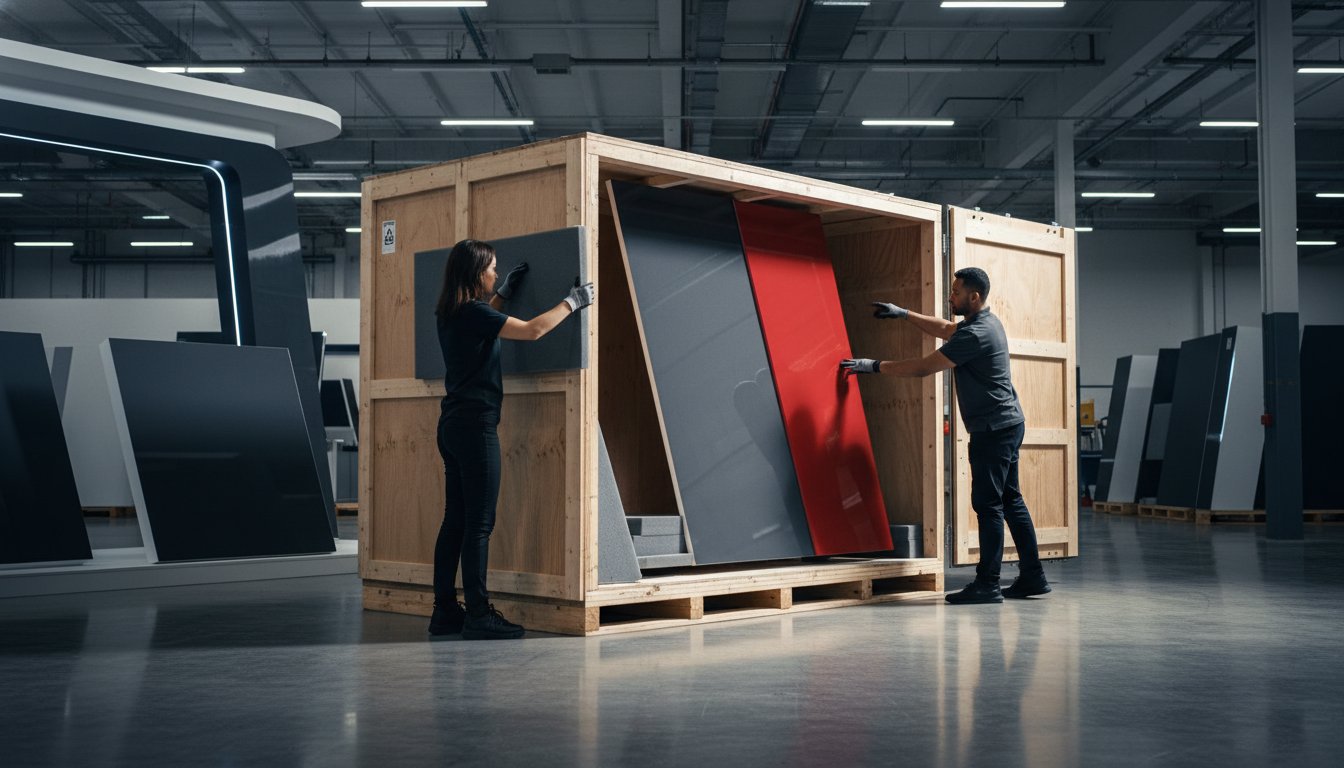
Standbuilder International simplifies this complex process through a strategic US-German partnership that provides global reach. Whether you need bespoke designs optimized for visitor flow or expert project management from Atlanta to Munich, our network of contractors is ready to deliver. Don't leave your 2026 results to chance. Request 5 Free Quotes for Your Next Custom Exhibition Stand and start building with confidence. We look forward to seeing your brand succeed on the world stage.
Frequently Asked Questions
What is the best way to capture leads at a trade show in 2026?
The most effective strategy is a hybrid approach that combines an engaging trade show booth design to attract visitors with real-time CRM synchronization. Use universal lead retrieval apps to eliminate manual data entry errors and capture visitor data instantly. By focusing on Contextual Lead Value (CLV) rather than just raw badge scans, you ensure your sales team receives high-quality prospects who are ready for immediate follow-up.
How do I qualify trade show leads quickly on a busy floor?
Qualify leads by using a digital scoring model on mobile tablets to categorize prospects as A, B, or C leads in under 60 seconds. Train your staff to ask the "Three Golden Questions" regarding budget, authority, and timeline while the visitor is in your Engagement Zone. Using AI-powered voice-to-text notes allows your team to record sentiment and urgency without slowing down the flow of traffic.
Are digital lead retrieval tools better than business cards?
Digital tools are far superior because they offer 100% data accuracy and allow for immediate automated follow-up. Considering the average cost per lead at a trade show is $112, digital systems provide a much higher ROI than physical cards that often get lost or misread. They also enable you to attach qualitative notes directly to a contact record, which is vital for personalized sales outreach.
How can I integrate trade show leads directly into my CRM?
Integrate your leads by using universal retrieval apps like eConnect or Wave Connect that offer native API connections to platforms like Salesforce and HubSpot. These tools sync data in real-time, allowing your home-office team to begin the qualification process while the prospect is still on the exhibition floor. Avoid using show-specific hardware that requires a manual CSV export, as this delay causes significant lead decay.
What are the GDPR requirements for capturing leads at European trade shows?
GDPR requires you to obtain explicit, double opt-in consent before you can legally process the data of European residents. You must display clear signage at your booth explaining your data collection policy and ensure your hardware uses encrypted transmission. Every digital form should include a mandatory checkbox for consent to stay compliant during global tours in cities like Munich, Paris, or London.
How do I train my booth staff for effective lead generation?
Train your staff on the Consultative Capture method to leverage the fact that 81% of trade show attendees have direct buying authority. Focus their training on identifying pain points rather than just scanning badges. Conduct role-playing sessions 30 days before the event to ensure every team member can transition from a casual greeting to a qualifying conversation without appearing overly aggressive or robotic.
What is a good lead-to-opportunity conversion rate for trade shows?
A healthy lead-to-opportunity conversion rate for B2B exhibitors in 2026 typically falls between 15% and 20%. While top-of-funnel volume is a common metric, your primary focus should be the quality of the data captured. If your trade show booth design to attract visitors includes dedicated zones for private discussions, you'll likely see a higher percentage of Sales Qualified Leads (SQLs) compared to open-plan layouts.
How can booth design impact my lead capture rate?
Booth design impacts lead capture by either facilitating or blocking the natural flow of visitors toward your data capture points. Strategic zoning ensures that "Capture Zones" are placed away from high-traffic aisles to prevent bottlenecks and visitor frustration. Using professional furniture and proper lighting in your Engagement Zone encourages prospects to stay longer, giving your staff more time to complete the qualification process.