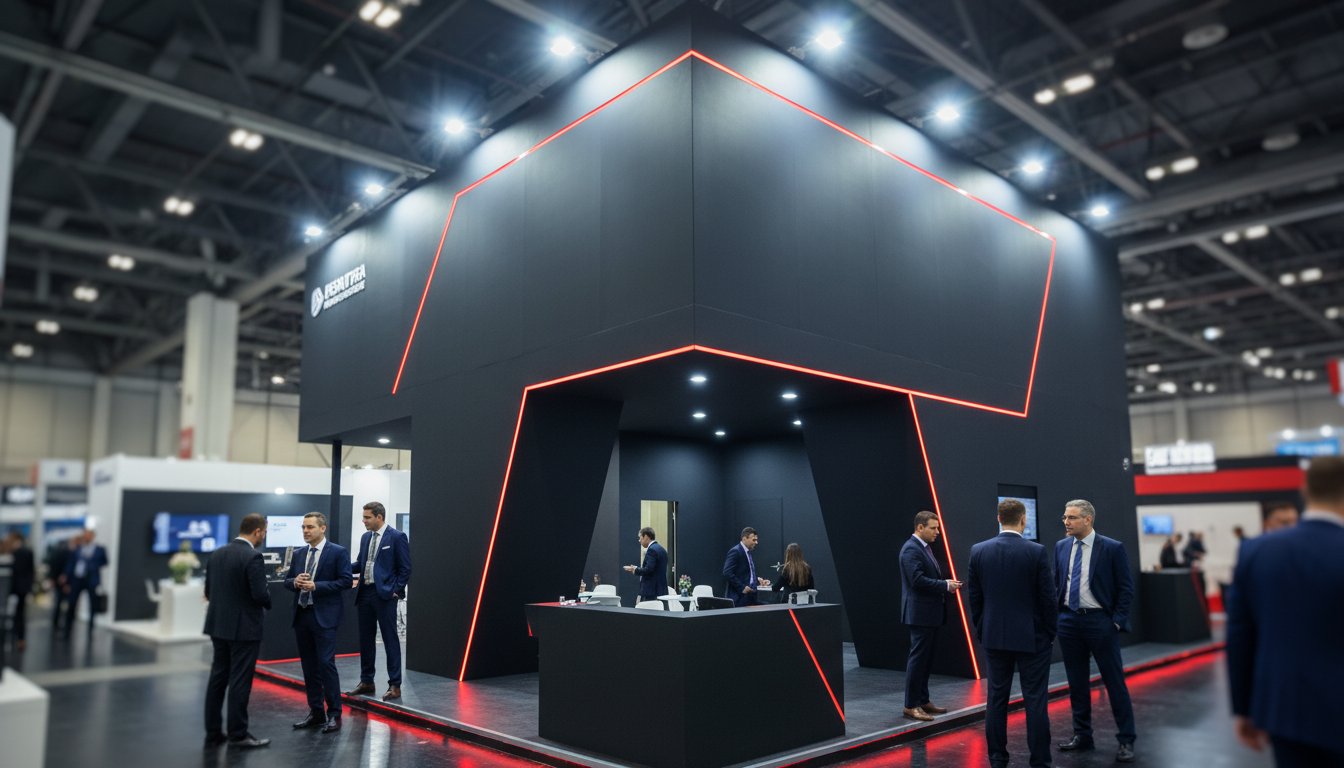
In 2026, owning a physical exhibition stand has become a strategic liability rather than a corporate asset. You've likely seen your budget drained by the 12% increase in logistics and drayage costs reported in 2025 industry benchmarks. It's exhausting to manage storage fees and complex fire safety codes that change the moment you move your activation from Las Vegas to Munich. A strategic trade show booth rental isn't just a fallback; it's the smartest way to maintain a premium brand presence without the anchor of permanent inventory.
This guide promises to help you master the economics of rentals so you can minimize operational friction and maximize your global reach. We'll show you how to achieve a bespoke, high-end look while ensuring your ROI is predictable and your logistics are handled by experts. We break down the specific steps to navigate international labor codes and secure high-quality modular stands that deliver a bespoke finish without the asset liability.
Key Takeaways
- Understand why global brands are shifting from asset ownership to a flexible rental model to bypass international shipping volatility and logistics delays.
- Learn how to leverage "Custom Rental" architecture with bespoke finishes to achieve a high-impact brand presence without the burden of long-term storage.
- Calculate your true ROI by comparing the "Rental Premium" against the hidden costs of ownership, including crating, shipping, and drayage fees.
- Navigate the specific differences between US convention standards and the European "Messe" system to streamline your trade show booth rental across global markets.
- Discover the essential components of a high-converting RFP and why requesting a 3D render is critical for securing the most accurate contractor quotes.
The Strategic Case for Trade Show Booth Rental in 2026
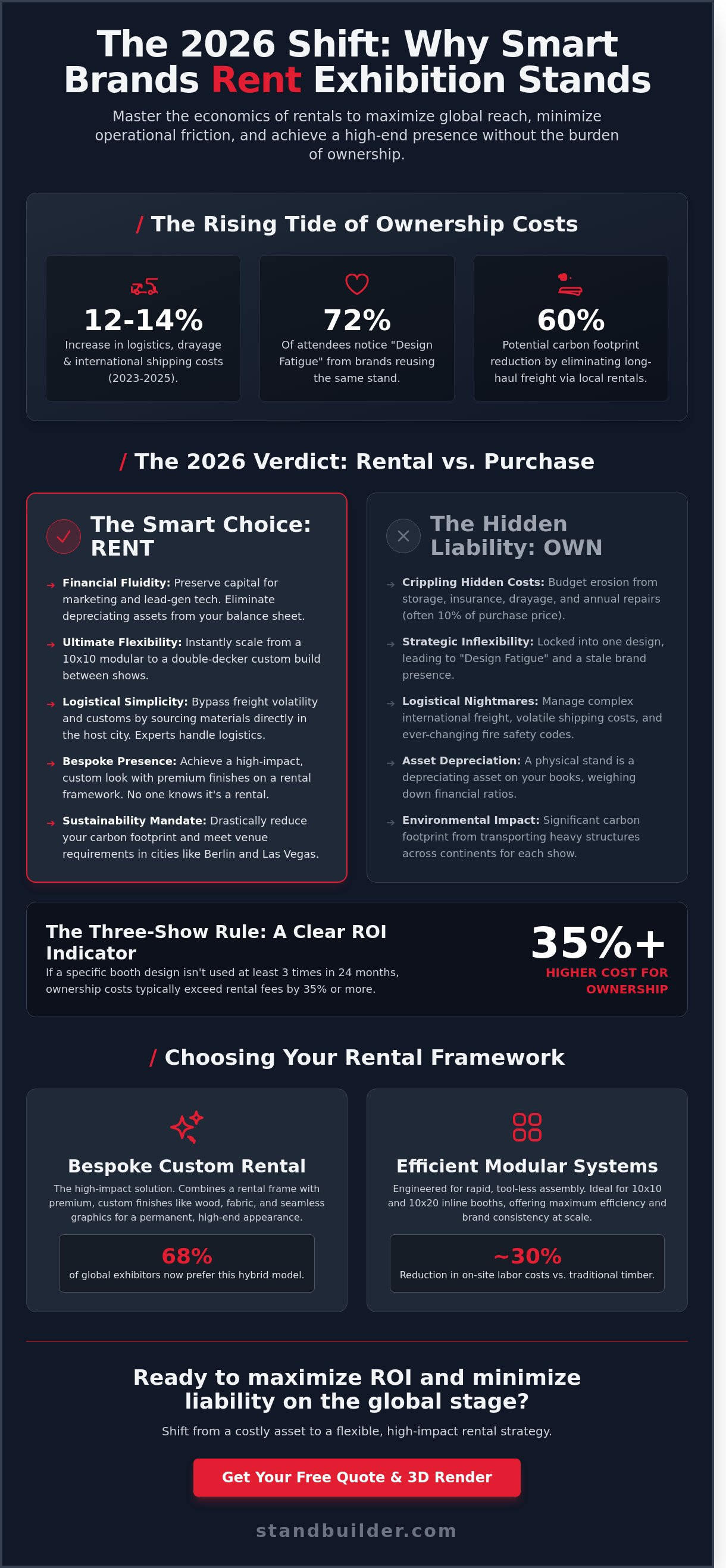
The 2026 event landscape prioritizes experiential agility over physical asset ownership. Global brands now view the Trade show floor as a dynamic stage rather than a fixed gallery. This shift is driven by a 14% increase in international shipping costs recorded between 2023 and 2025, forcing exhibitors to rethink their logistics. Choosing a trade show booth rental allows teams to bypass freight volatility and customs delays by sourcing high-quality materials directly in the host city. It's a move that replaces heavy crates with digital flexibility.
Decision makers utilize the Three-Show Rule to determine ROI. If a specific booth design isn't scheduled for at least three deployments within a 24-month period, the total cost of ownership typically exceeds rental fees by 35% or more. This calculation includes the initial build, recurring storage, and the inevitable 20% surcharge for emergency repairs during setup. Renting simplifies the process. You find a contractor, request five free quotes, and select the design that fits your current goals.
Sustainability is no longer a peripheral concern; it's a procurement mandate. Local rental models reduce the carbon footprint of an exhibition presence by up to 60% by eliminating long-haul trucking and heavy sea freight. By 2026, major venues in Berlin and Las Vegas require detailed carbon reporting. Local sourcing is the most efficient path to compliance. It keeps your brand aligned with green building standards without the logistical headache of transporting massive structures across borders.
Pros of Renting: Flexibility and Financial Fluidity
Smart exhibitors preserve capital for high-impact marketing activations and lead generation tech. Renting offers the ability to scale your footprint instantly. You can transition from a 10x10 modular booth in London to a double-decker bespoke stand in Dubai without purchasing new inventory. This approach removes depreciating assets from the corporate balance sheet, improving financial ratios for the fiscal year. It's about being lean. Compare options across our contractor network to find a setup that matches your specific show objectives.
Cons of Ownership: The Hidden Liabilities
Ownership carries invisible burdens that erode budgets. Climate-controlled warehouse storage in logistics hubs like Atlanta costs an average of $1.50 to $2.50 per square foot monthly as of 2025. Beyond storage, owned booths face "Design Fatigue." Industry data shows that 72% of attendees notice when a brand uses the same structure for more than two consecutive seasons. Maintenance cycles also require constant investment to keep panels and frames show-ready. These repairs often cost 10% of the original purchase price annually, making trade show booth rental a more predictable line item for the modern CFO.
Custom Rental vs. Modular Systems: Choosing Your Framework
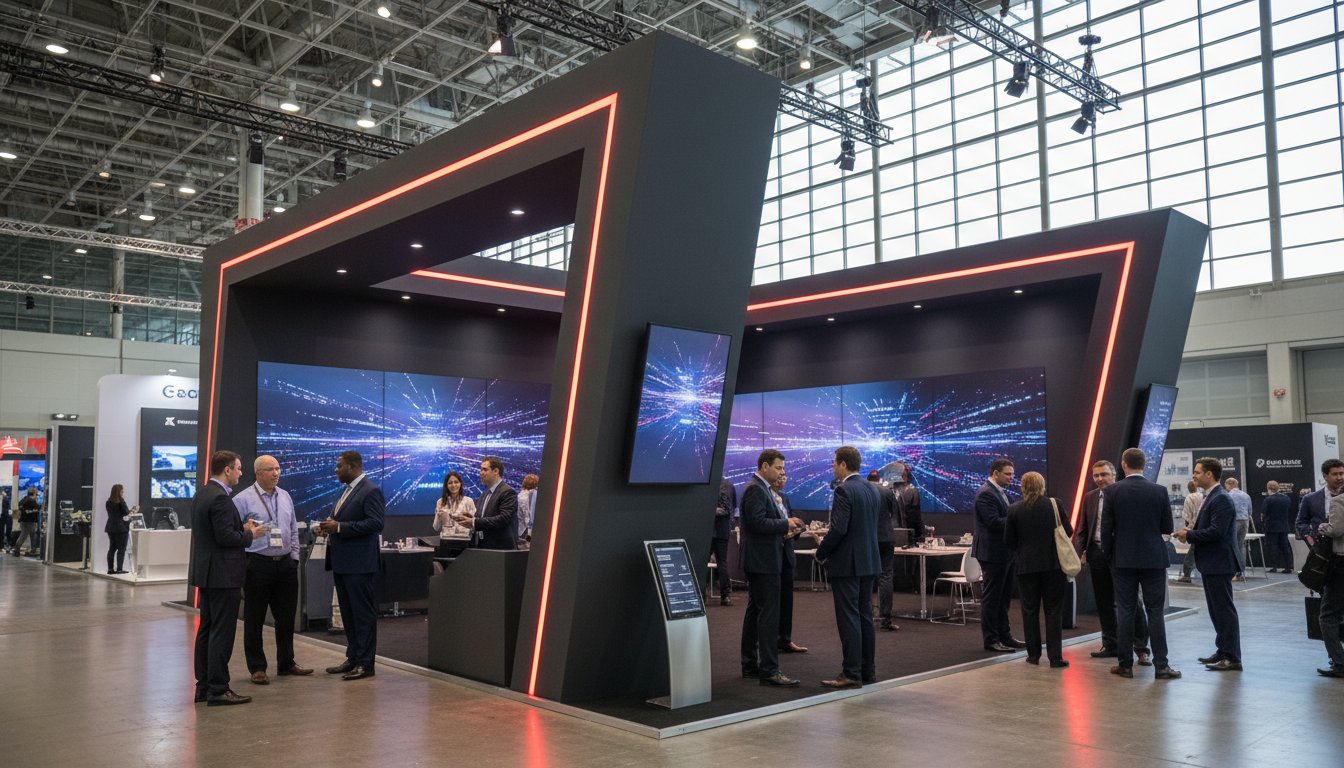
The idea that a trade show booth rental must look like a generic, off-the-shelf kit is a relic of the past. Modern exhibition technology allows brands to lease the structural skeleton of a stand while completely customizing the exterior skin. This hybrid approach enables exhibitors to generate ROI from trade shows by shifting budgets away from depreciating assets and toward high-impact design elements. By 2026, the distinction between a rented frame and a purchased one has become nearly invisible to the average attendee.
Bespoke Rental: The High-Impact Solution
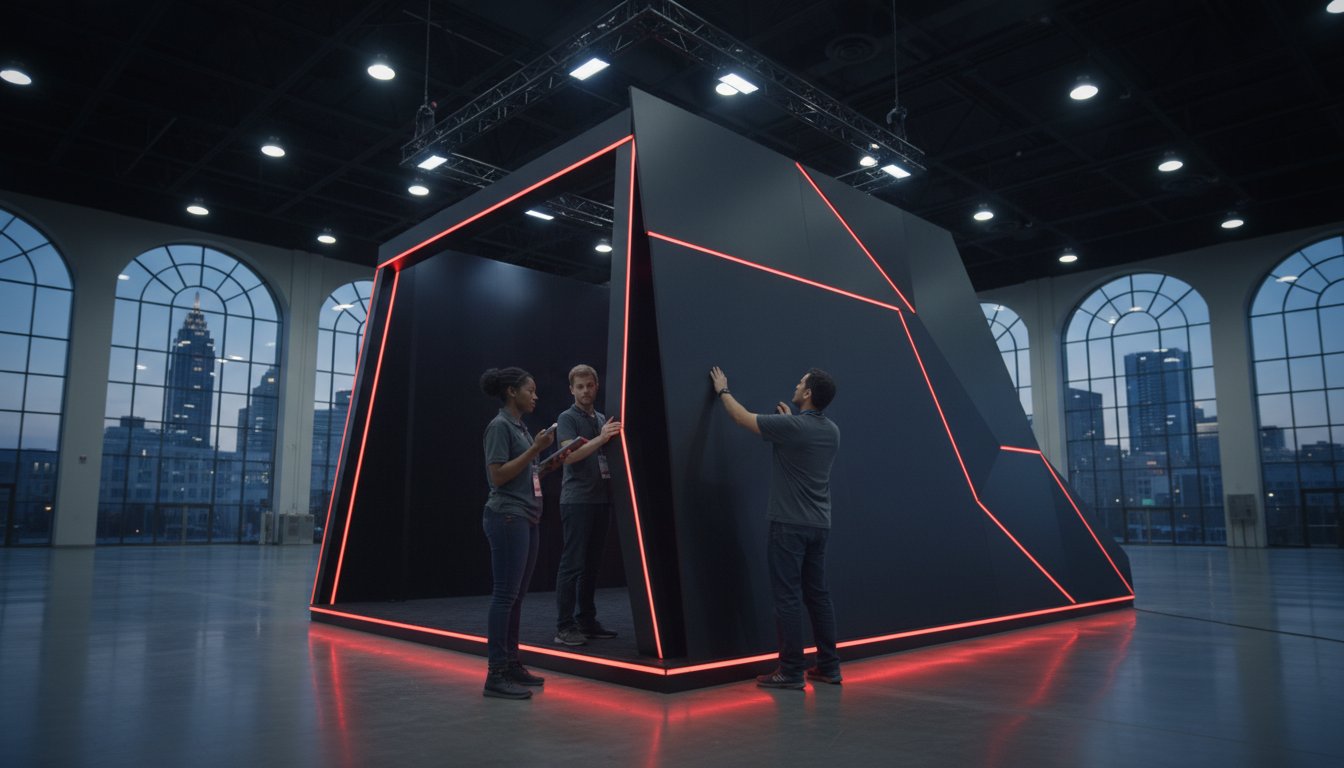
Bespoke rentals utilize structural frames hidden behind premium finishes like wood laminates, textured fabrics, or glass panels. These elements mirror the core principles of custom exhibition stand design to create a permanent, high-end look. A 2024 industry survey indicated that 68% of global exhibitors now prefer custom-rental hybrids to avoid the rising costs of storage and international shipping. By using silicone edge graphics (SEG) and seamless wall systems, you can ensure the underlying rental frame remains hidden. This allows for a "permanent look" built on temporary infrastructure that looks identical to a traditional build-and-burn stand.
Modular Rental Systems: Efficiency at Scale
Efficiency is the primary driver for modular systems like Aluvision or beMatrix. These frameworks are engineered for rapid deployment and tool-less assembly. This technical advantage reduces on-site labor costs by approximately 30% compared to traditional timber construction. Modular systems are the optimal choice for 10x10 and 10x20 inline configurations where space is limited but brand presence is critical. They offer a clean, architectural aesthetic that supports heavy AV integration and LED walls without requiring custom fabrication.
If your 2026 schedule includes a multi-city tour through Europe or North America, modularity is essential. Frames can be reconfigured to fit a 3x3 meter space in Frankfurt one week and a 20x20 foot island in Las Vegas the next. This flexibility ensures your trade show booth rental remains consistent across different hall footprints and regional regulations. It's a strategic way to maintain brand equity while staying agile in a fluctuating market.
Analyzing the Total Cost of Ownership: Rental vs. Purchase
Calculating the true ROI of your exhibition presence requires looking far beyond the initial sticker price. While purchasing an exhibit appears to be a one-time capital investment, it triggers an "ownership tail" of recurring costs. Data from 2024 industry benchmarks suggests that storage, insurance, and routine maintenance add approximately 15% to 22% to the original purchase price every year. When you choose a trade show booth rental, you effectively trade these unpredictable long-term liabilities for a fixed, transparent cost per event.
Financial planners often use a 3-year comparison to evaluate these options. Over three years, an owned booth likely requires significant graphic updates or structural repairs. Exhibitors must frequently decide whether to refurbish or trash your trade show exhibit as branding evolves or wear and tear sets in. Rental models bypass this lifecycle entirely, providing access to modern, modular inventory without the burden of depreciation or disposal fees. Furthermore, liability risks for damaged hardware typically rest with the rental provider, whereas owners must carry their own insurance riders to protect their assets during transit and on the show floor.
The Logistics Math: Shipping vs. Local Sourcing
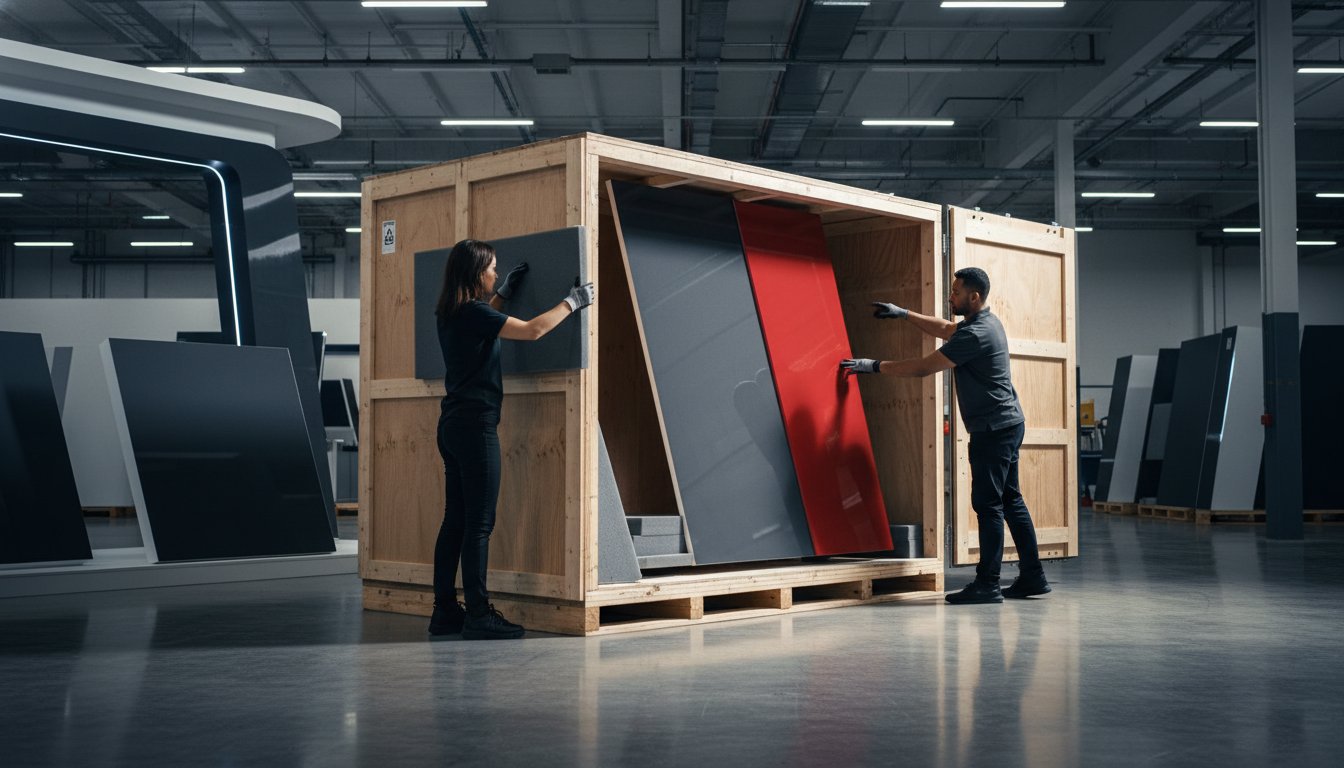
Shipping a 2,000lb crate across borders to a venue in Germany or between domestic hubs like Atlanta creates massive logistical overhead. Drayage is the cost of moving freight from the loading dock to the booth space. At high-demand venues like McCormick Place, drayage rates are calculated by weight and can significantly inflate the cost of owned, heavy timber structures. By utilizing a trade show booth rental sourced from a local contractor network, you eliminate transcontinental shipping and minimize the weight of materials hitting the loading dock. This local strategy reduces your carbon footprint and keeps your budget focused on engagement rather than logistics.
Operational Savings: Labor and Management
Operational efficiency is where rental models provide the most immediate relief. Using a turnkey provider allows you to reduce internal project management by an estimated 35 to 50 hours per show. You don't need to coordinate independent I&D (Installation and Dismantle) crews because the rental provider uses their own specialized teams who know the specific hardware intimately.
- Request detailed quotes that bundle I&D to avoid surprise labor overages.
- Compare technical fees for electrical and rigging to ensure they're included in the package.
- Find providers that offer "no-hidden-fee" guarantees on structural components.
Standbuilder simplifies this procurement phase by delivering five free quotes from vetted global partners. This transparency ensures you aren't hit with unexpected technical fees or management surcharges after the contract is signed. It's a professional, results-oriented approach that lets your team focus on lead generation instead of crate manifests.
Global Logistics: Navigating Rental Standards in the US and Europe
Managing a trade show booth rental across continents requires more than just a design; it demands a deep understanding of regional logistics. The partnership between Standbuilder and CBS Neospace bridges the US-Germany axis, providing exhibitors with a unified supply chain that eliminates the 6,000-mile communication gap. By leveraging this network, you gain access to local production hubs that prioritize regional compliance over risky international shipping.
Technical compliance is where most global exhibitors stumble. Safety standards are non-negotiable. European venues strictly require B1 fire-rated materials under the DIN 4102-1 standard. In contrast, US fire marshals look for NFPA 701 certification. Using the wrong fabric for your rental components can lead to immediate booth closure during pre-show inspections. Local fabrication removes these risks. It also eliminates the 15% to 20% tariff costs and unpredictable 14-day customs holds that often plague trans-Atlantic freight.
Exhibiting in the US: Atlanta and Beyond
Major US hubs like Atlanta require a specific approach to labor and logistics. At the Georgia World Congress Center, union labor regulations dictate who can pick up a screwdriver or plug in a monitor. You'll need to plan for these jurisdictions early in the procurement process. Utilizing "Advanced Warehouse" shipping is a critical strategy for any trade show booth rental in North America. Delivering your components to the warehouse 30 days before the event ensures your materials are at the front of the line on setup day, often reducing drayage costs by 25% compared to direct-to-site shipping.
Exhibiting in Europe: The German Advantage
German "Messebauer" (stand builders) operate within a system built for efficiency and sustainability. Unlike the heavy timber construction often seen in the US, European rentals favor modular aluminum systems that are 100% reusable. When adapting a trade show backdrop for a German hall, pay close attention to height restrictions. While US shows often allow 12-foot headers, European halls frequently cap standard inline stands at 2.5 meters. Always submit your design files in metric measurements. A 10-foot graphic will not fit a 3-meter frame, and on-site fixes are expensive.
Ready to simplify your international presence? Compare five free quotes from vetted local contractors who understand these regional standards.
Optimizing Your RFP: How to Secure the Best Exhibition Stand Rental
Securing a high-quality trade show booth rental requires more than a simple inquiry. You need a Request for Proposal (RFP) that leaves zero room for guesswork. For 2026 exhibitions, aim to sign your rental contract at least six to eight months before the show floor opens. This timeline ensures you secure specific modular components and premium AV equipment before peak season inventory disappears. A professional RFP must include your floor plan, budget range, and brand guidelines to attract the most qualified contractors.
Always demand a detailed 3D render as part of your rental quote. It's the only way to visualize how rental frames and custom graphics integrate. Standbuilder simplifies this procurement through our "5 Quote" strategy. We connect you with five vetted contractors who provide detailed, comparable proposals. This process eliminates the frustration of chasing individual vendors and allows you to compare design quality and pricing side-by-side. It's a system built to save you approximately 20 hours of manual research and outreach.
The Design Brief for Rental Success
Precision is your best tool for budget control. A well-defined brief can reduce rental quote variance by up to 30% by eliminating the "buffer" pricing contractors add when details are vague. Clearly define your "must-haves" such as high-definition LED walls, locked storage for staff, and private meeting rooms for lead closing. Specify your graphic requirements early. Since trade show booth rental structures often use standard frame sizes, your graphics must be engineered for a seamless fit on tension fabric or PVC panels to avoid unsightly gaps or sagging on site.
Selecting Your Partner: Beyond the Lowest Price
Don't let a low price tag lead to a logistical disaster. Evaluate a contractor's international network and their local warehouse presence in your host city. Local storage significantly reduces drayage costs and shipping risks. A contractor with a warehouse in Las Vegas or Frankfurt can react much faster to last-minute changes than one shipping from across the country. Demand on-site supervision for the booth handover. Having a dedicated project manager present during the final walkthrough ensures that lighting, AV, and structural elements meet your exact standards before the first attendee arrives.
Ready to simplify your procurement for 2026? Request five free quotes for your next trade show booth rental and find the perfect partner for your global exhibition strategy.
Maximize Your Global Impact in 2026
Success in the 2026 exhibition circuit depends on your ability to remain agile across international markets. Shifting to a trade show booth rental strategy eliminates the burden of storage while providing access to high-end bespoke stands. By analyzing the total cost of ownership, you'll find that modular systems offer the flexibility required for rapid transitions between US and European venues. Standbuilder simplifies this complex procurement process through our Atlanta headquarters and our strategic partnership with CBS Neospace in Germany. We specialize in custom rental solutions that meet strict local standards, ensuring your brand maintains a consistent, professional presence regardless of the city. Our experts bridge the gap between North American expectations and European regulations.
Stop managing logistics and start focusing on your leads. Our network of vetted contractors is ready to deliver high-quality exhibition stands tailored to your specific RFP requirements. Take the first step toward a hassle-free event by comparing your options today.
Get 5 Free Quotes for Your Trade Show Booth Rental
Your next successful exhibition is just a few clicks away.
Frequently Asked Questions
Is it cheaper to rent or buy a trade show booth?
Renting is typically 30% to 50% more cost-effective per event than purchasing a permanent structure. This model allows you to allocate capital toward lead generation rather than physical assets. You avoid recurring fees for maintenance, repairs, and depreciation that affect 100% of owned inventory.
Can I customize a rented trade show booth with my own branding?
You can fully customize a trade show booth rental with bespoke graphics, logo integration, and specific furniture choices. Modern modular systems allow for fabric skins and vinyl wraps that make a rental indistinguishable from a purchased stand. 95% of exhibitors achieve a unique brand look through these high-quality finishes.
What is typically included in a turnkey trade show booth rental package?
A turnkey trade show booth rental package includes design, hardware, graphics, flooring, lighting, and furniture. It also covers the logistics of installation and dismantling. This comprehensive approach eliminates the need to manage multiple vendors, streamlining your preparation for the 2026 exhibition season.
How far in advance should I book my trade show booth rental?
Secure your booth rental at least 6 months before the show opening. Early booking guarantees the availability of specific modular components and prevents the 15% to 25% price hikes often applied to last-minute orders. For major hubs like Las Vegas or Dubai, 180 days is the industry-standard lead time.
Do I need to pay for storage if I rent my exhibition stand?
You don't pay for storage when you opt for a rental solution. The contractor manages all warehousing and inventory logistics after the show ends. This saves your company the annual storage fees that typically range from $1,500 to $5,000 for a standard 20x20 booth structure.
Can I rent a double-decker stand or is that purchase-only?
Double-decker stands are available for rent and aren't limited to purchase-only options. These structures provide a 100% increase in usable space without increasing your floor footprint. Ensure your provider complies with local structural codes, such as the IBC in the United States or Eurocode 1 in Europe.
What happens if the rental booth gets damaged during the show?
Most rental contracts include a damage waiver or require a security deposit to cover minor wear and tear. If significant damage occurs, the provider's insurance typically handles the claim. 90% of contractors include a basic liability clause in their standard terms to protect both parties during the event.
How do I manage a rental booth for an international show in Germany?
Manage German shows by hiring a local contractor through Standbuilder to navigate the specific technical requirements of venues like Messe Berlin. German regulations require B1 fire-rated materials and specific electrical certifications. Request five free quotes to compare local experts who understand these regional compliance standards.